
PMV Pharmaceuticals reports a 46% response rate for rezatapopt in TP53 Y220C-mutated ovarian cancer, supporting a planned 2027 FDA filing.
Written By: Creola Gonsalves, MS Biotech
Reviewed By: Pharmacally Editorial Team
PMV Pharmaceuticals has reported updated interim data from the pivotal Phase 2 portion of its PYNNACLE trial (NCT04585750), showing a 46% overall response rate (ORR) with rezatapopt in patients with platinum-resistant or platinum-refractory ovarian cancer harboring a TP53 Y220C mutation. Enrollment for the primary analysis of the ovarian cancer cohort is complete, and the company plans to provide updated results across all PYNNACLE Phase 2 pivotal cohorts at a medical conference in the fourth quarter of 2026.
Rezatapopt Targets the TP53 Y220C Mutation
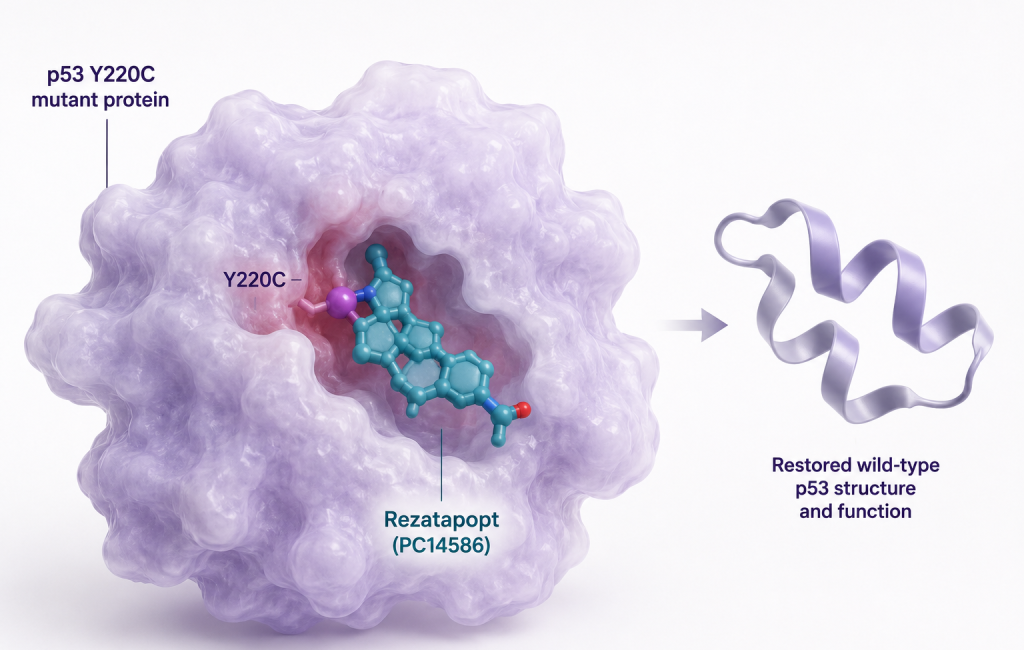
Rezatapopt (PC14586) is an oral small-molecule p53 reactivator that selectively binds to the pocket in the p53 Y220C mutant protein. This interaction restores wild-type tumor-suppressor structure and function, providing a mutation-specific therapeutic approach for TP53 Y220C-driven malignancies.
The TP53 Y220C mutation represents a defined molecular target across multiple advanced solid tumors. Patients with platinum-resistant or platinum-refractory ovarian cancer have limited treatment options and generally poor outcomes, underscoring the need for therapies directed at specific molecular drivers.
PYNNACLE Data Show Rapid and Durable Responses
As of the May 14, 2026 data cutoff, the interim efficacy population included 76 patients who had at least one post-baseline tumor assessment or discontinued treatment early.
Investigator assessment using RECIST v1.1 showed an ORR of 46% (35/76 patients), comprising four confirmed complete responses, 29 confirmed partial responses, and two unconfirmed partial responses. The confirmed response rate was 43.4% based on the 33 confirmed responses.
The median time to response was 1.3 months, indicating that tumor responses generally emerged early. Among patients with confirmed responses, the median duration of response was 10.0 months, supporting sustained activity in this difficult-to-treat population.
Safety remained consistent with previous reports from the broader PYNNACLE program. Most treatment-related adverse events were Grade 1 or 2, while treatment-related adverse events led to discontinuation in 5% of patients. These findings support a generally manageable safety and tolerability profile in the ovarian cancer cohort.
FDA Feedback Supports 2027 NDA Strategy
Following a recent meeting with the U.S. Food and Drug Administration, PMV said agency feedback continues to support its strategy to seek accelerated approval for rezatapopt in patients with platinum-resistant or platinum-refractory ovarian cancer harboring a TP53 Y220C mutation.
The company expects to submit a New Drug Application in the first quarter of 2027, supported by data from the Phase 2 portion of PYNNACLE.
Rezatapopt has received FDA Fast Track designation for locally advanced or metastatic solid tumors with a TP53 Y220C mutation and Orphan Drug designation for TP53 Y220C-positive ovarian, fallopian tube, and primary peritoneal cancers.
Path Forward
The next major data milestone is expected in Q4 2026, when PMV plans to provide an update across all five PYNNACLE Phase 2 pivotal cohorts, including the primary analysis of the ovarian cancer cohort. The study is also evaluating rezatapopt in lung, breast, endometrial, and other solid tumors.
The pivotal Phase 2 program is evaluating rezatapopt at the recommended Phase 2 dose of 2,000 mg once daily across approximately 70 clinical sites. The forthcoming ovarian cancer primary analysis will provide the key dataset for the company’s planned 2027 NDA submission.
Reference

About the Writer
Creola Gonsalves (Linkedin) is an M.S. Biotechnology postgraduate with a strong interest in clinical research, evidence interpretation, and healthcare writing, with a focus on translating life-science knowledge into meaningful real-world insights.
She is trained in Good Clinical Practice (GCP), clinical research principles, and critical interpretation of randomized clinical trials, with certifications from NIH and Stanford University.
Her research background in biotechnological applications and microbial research strengthens her ability to understand scientific evidence and develop clear, accurate, and research-driven healthcare content.