
FORE Biotherapeutics reports positive interim efficacy findings for plixorafenib in BRAF fusion-positive solid tumors from the Phase 2 FORTE study.
Written By: Anshu Gupta PharmD
Reviewed By: Pharmacally Editorial Team
FORE Biotherapeutics has reported a positive outcome from the first of two pre-specified interim efficacy analyses of the BRAF fusion basket in the global Phase 2 FORTE study (NCT05503797), which is evaluating plixorafenib monotherapy in patients with advanced solid tumors harboring BRAF fusions, including recurrent or progressive primary central nervous system (CNS) tumors with BRAF fusions. Following the analysis, the Independent Data Monitoring Committee (IDMC) recommended that the study continue as planned.
The first interim analysis was prospectively specified and conducted after the first 25 participants in the BRAF fusion basket had sufficient data for response assessment. The analysis was designed to evaluate plixorafenib against a defined efficacy threshold, while the IDMC continues to oversee safety during the study. A second interim efficacy analysis is anticipated once sufficient data are available from 50 participants. Approximately 75 patients are being evaluated in the BRAF fusion basket, with overall response rate (ORR), supported by duration of response, serving as the primary endpoint.
No Detailed Efficacy Data Disclosed
FORE reported that the first interim analysis supports continued observation of tumor regressions and prolonged treatment among patients receiving plixorafenib. However, detailed response data from this interim analysis have not been disclosed. The finding therefore represents a protocol-defined interim development milestone rather than a final assessment of efficacy in the BRAF fusion population.
FORTE Evaluates Plixorafenib Across Multiple BRAF Alterations
The FORTE study is a global, registration-intended Phase 2 master protocol comprising four baskets evaluating plixorafenib in distinct patient populations. The three monotherapy populations currently under evaluation include recurrent or progressive BRAF V600E primary CNS tumors, solid tumors with BRAF fusions, and rare BRAF V600-mutated solid tumors. Plixorafenib is administered orally once daily with food as a monotherapy and is no longer being administered in combination with the pharmacokinetic booster cobicistat. The study uses a Bayesian adaptive design, allowing interim efficacy analyses within the individual baskets.
BRAF fusions are estimated by Fore to occur in approximately 1% of all solid tumors. The alterations are also reported in brain tumors, including low-grade gliomas and rare glioneuronal tumors, particularly among children and young adults. Fore estimates that approximately 33,000 patients across G7 markets may have BRAF fusions and states that approved treatment options remain unavailable for the vast majority of these patients.
Plixorafenib Targets BRAF-Driven Signaling
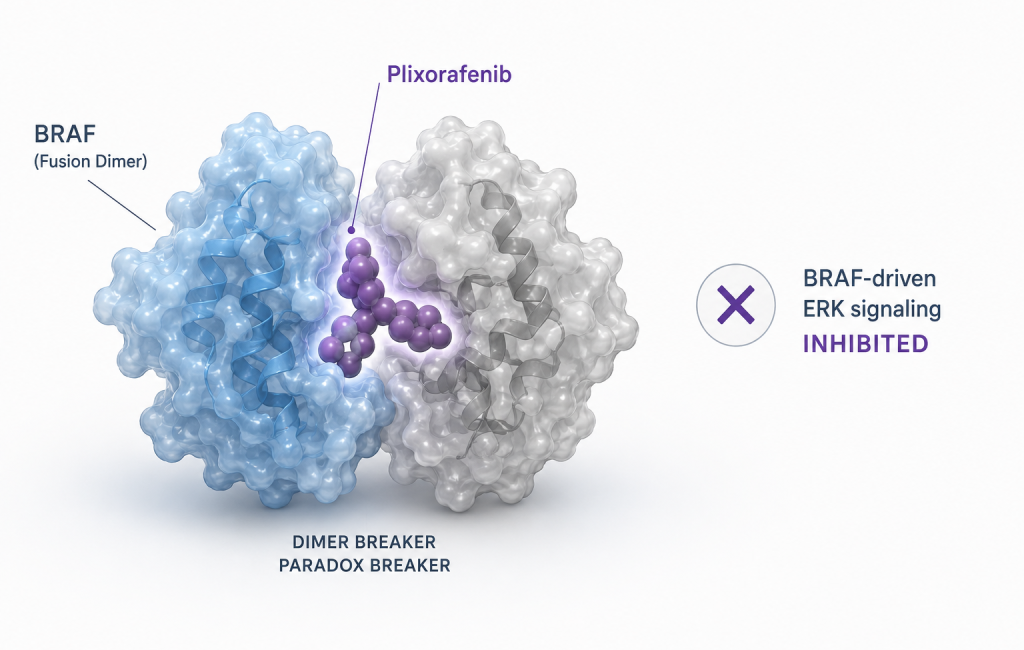
Plixorafenib is an investigational BRAF inhibitor designed to function as both a dimer breaker and paradox breaker. According to Fore, its mechanism is intended to inhibit BRAF-driven ERK signaling while avoiding paradoxical activation of the RAF/MEK/ERK pathway. In the FORTE study, plixorafenib is administered orally once daily with food as a monotherapy and is no longer being administered in combination with the pharmacokinetic booster cobicistat.
Earlier Data Showed Responses in BRAF Fusion Tumors
The current interim finding follows clinical data previously reported from a Phase 1/2a study involving adults with advanced solid tumors harboring BRAF fusions. Among 14 patients, plixorafenib produced an ORR of 14%, including one complete response and one partial response. Seven patients, representing 50% of the study population, had stable disease, resulting in a disease control rate of 64%. Both responders continued treatment under single-patient expanded access, with treatment duration exceeding eight years for the patient who achieved a complete response and four years for the patient with a partial response.
Safety Profile Remains Favorable
FORE also reported safety findings from 113 participants treated with plixorafenib. Treatment-related Grade 3 or higher adverse events occurred in fewer than 10% of participants. No treatment-related dermatologic events resulted in dose reduction, treatment interruption, or treatment discontinuation. Discontinuation because of plixorafenib-related adverse events occurred in less than 2%.
Next Steps for the BRAF Fusion Basket
The FORTE program has previously reported a positive interim outcome for its BRAF V600 CNS basket. The BRAF fusion basket has now passed its first planned interim efficacy analysis, while a second interim assessment is anticipated after sufficient data are available from 50 participants. A separate interim efficacy analysis is also planned for the rare BRAF V600 solid tumor basket after sufficient scans from approximately 25 patients have been evaluated by the IDMC.
Further follow-up will determine the efficacy profile of plixorafenib in BRAF fusion-positive tumors. FORE expects to report topline results from the BRAF fusion basket during the second half of 2027. The company has stated that, if the primary analysis is positive, it believes the findings could potentially support submission of a New Drug Application to the U.S. Food and Drug Administration under the Accelerated Approval pathway.
For now, the first interim analysis allows the BRAF fusion basket to continue toward its subsequent efficacy assessment. The final interpretation of plixorafenib in this population will depend on additional response data, duration of response, and continued safety follow-up as the FORTE study progresses.
Refrences

About the Writer
Anshu Gupta (LinkedIn) is a PharmD professional and healthcare writer with interests in clinical research, pharmacovigilance, regulatory affairs, and medical writing. She has presented research at academic conferences and completed certifications in Good Clinical Practice (GCP), ICH-GCP, and drug safety. Passionate about clinical trials and evidence-based medicine, she is committed to translating scientific evidence into accurate, reliable, and accessible healthcare content.