
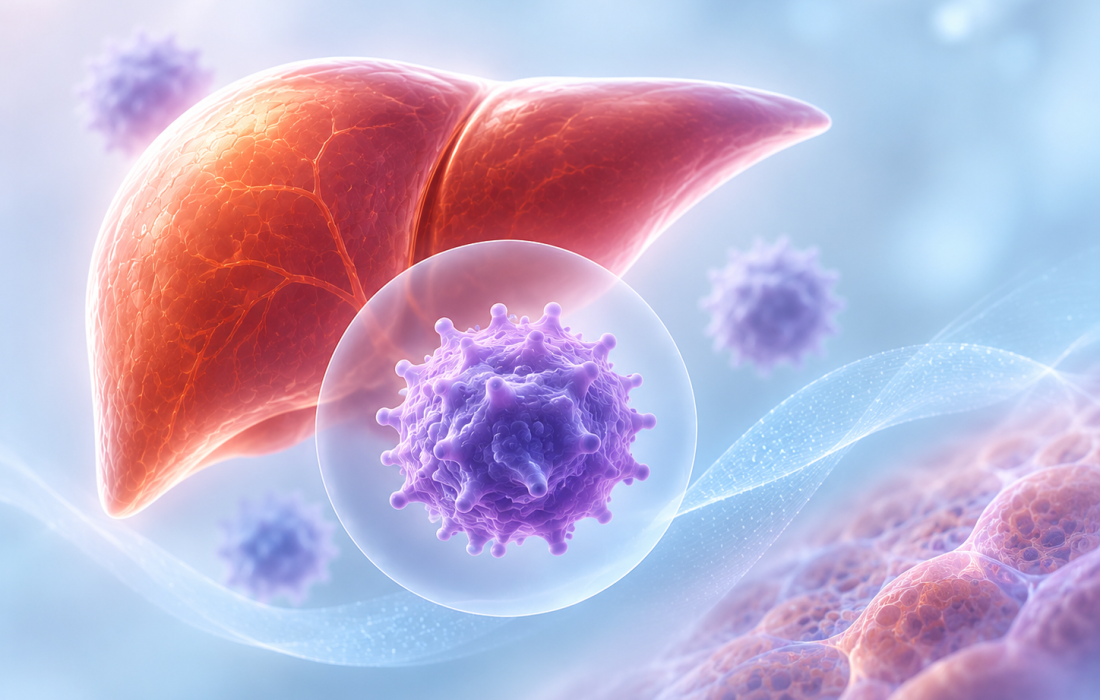
Resolution Therapeutics reports 42% lower risk of clinical events with RTX001 in the EMERALD trial, evaluating engineered macrophage therapy for end-stage liver disease.
Written By: Sravani Pamanji, PharmD
Reviewed By: Pharmacally Editorial Team
Resolution Therapeutics has reported positive six-month interim findings from its Phase I/II EMERALD trial evaluating RTX001, an investigational autologous engineered Regenerative Macrophage Therapy (RMT), in patients with end-stage liver disease (ESLD).
The interim analysis showed a 42% relative reduction in the risk of a composite clinical outcome comprising death, liver transplantation or hepatic decompensation compared with an external standard-of-care control group. RTX001 was also well tolerated, with biomarker assessments indicating reduced inflammatory pathway activity and lower markers of fibrogenesis.
Although preliminary, the findings provide an early clinical signal for an engineered macrophage-based approach targeting inflammation and fibrosis in advanced liver disease, where treatment options remain limited.
EMERALD Trial Design and Patient Population
EMERALD (NCT06823713) is a multicentre, single-arm, open-label Phase I/II study evaluating the safety, tolerability and preliminary efficacy of RTX001 in patients with ESLD who have recently recovered from a hepatic decompensation event.
For the six-month interim analysis, researchers compared the first nine patients treated with RTX001 against 21 patients receiving standard-of-care treatment in the OPAL natural-history study (NCT06380335). Both studies included patients recovering from recent hepatic decompensation, with closely aligned enrolment criteria and study-site participation.
OPAL is an observational external-control study rather than a randomized comparator arm within EMERALD. The primary EMERALD endpoint is safety and tolerability, while secondary endpoints include death, liver transplantation and protocol-defined hepatic decompensation.
EMERALD has completed enrolment, with 15 patients receiving RTX001. The primary analysis is anticipated in 2028.
RTX001 Associated With 42% Lower Risk of Composite Clinical Events
During six months of follow-up, two of nine patients receiving RTX001 (22%) experienced at least one component of the composite clinical outcome, compared with eight of 21 patients (38%) in the OPAL cohort.
These findings corresponded to a reported 42% relative risk reduction. The absolute difference between the observed event rates was approximately 15.9 percentage points.
When death or liver transplantation was assessed separately as a combined outcome, the reported incidence was 11% with RTX001 compared with 19% in the external control group.
The findings suggest a potential clinical benefit beyond biomarker changes alone. However, the comparison involved a small patient population and a non-randomized external control. Differences between the study populations and other potential confounding factors cannot be excluded. Consequently, the results do not establish a causal treatment effect.
Safety and Biomarker Findings
RTX001 was well tolerated in the interim analysis, with no infusion-related serious adverse reactions or severe adverse events considered related to treatment. Peri-infusion vital signs remained stable during reported infusions, with patients receiving up to four doses.
Pharmacodynamic assessments also demonstrated reduced activity of key inflammatory pathways and significant reductions in markers associated with fibrogenesis. Markers of fibrosis remodelling activity were maintained.
These findings support the proposed biological activity of RTX001, suggesting an anti-inflammatory and antifibrotic response. However, biomarker improvements do not independently demonstrate histological fibrosis reversal, restored liver function or clinical regeneration. Longer-term clinical outcomes will be needed to establish their significance.
Engineered Macrophages Target Inflammation and Fibrosis
RTX001 is manufactured using macrophages derived from a patient’s own monocytes. The cells are engineered with messenger RNA (mRNA) encoding interleukin-10 (IL-10) and matrix metalloproteinase-9 (MMP-9), designed to enhance their anti-inflammatory and antifibrotic activity.
IL-10 supports anti-inflammatory activity, while MMP-9 is intended to facilitate extracellular matrix remodelling. By targeting inflammatory and fibrotic processes simultaneously, RTX001 aims to create a more favourable environment for tissue repair and potentially liver regeneration.
Unlike certain other cell-based therapies, RTX001 does not require lymphodepletion or conditioning before administration.
The programme also builds on the University of Edinburgh’s MATCH clinical research involving non-engineered macrophages. Four-year findings from MATCH provide supportive clinical context, although differences in patient populations and cell products mean these results cannot be considered confirmatory evidence for RTX001.
FDA Development Plans and Upcoming Clinical Data
Resolution Therapeutics is preparing to advance RTX001 towards a planned pivotal clinical trial in the United States. The company has secured a pre-investigational new drug (pre-IND) meeting with the US Food and Drug Administration, scheduled for December 2026. Notably, EMERALD was conducted in Europe under UK and Spanish regulatory authorizations, while the upcoming FDA engagement concerns the therapy’s planned US clinical development.
The EMERALD/OPAL interim findings will also be presented as a late-breaking poster at the American Association for the Study of Liver Diseases (AASLD) Liver Meeting 2026 on November 8 (Poster 5034).
The combination of an early clinical-outcome signal and pharmacodynamic evidence provides a rationale for further evaluation of engineered regenerative macrophage therapy. Nevertheless, the small interim dataset and external-control design remain important limitations. The completed EMERALD study and subsequent pivotal development will be critical in determining whether RTX001 can deliver a reproducible and clinically meaningful improvement in outcomes for patients with end-stage liver disease.
References
Resolution Therapeutics Announces Positive Interim Phase I/II EMERALD Data for Regenerative Macrophage Therapy RTX001 in End-Stage Liver Disease, Resolution Therapeutics, 05 November 2026
RTX001 Autologous Engineered Macrophages for Liver Cirrhosis (EMERALD), ClinicalTrials.gov ID NCT06823713
Study in Patients with Decompensated Liver Cirrhosis (OPAL), ClinicalTrials.gov ID NCT06380335

About the Writer
Sravani Pamanji is a PharmD (LinkedIn) professional with experience in scientific writing, medical literature review, drug profile preparation, and clinical case documentation. She has contributed to scientific publication and presented at the 74th Indian Pharmaceutical Congress. Her training includes ICH GCP E6(R3), scientific research, and medication safety. She is passionate about evidence-based medical communication and accurate dissemination of clinical and pharmaceutical information.