
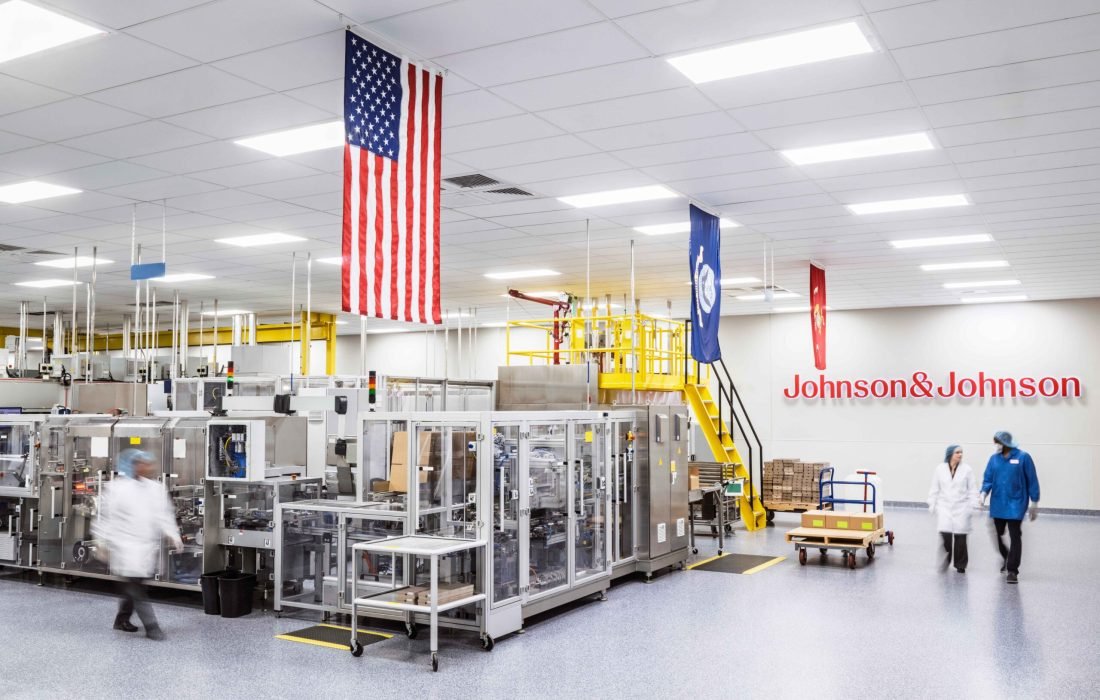
Johnson & Johnson secures FDA accelerated approval for Rybrevant Faspro in advanced HNSCC after OrigAMI-4 demonstrated a 42% response rate.
Written By: Siddhi Bhadekar, M. Pharm (QA)
Reviewed By: Pharmacally Editorial Team
The U.S. Food and Drug Administration (FDA) has granted accelerated approval to Johnson & Johnson’s RYBREVANT FASPRO™ (amivantamab and hyaluronidase-lpuj) as a single-agent treatment for adults with recurrent or metastatic head and neck squamous cell carcinoma (HNSCC) whose disease has progressed on or after platinum-based chemotherapy and an anti-PD-(L)1 antibody. Announced on November 5, 2026, the approval introduces the first dual EGFR–MET-targeted therapy for this treatment setting. The indication excludes HPV-associated oropharyngeal squamous cell carcinoma (OPSCC), identified by p16 immunohistochemistry.
FDA Approval Based on Response and Durability
The accelerated approval is supported by overall response rate (ORR) and duration of response (DOR) findings from Cohort 1 of the Phase 1b/2 OrigAMI-4 study (NCT06385080). The FDA noted that this represents the first drug approval in a decade for recurrent or metastatic HNSCC following prior platinum-based chemotherapy.
Accelerated approval allows earlier access to treatments for serious conditions based on surrogate or intermediate endpoints reasonably likely to predict clinical benefit. However, whether the observed responses translate into improved long-term outcomes remains unconfirmed. Continued approval may therefore depend on verification of clinical benefit through confirmatory studies.
OrigAMI-4 Demonstrates a 42% Response Rate
OrigAMI-4 is an ongoing, open-label, multicenter Phase 1b/2 study evaluating RYBREVANT FASPRO across six cohorts. Cohort 1 enrolled 102 adults with previously treated recurrent or metastatic HNSCC following platinum-based chemotherapy and anti-PD-(L)1 treatment. Patients with HPV-associated OPSCC were excluded.
Participants received weight-based subcutaneous amivantamab every three weeks until disease progression or unacceptable toxicity. ORR was the primary endpoint and DOR the secondary endpoint, both assessed by blinded independent central review (BICR) using RECIST v1.1.
The confirmed ORR was 42% (95% CI, 32–52%), comprising complete responses in 15% and partial responses in 28% of patients. Among responders, 56% maintained their responses for more than six months, with observed response durations ranging from 1.4+ to 19.7+ months.
The FDA noted that currently approved therapies in this setting are associated with ORRs of approximately 20% or lower. Although the response rate represents an encouraging efficacy signal, this comparison is not based on a head-to-head trial.
The regulatory timeline included Breakthrough Therapy Designation in February 2026, Priority Review in July 2026 and accelerated approval in November 2026. The pivotal findings were presented at the 2026 ASCO Annual Meeting and published in the Journal of Clinical Oncology.
Safety Profile and Important Warnings
The safety profile was consistent with previous amivantamab experience, with no new safety signals reported. In the 102-patient efficacy cohort, the most common adverse reactions included rash (79%), fatigue (39%), nail toxicity (35%), stomatitis (32%) and edema (28%).
Serious adverse reactions occurred in 39% of patients, including pneumonia (8%) and hemorrhage (4.9%). Fatal adverse reactions occurred in 6%, with sudden death reported in 2%.
In the larger 132-patient single-agent safety population, administration-related reactions occurred in 16%, all Grade 1–2, with 91% occurring during the initial dose. Rash occurred in 81%, including Grade 3 events in 11%. ILD/pneumonitis occurred in 1.5%, including one fatal case.
The prescribing information includes warnings for hypersensitivity and administration-related reactions, ILD/pneumonitis, dermatologic reactions, ocular toxicity and embryo-fetal toxicity. RYBREVANT FASPRO is contraindicated in patients with known hypersensitivity to hyaluronidase or its excipients.
EGFR–MET Targeting Extends Beyond Lung Cancer
Amivantamab is a first-in-class, fully human bispecific antibody targeting EGFR and MET, with immune-cell-directing activity. RYBREVANT FASPRO combines amivantamab with recombinant human hyaluronidase PH20, using Halozyme’s ENHANZE® drug-delivery technology to enable a five-minute subcutaneous injection instead of intravenous administration.
Johnson & Johnson reports that EGFR and MET are overexpressed in approximately 80–90% of recurrent or metastatic HNSCC tumors. The formulation can be administered every three or four weeks, according to the recommended dosing schedule.
This approval marks the first indication for the subcutaneous formulation beyond non-small cell lung cancer (NSCLC), where it is already approved for EGFR-mutated disease.
Clinical Significance and Confirmatory Evidence
The 42% ORR, including a 15% complete response rate, provides a notable efficacy signal in previously treated recurrent or metastatic HNSCC, a population with limited treatment options. Nevertheless, the evidence comes from a single-arm cohort of 102 patients without a concurrent control group. The findings cannot establish comparative superiority or confirm an overall survival benefit.
Tolerability will also influence clinical adoption. The high incidence of rash and the potential for serious complications, including ILD/pneumonitis, require appropriate monitoring and management. The subcutaneous formulation offers an administration advantage, although its impact on broader treatment outcomes remains to be established.
Johnson & Johnson identifies the ongoing Phase 3 OrigAMI-5 study (NCT07276399), evaluating subcutaneous amivantamab with carboplatin and pembrolizumab as first-line treatment, as a confirmatory study. Its findings will be important in determining whether the treatment’s clinical benefit can be verified.
References
Johnson & Johnson announces U.S. FDA Approval of RYBREVANT FASPRO™ (amivantamab and hyaluronidase-lpuj) as First and Only Dual-Targeted Therapy for Advanced Head and Neck Cancer, Johnson & Johnson, 05 November 2026
FDA Grants Accelerated Approval to a New Treatment for Head and Neck Squamous Cell Carcinoma, US FDA, 05 November 2026
A Study of Amivantamab Alone or in Addition to Other Treatment Agents in Participants With Head and Neck Cancer (OrigAMI-4), ClinicalTrials.gov ID NCT06385080
A Study of Amivantamab in Addition to Standard of Care Agents (SOC) Compared with SOC Alone in Participants with Recurrent/Metastatic Head and Neck Cancer (OrigAMI-5), ClinicalTrials.gov ID NCT07276399

About the Writer
Siddhi Rajendra Bhadekar (Linkedin) is an M.Pharm professional with expertise in medical and scientific writing, literature review, publication writing, and evidence synthesis, supported by four peer-reviewed publications.
She brings working knowledge of ICH-GCP, MedDRA, pharmacovigilance, ADR/AE reporting, clinical data management, and regulatory documentation.
With experience across pharmaceutical R&D, Quality Control, and Quality Assurance, she combines scientific research skills with strong attention to accuracy and detail.
Her background in manuscript development, publication planning, and scientific communication enables her to translate complex healthcare information into clear, reliable content.