
FDA approves RASONQUE (daraxonrasib) for metastatic pancreatic cancer after prior systemic therapy, following Phase 3 data showing a 60% lower risk of death.
Written By: Mayuri Vaja, PharmD
Reviewed By: Pharmacally Editorial Team
The U.S. Food and Drug Administration has approved Revolution Medicines’ RASONQUE (daraxonrasib), a once-daily oral RAS(ON) inhibitor, for adults with metastatic pancreatic adenocarcinoma who have received at least one prior systemic therapy or are not candidates for multiagent systemic therapy. The approval makes RASONQUE the first targeted cancer medicine from the RAS(ON) multi-selective and mutant-selective inhibitor class.
Phase 3 data show a 60% reduction in mortality risk
The approval is based on RASolute 302 trial (NCT06625320), a global, randomized Phase 3 trial comparing RASONQUE with investigator’s choice of four cytotoxic chemotherapy regimens in patients with previously treated metastatic pancreatic adenocarcinoma. The study enrolled patients across a broad range of RAS variants, including G12D, G12V and G12R mutations, as well as patients without an identified tumor RAS mutation.
In the intent-to-treat population, RASONQUE reduced the risk of death by 60% versus chemotherapy, producing a median overall survival of 13.2 months compared with 6.7 months. The overall survival hazard ratio was 0.40 (95% CI, 0.30-0.53; p<0.0001). Progression-free survival also improved significantly, with a hazard ratio of 0.49 (95% CI, 0.38-0.64; p<0.0001) and median PFS of 7.2 months versus 3.6 months. Results were generally consistent in the RAS G12-mutant population.
FDA officials highlighted both the clinical results and the speed of the regulatory review. Angelo de Claro, M.D., director of the FDA’s Oncology Center of Excellence, said the drug showed “unprecedented results” in an area of high unmet need and noted that the approval came 6.5 months before the user fee deadline.
Acting FDA Commissioner Kyle Diamantas, J.D., described the decision as a critical new treatment option for patients with an exceptionally difficult-to-treat cancer, emphasizing the agency’s rapid but thorough review.
The trial’s primary endpoints were PFS and overall survival in patients with RAS G12-mutant tumors. Secondary endpoints included PFS and OS in the overall population, objective response rate, duration of response and patient-reported quality of life.
Targeting RAS across metastatic pancreatic cancer
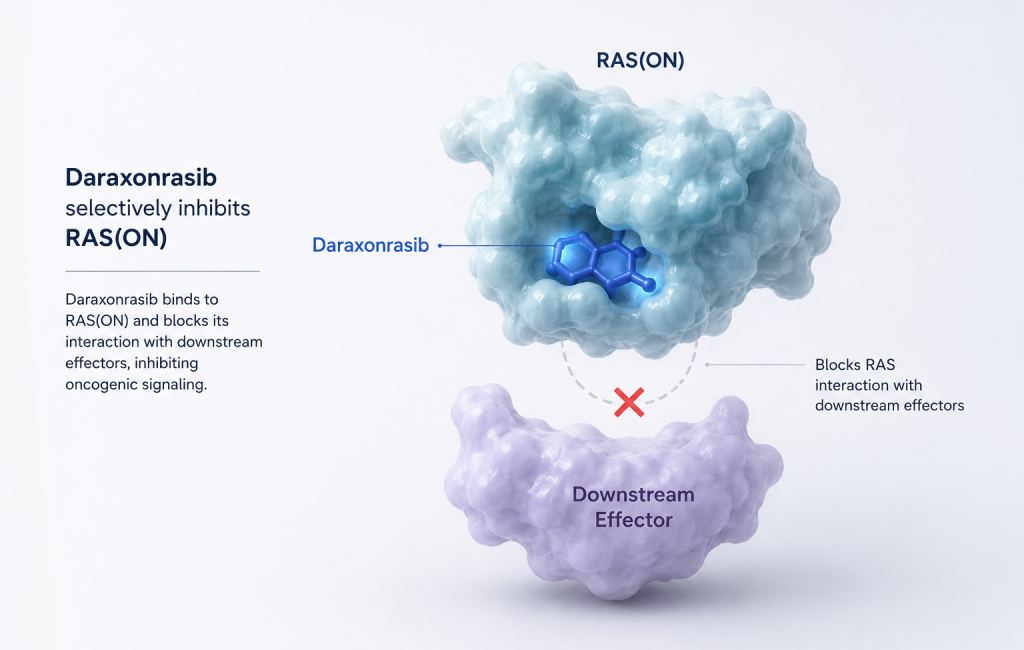
RASONQUE is an oral, noncovalent, tri-complex RAS(ON) inhibitor that targets both wild-type and mutant RAS(ON) proteins by blocking their interaction with downstream effectors. The FDA indication covers metastatic pancreatic adenocarcinoma with or without an identified RAS mutation and does not require a companion diagnostic.
The approval addresses a major therapeutic gap in pancreatic cancer, where approximately 80% of patients are diagnosed after the disease has spread. Metastatic PDAC has a five-year relative survival rate of about 3% in the U.S., underscoring the need for more effective treatments after initial systemic therapy.
Quality of life and safety
RASONQUE also delayed deterioration in patient-reported health status and pain. Median time to deterioration in global health status and quality of life was 5.7 months versus 2.6 months with chemotherapy (HR, 0.60; 95% CI, 0.46-0.79; p<0.001). Time to clinically relevant pain deterioration was 9.2 months versus 3.8 months (HR, 0.51; 95% CI, 0.37-0.71; p<0.001).
The safety profile was considered manageable, although treatment requires monitoring for several clinically important toxicities. Common adverse reactions included rash, diarrhea, stomatitis, nausea, vomiting, abdominal pain, edema, decreased appetite and hemorrhage. Serious adverse reactions occurred in 30% of treated patients, while 2.9% discontinued treatment permanently because of adverse reactions.
Key warnings include dermatologic and soft-tissue toxicity, stomatitis, diarrhea, gastrointestinal perforation, interstitial lung disease or pneumonitis, and embryo-fetal toxicity. Dermatologic toxicity occurred in 86% of patients, including 10% with Grade 3 events; diarrhea occurred in 63%, including 6% with Grade 3 events. Gastrointestinal perforation occurred in 0.9% of patients, including one fatal event.
U.S. launch and global development
RASONQUE is now available in the U.S. at a dose of 300 mg once daily. Revolution Medicines has launched its (ON)Path program to provide insurance navigation, financial assistance and treatment education for prescribed patients.
The company is continuing a global Phase 3 registrational program in PDAC and metastatic RAS-mutant non-small cell lung cancer. Outside the U.S., daraxonrasib remains investigational, although the European Medicines Agency has begun a phased review and granted the program orphan medicinal product designation for pancreatic cancer.
Reference
FDA Approves First in Class Targeted Therapy for Metastatic Pancreatic Cancer | FDA

About the Writer
Mayuri Vaja (Linkedin) is a Pharm.D professional with a strong interest in clinical research, pharmacovigilance, and medical writing, supported by certifications in pharmacovigilance and academic projects exploring AI in healthcare and drug safety.
With a growing focus on evidence-based healthcare and scientific communication, she is developing expertise in clinical research and translating healthcare evidence into clear, meaningful content.
As a Pharmacally healthcare writer, Mayuri is committed to creating accurate, research-driven, and clinically relevant healthcare content while continuously strengthening her professional skills