Zealand Pharma will receive $100 million from Royalty Pharma for its economic interests in rusfertide, including a royalty on potential global sales.
Written By: Samiksha Jadhav, BPharm
Reviewed By: Pharmacally Editorial Team
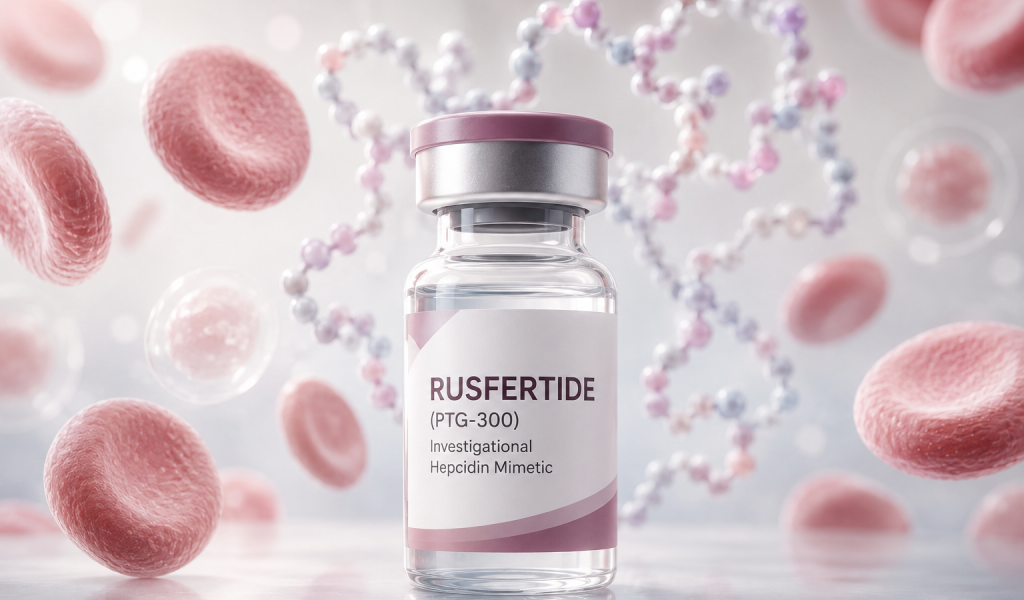
Zealand Pharma has entered into a $100 million royalty purchase and sale agreement with Royalty Pharma covering its economic interests in rusfertide (PTG-300), an investigational hepcidin mimetic being developed for adults with polycythemia vera (PV).
The transaction closed on August 12, 2026. Zealand will receive $50 million at closing and another $50 million on the first anniversary of the transaction. The agreement transfers rights to a 1% royalty on potential future global net sales of rusfertide, together with regulatory and commercial milestones.
Zealand will retain a 0.25% royalty on annual global net sales above $1.5 billion, while Royalty Pharma will hold a 0.75% royalty on sales above that threshold.
Rusfertide Targets Iron Regulation in Polycythemia Vera
Rusfertide is a once-weekly subcutaneous therapy that mimics hepcidin, the hormone that regulates iron homeostasis and red blood cell production. In PV, excessive red blood cell production can increase blood viscosity and raise the risk of thrombotic complications.
By regulating iron availability for erythropoiesis, rusfertide has demonstrated the ability to reduce phlebotomy requirements and improve hematocrit control, addressing a major treatment challenge for patients who remain inadequately controlled on standard therapy.
Phase 3 VERIFY Supports Regulatory Application
The pivotal Phase 3 VERIFY study (NCT05210790) enrolled 293 patients with PV who remained phlebotomy-dependent despite standard-of-care treatment, including hydroxyurea, interferon and/or ruxolitinib. The randomized, placebo-controlled study evaluated once-weekly subcutaneous rusfertide over a planned 156-week period.
At the primary 32-week analysis, 76.9% of patients receiving rusfertide plus standard therapy achieved a clinical response, defined as the absence of phlebotomy eligibility, compared with 32.9% receiving placebo plus standard therapy (p<0.0001). Mean phlebotomy requirements were also lower with rusfertide, at 0.5 versus 1.8 procedures per patient through Week 32. Hematocrit control and patient-reported fatigue and symptom measures also significantly favored rusfertide.
Longer-term data supported durability. At Week 52, 61.9% of patients continuously treated with rusfertide maintained the absence of phlebotomy eligibility. Four-year data from the REVIVE and THRIVE studies also showed a more than 13-fold reduction in annualized phlebotomy rates compared with baseline.
Rusfertide was generally well tolerated. The most common adverse events through 52 weeks included injection-site reactions, anemia and fatigue, predominantly Grade 1 or 2.
FDA Review Sets Up Next Milestone
Takeda and Protagonist submitted the U.S. New Drug Application in January 2026, and the FDA accepted it for priority review in March. The agency has set a PDUFA target action date in the third quarter of 2026.
For Zealand, the transaction converts potential long-term royalty income into near-term capital. CFO Henriette Wennicke said the proceeds will support future growth opportunities under the company’s Metabolic Frontier 2030 strategy.
Takeda holds responsibility for global commercialization if rusfertide receives regulatory approval, while Royalty Pharma gains exposure to the asset’s potential commercial economics through its royalty agreement with Zealand.
Reference

About the Writer
Samiksha Vikram Jadhav (LinkedIn) is a B. Pharm graduate with a strong academic foundation in pharmaceutical sciences, pharmacology, and drug development. She specializes in pharma market research, with a focused interest in mergers and acquisitions, strategic partnerships, and global pharma and biotech deals. Her work centers on analyzing industry transactions, market positioning, and business strategies, translating complex developments into clear, accurate, and insightful scientific and commercial reporting.