
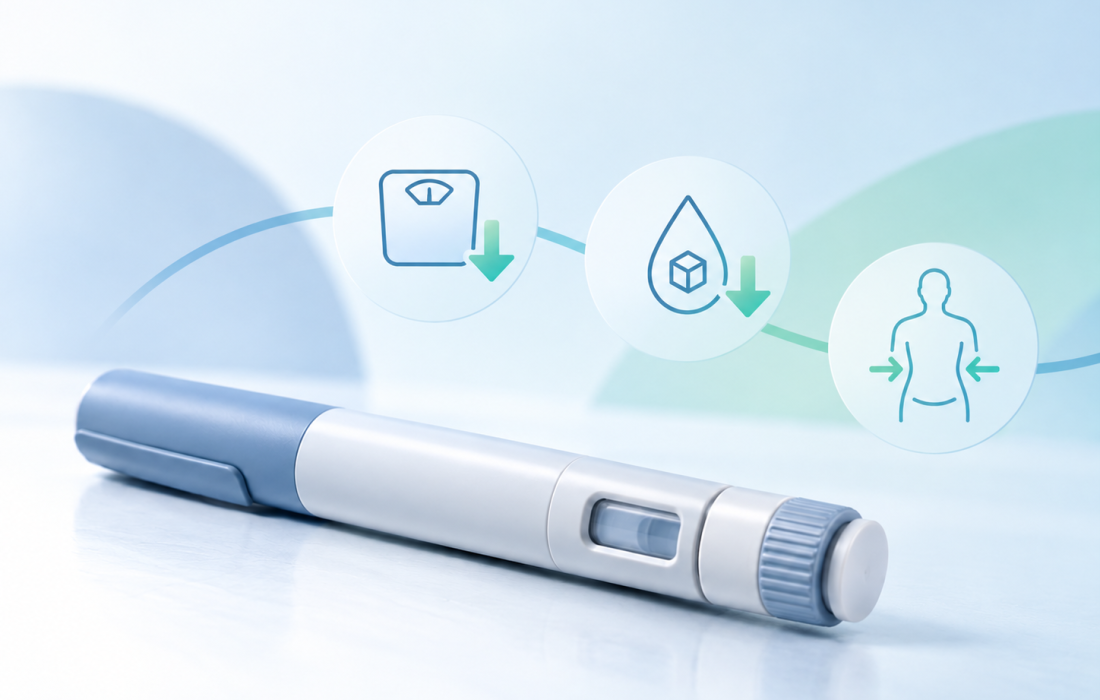
Boehringer Ingelheim reports up to 13.1% weight loss and improved HbA1c with investigational survodutide in the Phase III SYNCHRONIZE-2 trial.
Written By: Anamika Koshti, PharmD
Reviewed By: Pharmacally Editorial Team
Boehringer Ingelheim has reported positive Phase III results for investigational survodutide (BI 456906), a glucagon/GLP-1 receptor dual agonist, in adults with overweight or obesity and type 2 diabetes (T2D). The 76-week SYNCHRONIZE-2 trial (NCT06066528) met both co-primary endpoints, demonstrating reductions in body weight and a greater proportion of participants achieving at least 5% weight loss compared with placebo.
The full results were presented on October 1, 2026, at the 62nd Annual Meeting of the European Association for the Study of Diabetes (EASD) and published simultaneously in The New England Journal of Medicine.
Survodutide is licensed to Boehringer Ingelheim by Zealand Pharma, with Boehringer responsible for its global development and commercialization. The investigational drug is not approved, and its efficacy and safety have not been established for clinical use.
SYNCHRONIZE-2 Evaluated Survodutide in Adults with Obesity and T2D
SYNCHRONIZE-2 was a double-blind, placebo-controlled Phase III study involving 755 adults with overweight or obesity and T2D. Participants received once-weekly subcutaneous survodutide at doses of 3.6 mg or 6.0 mg, or placebo, for 76 weeks. The trial enrolled adults with a body mass index (BMI) of at least 27 kg/m² and HbA1c levels of at least 6.5% and below 10%.
The co-primary endpoints were the percentage change in body weight and the proportion of participants achieving at least 5% weight loss from baseline at week 76. Secondary endpoints included higher weight-loss thresholds of 10%, 15% and 20%, as well as changes in blood pressure, fasting plasma glucose and eating behavior.
The results were assessed using both an efficacy estimand and a treatment-regimen estimand. The efficacy estimand evaluated outcomes assuming participants remained on treatment, while the treatment-regimen estimand assessed treatment effects regardless of treatment discontinuation or the use of additional therapies.
Survodutide Produced Up to 13.1% Weight Loss
Under the efficacy estimand, mean body weight decreased by up to 13.1% with survodutide compared with 3.1% with placebo. Up to 79.3% of participants receiving survodutide achieved at least 5% weight loss, compared with 32.7% of those receiving placebo. The reported comparisons had nominal p-values of less than 0.0001.
The 13.1% reduction was reported with the higher 6.0 mg dose. The company also reported that both co-primary endpoints were met under the treatment-regimen estimand, although the announcement did not provide corresponding numerical results or a dose-level breakdown for that analysis.
For comparison, the earlier Phase III SYNCHRONIZE-1 trial (NCT06066515), conducted in adults without T2D, reported up to 16.6% weight loss under the same efficacy framework.
Glycemic Control Also Improved
Survodutide was associated with improvements in glycemic measures alongside weight loss. From a baseline mean HbA1c of 7.4%, HbA1c decreased by up to 1.21 percentage points with survodutide compared with 0.03 percentage points with placebo.
Waist circumference decreased by up to 11.1 cm with survodutide versus 3.5 cm with placebo. Up to 29.5% of participants receiving survodutide achieved normoglycemia, defined as HbA1c below 5.7%, compared with 4.0% of participants receiving placebo.
Fasting glucose, insulin resistance measured by HOMA-IR and insulin secretion measured by HOMA-β also improved with survodutide, although numerical results for these measures were not provided in the company announcement.
According to coordinating investigator Dr. Sean Wharton, the combination of weight loss with improvements in glycemic and insulin-related measures indicates broader metabolic effects associated with treatment of obesity.
Gastrointestinal Adverse Events Were the Most Common
Gastrointestinal adverse events were the most frequently reported adverse events with survodutide and were generally mild to moderate. Reported events included nausea, vomiting, diarrhea and constipation.
Treatment discontinuation because of adverse events occurred in 18% of participants receiving survodutide compared with 1.2% receiving placebo. Boehringer Ingelheim reported that most discontinuations occurred during the dose-escalation period. The company also noted that current and planned studies use greater flexibility in dose titration.
These tolerability findings remain an important part of the overall assessment of survodutide as its clinical development continues.
MRI Substudy Provides Additional Body-Composition Data
Additional body-composition findings came from an MRI-based substudy of the SYNCHRONIZE-1 trial involving 75 adults without T2D. The analysis showed reductions in visceral and liver fat, with muscle accounting for no more than 10% of total tissue lost.
The company also reported that reductions in visceral and liver fat appeared largely independent of the degree of overall weight loss. Because this substudy involved a small population without T2D, the findings provide complementary body-composition information rather than direct evidence from the SYNCHRONIZE-2 population.
Further Phase III Studies Are Underway
Survodutide’s clinical development program includes additional Phase III studies addressing cardiovascular outcomes and glycemic control. The SYNCHRONIZE-CVOT trial (NCT06077864) is evaluating cardiovascular outcomes, while SYNCHRONIZE-T2D (NCT07754461) is assessing glycemic control in adults with T2D managed with diet and exercise alone or with diabetes medications, including insulin.
SYNCHRONIZE-2 provides Phase III evidence that once-weekly survodutide can reduce body weight and HbA1c over 76 weeks in adults with overweight or obesity and T2D. Further data from the broader Phase III program, including cardiovascular outcomes, treatment-regimen analyses and longer-term safety, will add to the understanding of survodutide’s clinical profile.
Reference
Boehringer Ingelheim’s survodutide achieves up to 13.1% weight loss in new Phase III trial, alongside significant improvements in glycemic control in people with obesity and type 2 diabetes, Boehringer Ingelheim, 01 October 2026
A Study to Test Whether Survodutide (BI 456906) Helps People Living with Overweight or Obesity Who Also Have Diabetes to Lose Weight (SYNCHRONIZE™-2), ClinicalTrials.gov ID NCT06066528
Sean Wharton et al, Survodutide Once Weekly in Adults with Obesity and Type 2 Diabetes, New England Journal of Medicine, Published October 1, 2026, https://www.nejm.org/doi/full/10.1056/NEJMoa2607219

About the Writer
Anamika Koshti (LinkedIn) is a PharmD professional and healthcare writer with interests in clinical research, pharmacovigilance, and evidence-based medicine. She has authored peer-reviewed publications on Alzheimer’s disease and PCOS, presented research at national conferences, and gained hands-on experience in medical content development and clinical data interpretation. She is committed to translating complex medical research into accurate, accessible content for healthcare professionals and patients.