
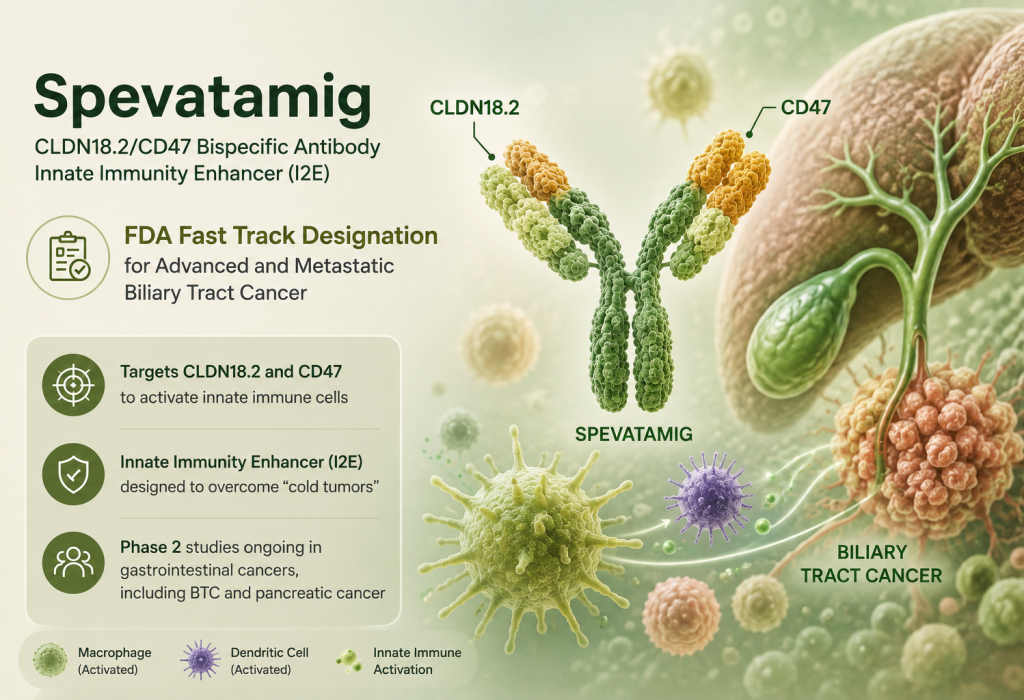
Phanes Therapeutics receives FDA Fast Track designation for spevatamig, a CLDN18.2/CD47 bispecific antibody, in advanced and metastatic biliary tract cancer.
Written By: Rishabh Sonawane, BPharm
Reviewed By: Pharmacally Editorial Team
Phanes Therapeutics has secured U.S. Food and Drug Administration (FDA) Fast Track designation for spevatamig (PT217) in patients with advanced and metastatic biliary tract carcinoma (BTC). The regulatory designation recognizes the urgent need for new treatment options in BTC, where advanced disease remains difficult to treat and therapeutic options are severely limited.
Fast Track designation facilitates more frequent interactions with the FDA and supports expedited development and review, though it does not establish efficacy or safety.
Dual Targeting of CLDN18.2 and CD47
Spevatamig is currently being evaluated in Phase 2 clinical studies across multiple gastrointestinal cancers. The company has also expanded its clinical collaboration with Merck to evaluate spevatamig in combination with pembrolizumab as first-line treatment for BTC.
Fast Track designation can facilitate more frequent interactions with the FDA and support expedited development and review of therapies addressing serious conditions with unmet medical needs. It does not establish efficacy or safety.
Dual Targeting of CLDN18.2 and CD47
Spevatamig is a native IgG-like bispecific antibody that targets claudin 18.2 (CLDN18.2) and CD47. The molecule belongs to an emerging immuno-oncology class known as innate immunity enhancers (I2Es).
The therapeutic concept focuses on activating innate immune cells, including macrophages and dendritic cells, to improve recognition and elimination of tumor cells. This mechanism could complement immune checkpoint inhibition, which primarily enhances adaptive antitumor immune responses.
The approach is particularly relevant to so-called immunologically “cold” tumors, which often show limited responses to checkpoint inhibitors alone.
Phase 2 Development Continues Across Gastrointestinal Cancers
The company is evaluating spevatamig in several gastrointestinal cancer indications, including pancreatic ductal adenocarcinoma (PDAC) and BTC.
In PDAC, Phanes has completed enrollment in a Phase 2 study (NCT05482893) evaluating spevatamig in combination with chemotherapy as first-line treatment for metastatic disease. The company did not provide efficacy or safety results from the study in its August 2026 announcement.
Spevatamig previously received FDA orphan drug designation for pancreatic cancer in 2022 and Fast Track designation for metastatic CLDN18.2-positive pancreatic adenocarcinoma in 2024.
Phanes entered a clinical collaboration with Merck in 2023 to study spevatamig with pembrolizumab. The collaboration has since expanded to include frontline BTC, providing a clinical strategy for combining innate immune activation with PD-1 checkpoint blockade.
Development Path
Ming Wang, PhD, MBA, CEO of Phanes, said the company is advancing spevatamig in BTC while progressing its pancreatic cancer program following completion of Phase 2 enrollment.
The next major development milestones will come from ongoing Phase 2 studies evaluating the antibody’s safety, tolerability and antitumor activity. Results from these trials will determine whether spevatamig can support later-stage development in BTC and other gastrointestinal cancers.
The FDA designation adds regulatory momentum to a program pursuing a distinct immuno-oncology strategy, but clinical data will ultimately determine the therapeutic potential of CLDN18.2/CD47 targeting in these tumor types.
Reference

About the Writer
Rishabha Sonawane, B.Pharm (LinkedIn) is healthcare writer with a strong interest in medical writing, regulatory affairs, clinical research, and AI-driven drug discovery. He has completed specialized training from the NIH and ICMR in clinical pharmacology, clinical research, and scientific writing. Passionate about evidence-based healthcare communication, he focuses on translating complex scientific research into clear, accurate, and engaging medical content.