
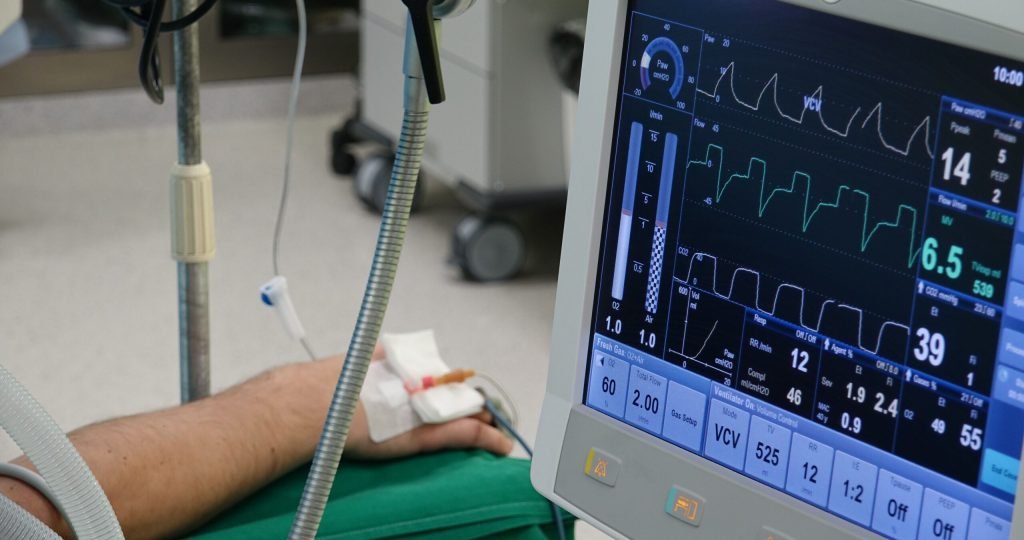
Sedana Medical has submitted a New Drug Application to the FDA for isoflurane delivered via its AnaConDa system, seeking the first U.S. approval of inhaled sedation therapy for mechanically ventilated ICU patients.
Written By: Kalyani Boharapi,
M.Pharm (Reg. Affairs)
Reviewed By: Pharmacally Editorial Team
Sedana Medical has submitted a New Drug Application (NDA) to the U.S. Food and Drug Administration (FDA) seeking approval of isoflurane delivered via its proprietary AnaConDa (Anesthetic Conserving Device) system for sedation of mechanically ventilated adult patients in intensive care units (ICUs).
The submission could pave the way for the first inhaled sedation therapy specifically approved for intensive care use in the United States.
The FDA will first determine whether the NDA is sufficiently complete to permit full scientific review, with a filing decision expected within approximately two months. If accepted, the agency will assign a Prescription Drug User Fee Act (PDUFA) target date for regulatory action.
Drug-Device Combination
The submission covers a drug-device combination product integrating the volatile anesthetic isoflurane with Sedana Medical’s AnaConDa delivery technology. The system enables inhaled sedation through standard ventilator circuits while reducing anesthetic gas consumption, supporting practical use in ICU settings.
Unlike conventional intravenous sedatives, inhaled anesthetics are administered through the respiratory system and eliminated primarily through the lungs. This approach may provide predictable sedation levels while allowing rapid adjustment of sedation depth when clinically required.
Clinical Context
Sedation remains central to ICU management for critically ill patients requiring mechanical ventilation. Current U.S. practice relies predominantly on intravenous agents such as propofol, dexmedetomidine, and benzodiazepines. While these therapies remain standard of care, they may be associated with drug accumulation, delayed awakening, hemodynamic effects, and variability in sedation management in some patients.
Inhaled sedation is widely used in operating rooms but remains relatively uncommon in U.S. intensive care units. Regulatory approval could provide clinicians with an additional sedation option and may support broader adoption of inhaled sedation technologies in critical care practice.
Pivotal Trial Results
The NDA is supported by Sedana Medical’s U.S. clinical development program, including the pivotal Phase 3 INSPIRE ICU-1 (NCT05312385) and INSPIRE ICU-2 (NCT05327296) studies. Both trials met their primary efficacy endpoints, demonstrating the effectiveness of isoflurane-based sedation in mechanically ventilated adult ICU patients.
A key secondary endpoint showed statistically significant reductions in opioid consumption compared with standard intravenous sedation. Reduced opioid requirements may hold important clinical value in critical care settings, where minimizing opioid exposure has become an increasingly important treatment objective.
The safety profile was consistent with previous clinical experience and earlier studies of inhaled sedation, with no new safety concerns identified during the program.
Market Impact
If approved, isoflurane delivered via the AnaConDa system would become the first inhaled sedation therapy specifically authorized for ICU use in the United States. Such an approval would establish a new category within the ICU sedation landscape and expand treatment options for intensivists and critical care teams managing mechanically ventilated patients.
The U.S. represents one of the world’s largest critical care markets, making the regulatory submission an important commercial milestone for Sedana Medical as it seeks to expand beyond its established European footprint.
Path Forward
The immediate catalyst will be FDA acceptance of the NDA for review, followed by assignment of a PDUFA action date. Acceptance for review would move the application into full FDA evaluation and establish a timeline for a potential regulatory decision, representing the next major milestone for Sedana Medical’s U.S. launch plans.
Company executives described the submission as the culmination of years of clinical, non-clinical, device, and manufacturing development. They also highlighted ongoing interactions with the FDA throughout the development process and expressed confidence in the completeness of the regulatory package.
What This Means for Patients
Patients who require mechanical ventilation in intensive care units often need continuous sedation to remain comfortable and safely tolerate life-support treatment. If approved, isoflurane delivered via the Sedana Medical ACD Delivery System could offer clinicians a new alternative to traditional intravenous sedatives. In clinical studies, the therapy provided effective sedation and reduced opioid use, an important goal in critical care. As the first inhaled sedation therapy under FDA review specifically for ICU use, it could expand treatment options for critically ill patients and support more individualized sedation management in the intensive care setting.
Reference
sedana-medical-submits-new-drug-application-to-the-u-s-fda-for-inhaled-sedation-in-the-icu.pdf

About the Writer
Kalyani Boharapi (LinkedIn) is a pharmacy professional and healthcare writer currently pursuing an M.Pharm in Regulatory Affairs at Dr. D. Y. Patil College of Pharmacy, with interests in pharmaceutical regulations, drug development, and healthcare innovation. She has academic exposure to dossier preparation, scientific writing, and regulatory documentation. Kalyani has also completed certification courses in Generative AI, AI in Pharma, and Bioinformatics, and actively participates in pharmaceutical conferences to stay updated with emerging trends and advancements in the healthcare and pharmaceutical industry.