
Zydus’ saroglitazar met the primary endpoint in the Phase IIb EVIDENCES-X trial, showing MASH resolution without worsening fibrosis at Week 52
Written By: Kalyani Boharapi,
M.Pharm (Reg. Affairs)
Reviewed By: Pharmacally Editorial Team
Zydus Lifesciences reported positive topline results from its completed global EVIDENCES-X (NCT05011305) Phase II(b) trial of saroglitazar magnesium in patients with metabolic dysfunction-associated steatohepatitis (MASH) and fibrosis. The liver biopsy-driven study met its primary endpoint of MASH resolution without worsening of fibrosis at Week 52, with a reported treatment difference of 26.5%.
Saroglitazar Targets Metabolic Pathways in MASH
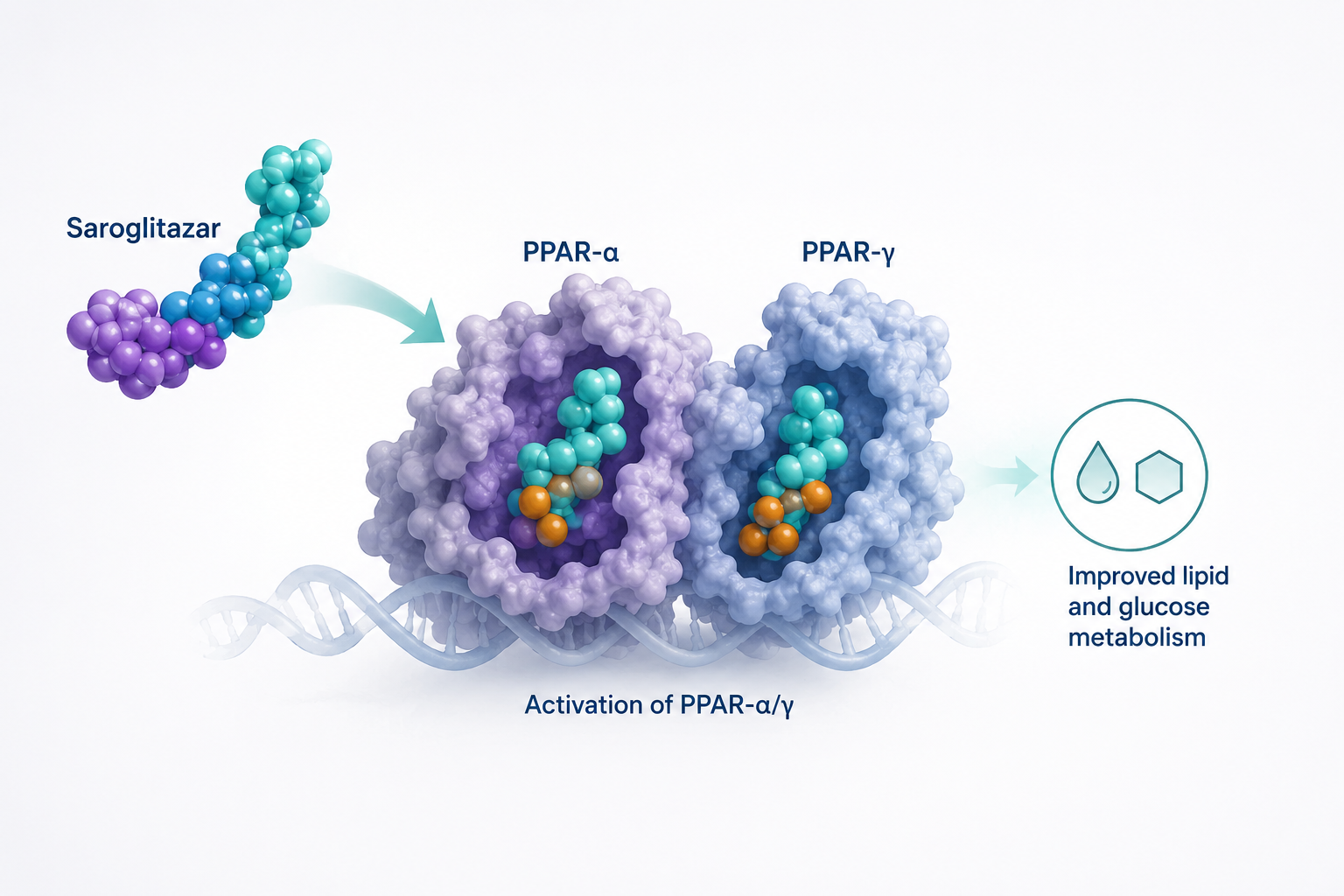
Saroglitazar is a dual PPAR-α/γ agonist, with activity across metabolic pathways relevant to lipid and glucose regulation. Its development in MASH reflects the need for therapies that can address the metabolic drivers and progressive liver injury associated with the disease.
MASH is a progressive form of metabolic dysfunction-associated steatotic liver disease (MASLD) characterized by hepatic steatosis, inflammation, and hepatocellular injury. It can progress to advanced fibrosis, cirrhosis, liver failure, hepatocellular carcinoma, and death. Zydus estimates that MASLD affects approximately 25% of adults worldwide, while MASH affects an estimated 5% to 20% of adults.
EVIDENCES-X Used Liver Biopsy to Assess Efficacy
EVIDENCES-X was a prospective, multicenter, randomized, double-blind, placebo-controlled Phase II(b) study that enrolled 189 patients across the United States, Turkey, and Argentina. Participants were randomized in a 1:1:1 ratio to receive saroglitazar 2 mg, saroglitazar 4 mg, or placebo for 52 weeks.
The primary endpoint assessed resolution of steatohepatitis with no worsening of fibrosis, based on liver biopsy after 52 weeks of treatment. The study also reported encouraging findings across key secondary and exploratory measures, including liver histology, steatosis, inflammation, and hepatocellular ballooning.
Zydus has not disclosed detailed numerical results for these secondary and exploratory endpoints in the topline release. The announcement also does not provide detailed safety or tolerability data, limiting assessment of the overall benefit-risk profile at this stage.
Results Advance Saroglitazar’s MASH Program
The EVIDENCES-X trial was led by Prof. Naga Chalasani, M.D., Interim Chair of the Department of Medicine at Indiana University School of Medicine, and Prof. Arun J. Sanyal, M.D., of the Division of Gastroenterology at Virginia Commonwealth University, who served as co-Principal Investigators.
Zydus Managing Director Dr. Sharvil Patel said the successful completion of the study and achievement of its primary endpoint mark an important milestone in the company’s MASH development program. He added that the findings reinforce the therapeutic potential of saroglitazar magnesium for chronic liver disease.
The results build on previously published Phase II studies of saroglitazar in MASH and MASLD. The company plans to present the EVIDENCES-X findings at upcoming scientific meetings and submit the data for publication in a peer-reviewed medical journal.
Regulatory Status and Path Forward
Saroglitazar magnesium was approved in India by the Drug Controller General of India (DCGI) in 2020 for the treatment of MASH and MASLD. The drug remains investigational in the United States and has not been approved by either the U.S. Food and Drug Administration (FDA) or the European Medicines Agency (EMA) for MASH or MASLD.
Separately, Zydus Therapeutics’ New Drug Application for saroglitazar in primary biliary cholangitis (PBC) received Priority Review from the U.S. FDA in May 2026, with a PDUFA target action date of November 27, 2026. The application covers saroglitazar for adults with PBC who have had an inadequate response to or cannot tolerate ursodeoxycholic acid (UDCA).
The full EVIDENCES-X dataset will provide a more complete assessment of the magnitude and consistency of the biopsy-based treatment effect, secondary histologic outcomes, and safety profile. Upcoming scientific presentations and peer-reviewed publication will help clarify the clinical significance of the findings and saroglitazar’s potential role in the evolving MASH treatment landscape.
Reference

About the Writer
Kalyani Boharapi (LinkedIn) is a pharmacy professional and healthcare writer currently pursuing an M.Pharm in Regulatory Affairs at Dr. D. Y. Patil College of Pharmacy, with interests in pharmaceutical regulations, drug development, and healthcare innovation. She has academic exposure to dossier preparation, scientific writing, and regulatory documentation. Kalyani has also completed certification courses in Generative AI, AI in Pharma, and Bioinformatics, and actively participates in pharmaceutical conferences to stay updated with emerging trends and advancements in the healthcare and pharmaceutical industry