
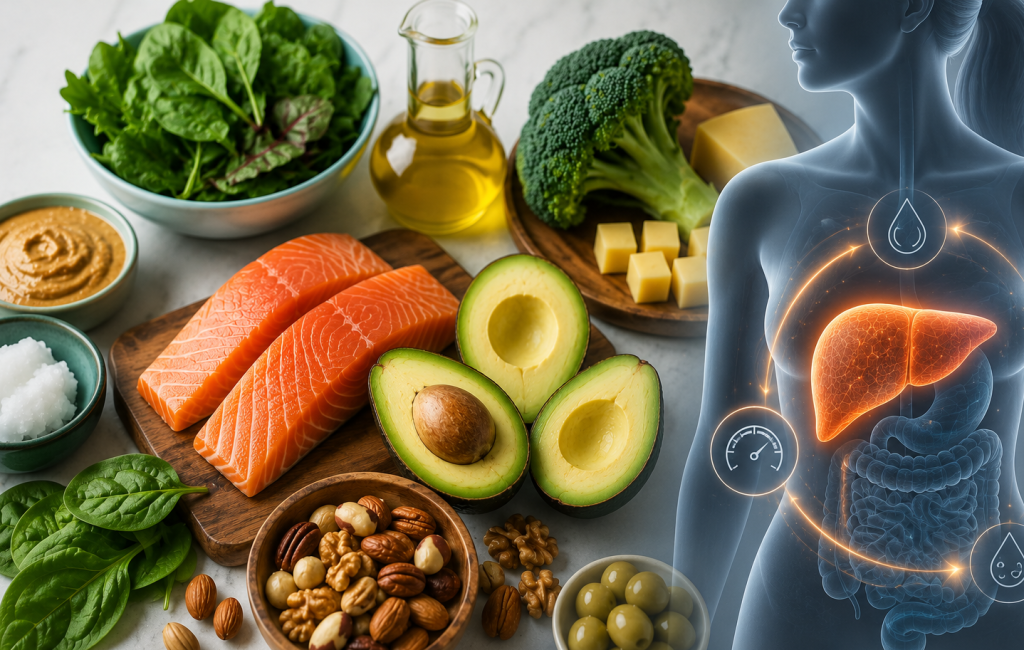
A randomized trial found ketogenic-diet weight loss improved liver insulin sensitivity, liver fat and glucose control more than matched diets.
Written By: Kirti Kumbhar, M. Pharm (QA)
Reviewed By: Pharmacally Editorial Team
A randomized clinical trial reported in Cell Metabolism found that people with metabolically unhealthy obesity who lost about 10% of body weight had greater improvements in hepatic insulin sensitivity, liver fat, glucose control, and several cardiometabolic markers when weight loss was achieved with a very-low-carbohydrate ketogenic diet rather than a Mediterranean or very-low-fat plant-forward diet. Hepatic insulin sensitivity was one of the trial’s two primary outcomes.
Matched Weight Loss, Different Metabolic Effects
The study enrolled 55 adults with obesity, prediabetes, and hepatic steatosis. Participants were randomized to a very-low-carbohydrate ketogenic diet, Mediterranean diet, or very-low-fat plant-forward diet. Forty-two completed the intervention and underwent final metabolic testing. Weight loss was closely matched across groups at 10.4%, 10.2%, and 10.1%, respectively, reached after roughly five months. Dietary adherence exceeded 95%, supported by provision of study meals and weekly dietitian visits.
The diets differed substantially in composition. Per 2,000 kcal, the ketogenic diet provided 4% of calories from carbohydrate, 73% from fat, including 23% from saturated fat, and 23% from protein. The Mediterranean diet provided 50% carbohydrate, 35% fat, and 15% protein, while the plant-forward diet provided 70% carbohydrate, 15% fat, and 15% protein.
Liver Metabolism Showed the Largest Separation
Weight loss improved skeletal muscle insulin sensitivity by about 50% in all three groups, with no significant difference between diets. Hepatic insulin sensitivity, however, improved two- to three-fold more with the ketogenic diet than with either comparator diet (p<0.001).
Liver fat followed a similar pattern. Intrahepatic triglyceride content fell 67% with the ketogenic diet versus 45% with both the Mediterranean and plant-forward diets. Hepatic de novo lipogenesis also declined more substantially with the ketogenic diet, and the reduction correlated strongly with the decline in 24-hour insulin exposure (r=0.725; p<0.001).
The metabolic differences extended beyond the liver. Fasting glucose, insulin, and HOMA-IR declined more with the ketogenic diet. HbA1c also fell more with the ketogenic diet than with the comparator diets. Prediabetes remission occurred in 50% of ketogenic-diet participants, compared with 29% on the Mediterranean diet and 7% on the very-low-fat plant-forward diet (p<0.05).
Distinct Hormonal and Lipid Changes
Twenty-four-hour metabolic profiling showed greater reductions in plasma glucose and insulin with the ketogenic diet. β-hydroxybutyrate increased more than 20-fold, while glucagon increased 52% and the glucagon-to-insulin ratio increased more than three-fold.
Despite the higher saturated fat intake, the ketogenic group showed no significant between-group differences in LDL cholesterol, apolipoprotein B, or 24-hour plasma triglycerides. Fasting triglycerides and several VLDL measures, however, improved more with the ketogenic diet. The lack of a difference in 24-hour triglycerides reflected higher postprandial triglycerides in the ketogenic group.
Safety and Study Limits
No serious adverse events occurred, and no participant withdrew because of an adverse event. The authors noted that the small sample size could have limited detection of some between-group differences. The trial also cannot establish whether less severe carbohydrate restriction without ketosis would produce similar effects or whether the hepatic benefits persist during weight-loss maintenance.
Overall, the findings suggest that dietary macronutrient composition can modify the metabolic effects of matched weight loss, with the largest differences seen in hepatic insulin sensitivity and liver fat. The study does not establish whether these metabolic advantages translate into better long-term clinical outcomes or whether they can be reproduced outside the tightly controlled research setting, where participants received prepared meals and maintained high dietary adherence.
Reference

About the Writer
Kirti Kumbhar (LinkedIn) is an M.Pharm graduate with experience in Quality Assurance at Lupin Limited and a strong interest in clinical research, regulatory affairs, and Trial Master File (TMF) management. She has developed knowledge of regulatory documentation, quality systems, compliance, and healthcare research through her professional experience. Passionate about clinical development and continuous learning, Kirti is committed to supporting high-quality healthcare documentation, regulatory excellence, and research-driven healthcare advancements.