
FDA aligns with Cadrenal on the Phase 3 CAD-1005 trial endpoint and placebo-controlled design for acute heparin-induced thrombocytopenia.
Written By: Shreya Desai, PharmD
Reviewed By: Pharmacally Editorial Team
Cadrenal Therapeutics has reached agreement with the U.S. Food and Drug Administration on critical elements of the Phase 3 development plan for CAD-1005, an investigational 12-lipoxygenase (12-LOX) inhibitor for acute HIT.
The agreement followed a Type D meeting held July 28, 2026. The FDA endorsed an optimized definition of worsening HIT for the trial’s primary endpoint, with thrombotic progression assessed through Day 14 of treatment or hospital discharge.
The revised composite endpoint will measure the proportion of patients with a positive serotonin release assay (SRA+), a functional laboratory test that confirms platelet-activating antibodies associated with HIT, who experience adjudicated new or worsening composite thromboembolic events (CTEs) through Day 14 or hospital discharge.
Optimized Endpoint Reduces Measurement Variability
The revised definition of worsening HIT will include extension of an existing thrombus into a new vascular segment or vascular bed. This approach avoids reliance on manual thrombus-size measurements, which could introduce variability between clinical sites.
The FDA also agreed with a placebo-controlled Phase 3 design, with standard anticoagulation administered in both treatment groups. The control arm will receive an intravenous saline placebo, allowing investigators to evaluate CAD-1005 as an add-on to standard anticoagulant therapy while maintaining study blinding.
CAD-1005 Targets the 12-LOX Pathway in HIT
HIT is a potentially life-threatening immune-mediated complication of heparin exposure. The condition activates platelets and triggers a prothrombotic cascade that can lead to arterial or venous thrombosis.
Approximately 50,000 confirmed cases of acute HIT occur annually in the U.S., according to Cadrenal.
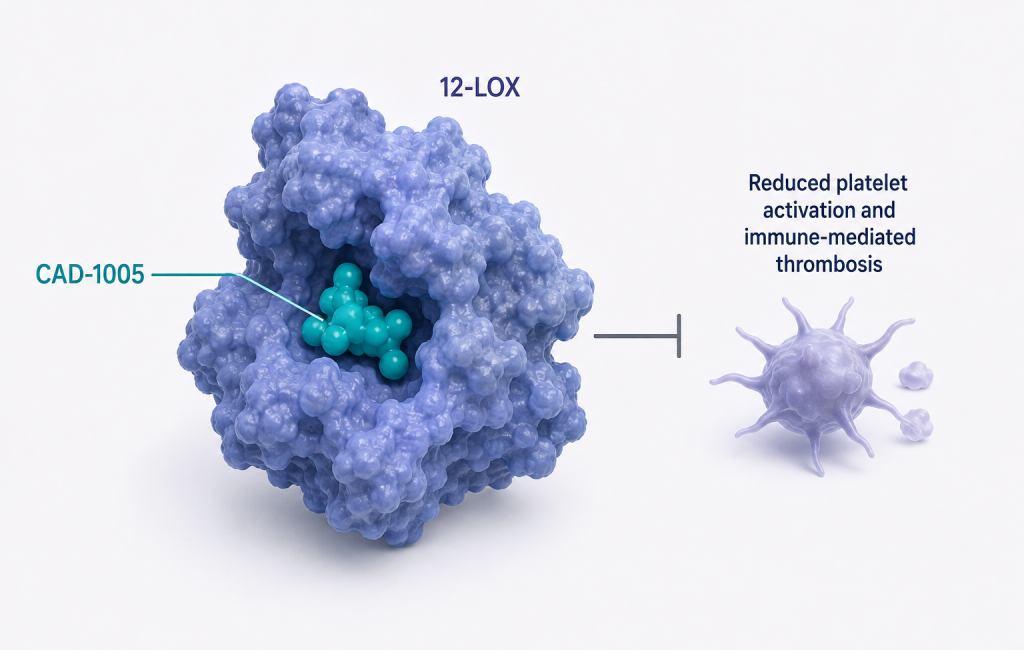
Current treatment relies on alternative anticoagulants to reduce thrombotic risk. CAD-1005 takes a different therapeutic approach by inhibiting 12-LOX, a pathway involved in platelet activation and immune-mediated thrombosis.
CAD-1005 is being developed as an add-on to standard anticoagulation, with the goal of addressing thrombotic activity that can persist despite conventional anticoagulant treatment.
Phase 3 Design Incorporates Placebo Control and ISTH Bleeding Assessment
The updated protocol and Statistical Analysis Plan incorporate the FDA’s recommendations, establishing the primary efficacy endpoint and framework for adjudicating thromboembolic events in the registrational study.
Bleeding will be evaluated as a major safety endpoint using standard International Society on Thrombosis and Haemostasis (ISTH) criteria. Safety analyses will include patients who receive at least one dose of study treatment.
Quang X. Pham, CEO of Cadrenal Therapeutics, said the FDA feedback provides greater clarity on the primary endpoint and blinding procedures for the study’s control arm. The company has incorporated the Agency’s recommendations into the Phase 3 protocol and Statistical Analysis Plan.
The regulatory agreement marks an important development milestone for CAD-1005 because the primary endpoint will determine whether the therapy can demonstrate a clinically meaningful reduction in new or worsening thromboembolic events in patients with HIT receiving standard anticoagulation.
Cadrenal plans to advance the finalized Phase 3 protocol toward study initiation. The company estimates a potential $2 billion peak annual revenue opportunity for CAD-1005, although any commercial opportunity remains contingent on successful clinical development and regulatory approval.
Reference

About the Writer
Shreya Desai is a Doctor of Pharmacy professional with a strong academic record, having secured Rank 1 for three consecutive years, and a keen interest in clinical writing, clinical research, regulatory affairs, and pharmacovigilance.
With experience in medical communication and scientific writing, she brings strong research aptitude, scientific acumen, and effective communication skills to healthcare content development.
As a Pharmacally healthcare writer, Shreya focuses on creating clear, accurate, evidence-based medical content while translating complex scientific information into meaningful healthcare communication.