
GSK’s mRNA flu vaccine showed stronger immune responses than standard- and high-dose vaccines in Phase II, with Phase III planned for September 2026.
Written By: Dishali Desai, PharmD
Reviewed By: Pharmacally Editorial Team
GSK’s investigational mRNA seasonal influenza vaccine generated higher immune responses than licensed standard-dose influenza vaccines in adults aged 18–64 years and then high-dose vaccines in adults aged 65 years and older in the Phase II Flu-028 trial (NCT07204964). The company plans to begin a Phase III efficacy trial in September 2026, advancing an mRNA approach that targets both haemagglutinin (HA) and neuraminidase (NA).
Phase II Data Support Next-Generation Flu Vaccine
Presented at the OPTIONS XIII Conference for the Control of Influenza, the Phase II findings showed that GSK’s mRNA candidates generated robust immune responses against all influenza strains tested. The vaccines were generally well tolerated, with acceptable reactogenicity and safety profiles.
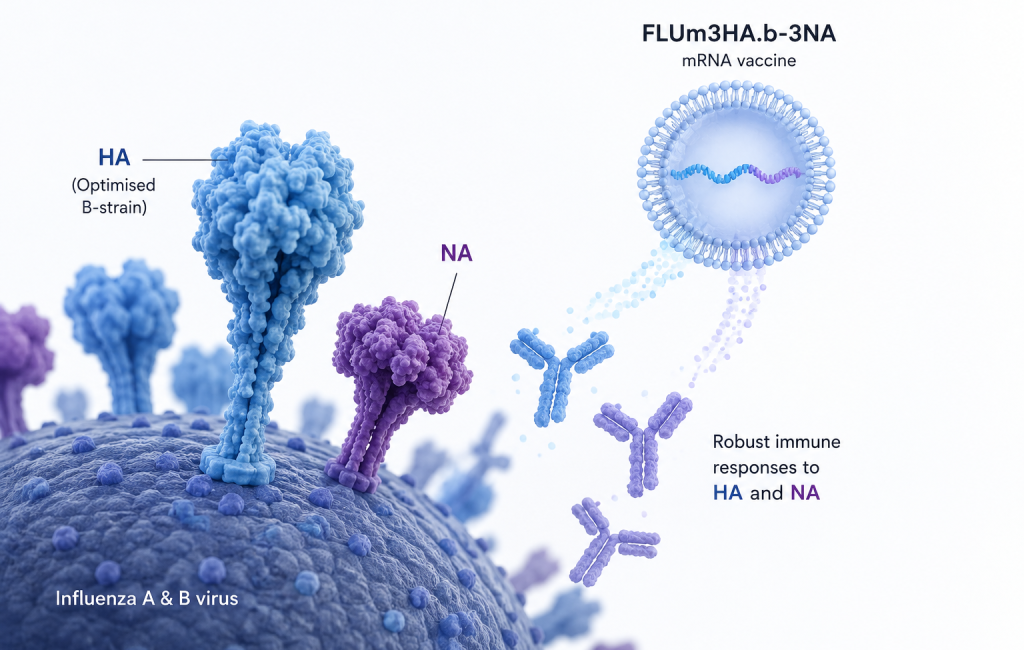
The lead candidate, FLUm3HA.b-3NA, combines an optimised B-strain HA component with NA antigens. Based on the Phase II findings, GSK will further evaluate this candidate in the upcoming Phase III efficacy trial.
Seasonal influenza remains a major global health burden, causing about one billion cases and up to 650,000 respiratory deaths each year. Although vaccination remains the primary strategy for prevention, substantial disease burden persists because vaccine protection can vary by influenza strain, age and vaccine formulation.
Dual-Target Approach: Targeting HA and NA
Most licensed seasonal influenza vaccines primarily target HA, the viral surface protein that enables influenza viruses to attach to host cells. GSK’s mRNA vaccine also targets NA, an enzyme that helps newly formed viral particles release and spread from infected cells.
Including NA broadens the antigenic targets of the vaccine beyond HA and could potentially improve protection, reduce illness severity and limit viral transmission. The strategy also addresses the ongoing challenge of generating stronger immune responses against influenza B strains.
FLUm3HA.b-3NA specifically incorporates an optimised B-strain HA component alongside NA antigens. This formulation generated robust immune responses against HA and NA from influenza A and B strains across younger and older adults, supporting its further development in Phase III.
Flu-028 Phase II Trial Findings
Flu-028 was a randomised, observer-blind Phase II study involving 971 adults aged 18 years and older. Participants aged 18–64 years and those aged 65 years and older received different dose levels of FLUm3HA.b-3NA, FLUm3HA-3NA, or licensed age-appropriate comparator vaccines.
The trial assessed immunogenicity, reactogenicity and safety through Day 181 post-vaccination.
- Immunogenicity:b-3NA generated robust immune responses against HA and NA from influenza A and B strains across the evaluated age groups. In comparative analyses, it demonstrated higher immune responses than standard-dose comparator vaccines in adults aged 18–64 years and than high-dose comparator vaccines in adults aged 65 years and older.
- Safety and tolerability: The safety and reactogenicity profiles were acceptable across the evaluated vaccine candidates, supporting further evaluation of the optimised B-strain HA formulation in Phase III.
Regulatory and Development Path
In July 2026, the US Food and Drug Administration (FDA) granted GSK’s mRNA seasonal influenza vaccine candidate Fast Track designation for the targeted age indication, reflecting the need for improved approaches to seasonal influenza prevention.
Sanjay Gurunathan, GSK’s Head of Vaccines and Infectious Diseases R&D, said the Phase II findings support advancing a vaccine that generates immune responses against both HA and NA. He also highlighted the continuing global burden of influenza and the need for new vaccine strategies.
GSK expects to initiate the Phase III efficacy trial in September 2026. The study will provide the next clinical test of whether broader antigen coverage can translate into improved protection against seasonal influenza.
The vaccine candidate remains investigational and has not received regulatory approval anywhere in the world.
Reference

About the Writer
Dishali Desai (LinkedIn) is a PharmD professional with expertise in clinical pharmacy, evidence-based healthcare writing, and published work on Brugada syndrome and ADR reporting.
Her interests include guideline integration, multimodal therapy, pharmacogenomics, and antibiogram utilization, with a focus on clinical evidence and treatment decisions.
As a healthcare writer, she translates complex clinical information into clear, accurate, and evidence-informed medical content.