
FDA approves Novartis’ Pluvicto for PSMA-positive metastatic hormone-sensitive prostate cancer after Phase III PSMAddition reduced progression or death by 33%.
Written By: Mayuresh Salvi, PharmD
Reviewed By: Pharmacally Editorial Team
The US Food and Drug Administration (FDA) has approved Novartis’ Pluvicto® (lutetium Lu 177 vipivotide tetraxetan) in combination with an androgen receptor pathway inhibitor (ARPI) for adults with prostate-specific membrane antigen (PSMA)-positive metastatic hormone-sensitive prostate cancer (mHSPC). Previously approved for metastatic castration-resistant prostate cancer (mCRPC), Pluvicto can now be used across all stages of PSMA-positive metastatic prostate cancer, nearly doubling the eligible patient population and making it the first PSMA-targeted radioligand therapy approved in both hormone-sensitive and castration-resistant metastatic disease.
Disease Background: Need for Earlier Treatment
Metastatic hormone-sensitive prostate cancer remains responsive to androgen deprivation therapy (ADT), but many patients eventually develop castration-resistant disease. Approximately one-third of patients do not achieve undetectable prostate-specific antigen (PSA) levels despite ADT plus ARPI therapy, and about half progress within 20 months. Because PSMA is expressed in more than 80% of prostate cancers, it has become an important target for precision therapy.
Mechanism of Action: PSMA-Targeted Radioligand Therapy
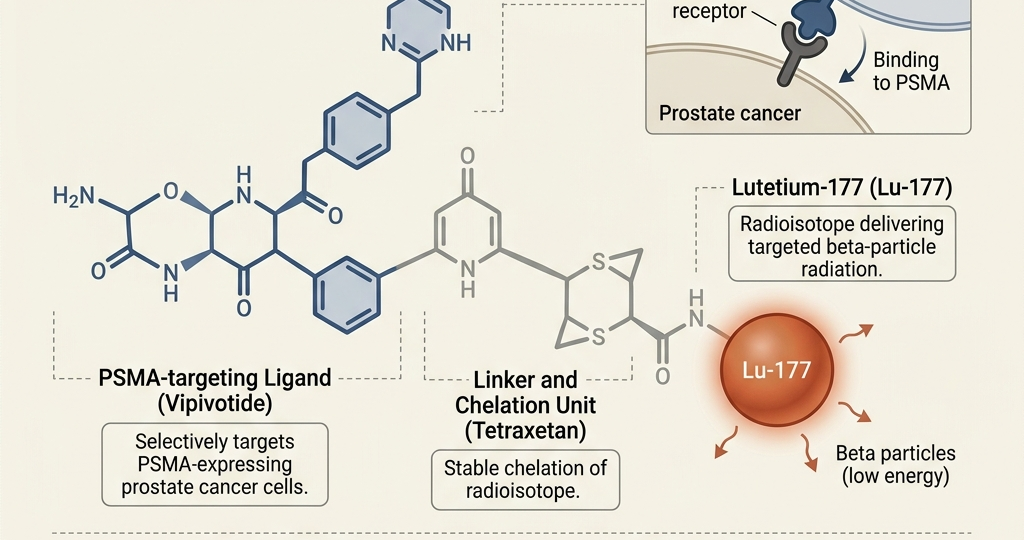
Pluvicto combines a PSMA-binding ligand with the radioisotope lutetium-177. After intravenous administration, it selectively binds to PSMA-expressing prostate cancer cells and delivers targeted beta radiation that damages cancer cells and nearby tumor tissue while limiting radiation exposure to surrounding healthy cells.
Clinical Trial Evidence: Phase III PSMAddition
The FDA approval was based on the global, randomized Phase III PSMAddition trial (NCT04720157), which compared Pluvicto plus standard of care (ADT plus ARPI) with standard therapy alone in patients with PSMA-positive mHSPC.
At the primary analysis, Pluvicto reduced the risk of radiographic progression or death by 28% (Hazard Ratio [HR] 0.72; 95% Confidence Interval [CI], 0.58-0.90). An updated analysis demonstrated a 33% reduction in progression or death (HR 0.67; 95% CI, 0.55-0.82). Overall survival also favored the Pluvicto combination (HR 0.80; 95% CI, 0.63-1.01), although the data remain immature and continue to be followed.
Safety Profile: Consistent with Previous Studies
The safety profile was consistent with the VISION and PSMAfore studies. Grade 3 or higher adverse events occurred in 50.7% of patients receiving Pluvicto plus standard therapy compared with 43.0% receiving standard therapy alone. The most common adverse events included dry mouth, fatigue, nausea, hot flush, and anemia. Health-related quality of life was maintained with similar patient-reported outcomes between treatment groups.
Expert Perspective: Expanding Precision Treatment
Dr. Michael Morris of Memorial Sloan Kettering Cancer Center said the approval expands treatment options by introducing radioligand therapy during the hormone-sensitive stage of metastatic disease. Gina Carithers, President and CEO of the Prostate Cancer Foundation, described the approval as a milestone that brings precision medicine earlier in the metastatic treatment journey.
Researcher Perspective: Earlier Use of Radioligand Therapy
The approval extends PSMA-targeted radioligand therapy beyond castration-resistant disease, supporting earlier treatment intensification for eligible patients. While overall survival data are still maturing, the consistent improvement in radiographic progression-free survival supports the potential benefit of introducing precision radiopharmaceutical therapy earlier in the disease course.
Future Directions: Supporting Broader Access
To support the expanded indication, Novartis has established five US radioligand therapy manufacturing sites that are operational or under construction, with an integrated network capable of delivering Pluvicto to treatment centers within approximately five days. The company is also evaluating Pluvicto in earlier disease settings, including the PSMA-DC trial (NCT05939414) in oligometastatic prostate cancer.
Reference

About the Writer
Mayuresh Sunil Salvi (Linkedin) is a PharmD professional and healthcare writer with a strong interest in pharmacovigilance, drug safety, and emerging medical research. He is passionate about exploring new drug discoveries, clinical research, and advances in evidence-based medicine. His interests also include ward rounds, prescription audits, and treatment analysis to support rational pharmacotherapy and improved patient care.