
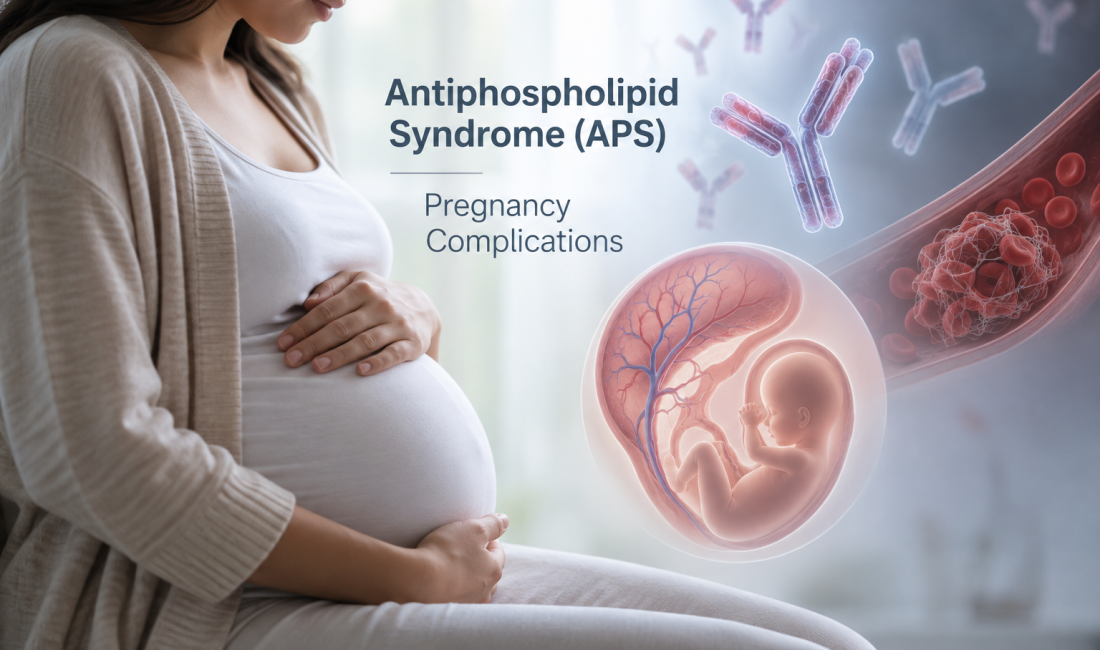
UCB’s CIMZIA received FDA Breakthrough Therapy Designation for preventing placenta-mediated adverse pregnancy outcomes in pregnant women with APS
Written By: Creola Gonsalves, MS Biotech
Reviewed By: Pharmacally Editorial Team
UCB’s CIMZIA (certolizumab pegol) has received FDA Breakthrough Therapy Designation for preventing placenta-mediated adverse pregnancy outcomes in pregnant women with antiphospholipid syndrome (APS) who are positive for lupus anticoagulant (LA) and have a history of obstetric or thrombotic events.
FDA Designation Targets a Major Unmet Need in APS
The designation recognizes preliminary clinical evidence from the investigator-sponsored IMPACT study, which evaluated certolizumab pegol in pregnant women with APS at high risk of adverse pregnancy outcomes. The FDA grants Breakthrough Therapy Designation when preliminary clinical evidence suggests a medicine may provide substantial improvement over available treatments on clinically significant endpoints. The designation can support more intensive FDA guidance and accelerate development and review, but it does not constitute regulatory approval.
APS is a rare autoimmune disorder associated with antiphospholipid antibodies and recurrent arterial or venous thrombosis. During pregnancy, the condition can cause recurrent first-trimester pregnancy loss, pre-eclampsia, placental insufficiency, fetal growth restriction, preterm birth and stillbirth. Current management generally relies on low-dose aspirin and heparin, but no therapy is specifically FDA-approved to prevent adverse pregnancy outcomes in this population.
IMPACT Supports Certolizumab’s Potential in High-Risk Pregnancies
IMPACT, or IMProve Pregnancy in APS with Certolizumab Therapy, evaluated certolizumab pegol in pregnant women with APS considered at high risk for complications. Published findings demonstrated the potential of the TNF inhibitor to prevent adverse pregnancy outcomes in this population. The findings also add to evidence implicating TNF-mediated inflammation in APS-associated pregnancy complications.
The source material does not provide detailed numerical efficacy results, statistical analyses, trial size, endpoint-level outcomes or IMPACT-specific safety findings. Therefore, the Breakthrough Therapy decision should be viewed as an advancement in the development program rather than evidence of established efficacy in APS pregnancy.
Certolizumab Brings an Established TNF-Blocking Mechanism
CIMZIA is a tumor necrosis factor (TNF) blocker already approved in the U.S. for several inflammatory diseases, including rheumatoid arthritis, psoriatic arthritis, ankylosing spondylitis, non-radiographic axial spondyloarthritis, plaque psoriasis, Crohn’s disease and polyarticular juvenile idiopathic arthritis.
Its development in APS pregnancy complications extends the use of TNF inhibition into a rare disease setting where placental inflammation may contribute to poor pregnancy outcomes.
Development Builds on Recent Orphan Drug Designation
The Breakthrough Therapy Designation follows the FDA’s recent Orphan Drug Designation for CIMZIA for preventing placenta-mediated adverse pregnancy outcomes in pregnant patients with APS. Orphan Drug Designation applies to therapies for rare conditions and can provide development and regulatory incentives, but does not establish safety, efficacy or marketing approval.
UCB said the designation reinforces its focus on developing treatments for underserved rare-disease populations and supporting women through their reproductive journey.
CIMZIA is not approved for pregnant women with APS, and its safety and efficacy for this use have not been established.
Safety Remains a Key Consideration
As a TNF blocker, certolizumab carries important safety considerations, including serious and potentially fatal infections such as tuberculosis, bacterial sepsis and invasive fungal infections. U.S. safety information also warns of malignancies reported with TNF blockers.
The Breakthrough Therapy designation now gives UCB an opportunity to work more closely with the FDA as it advances the APS program. Further clinical development will be needed to establish whether certolizumab can provide a clinically meaningful reduction in placenta-mediated pregnancy complications and support a future regulatory submission.
Reference
UCB receives U.S. FDA Breakthrough Therapy Designation for CIMZIA[®] (certolizumab pegol) in pregnant women with antiphospholipid syndrome (APS), UCB, 09 September 2026

About the Writer
Creola Gonsalves (Linkedin) is an M.S. Biotechnology postgraduate with a strong interest in clinical research, evidence interpretation, and healthcare writing, with a focus on translating life-science knowledge into meaningful real-world insights.
She is trained in Good Clinical Practice (GCP), clinical research principles, and critical interpretation of randomized clinical trials, with certifications from NIH and Stanford University.
Her research background in biotechnological applications and microbial research strengthens her ability to understand scientific evidence and develop clear, accurate, and research-driven healthcare content.