
FDA grants RASONQUE Breakthrough Therapy Designation for first-line metastatic pancreatic cancer with gemcitabine and nab-paclitaxel.
Written By: Mayuresh Salvi, PharmD
Reviewed By: Pharmacally Editorial Team
Revolution Medicines has received its third Breakthrough Therapy Designation for RASONQUE (daraxonrasib), this time for treatment-naïve metastatic pancreatic ductal adenocarcinoma (PDAC) in combination with gemcitabine and nab-paclitaxel. The designation advances the RAS(ON) inhibitor into an earlier-line treatment setting while a global Phase 3 trial evaluates its potential against standard chemotherapy.
FDA Expands Development Path for RASONQUE
The FDA based the designation on preliminary clinical evidence from the Phase 1/2 RMC-GI-102 trial, in which treatment-naïve patients with RAS-mutant metastatic PDAC received RASONQUE with gemcitabine and nab-paclitaxel (GnP). The combination showed encouraging preliminary antitumor activity with a manageable safety profile consistent with the known safety profiles of RASONQUE and GnP. These findings informed the ongoing RASolute 303 Phase 3 trial, which is evaluating RASONQUE as monotherapy and in combination with GnP versus GnP alone in previously untreated metastatic PDAC.
The regulatory milestone follows RASONQUE’s recent FDA approval for adults with metastatic PDAC who have received at least one prior systemic therapy or who are not candidates for multiagent systemic therapy. Its use with GnP in treatment-naïve metastatic disease remains investigational, and safety and efficacy in the first-line setting have not yet been established. The designation brings Revolution Medicines’ total number of Breakthrough Therapy Designations across its RAS(ON) inhibitor portfolio to five.
Targeting Active RAS Signaling
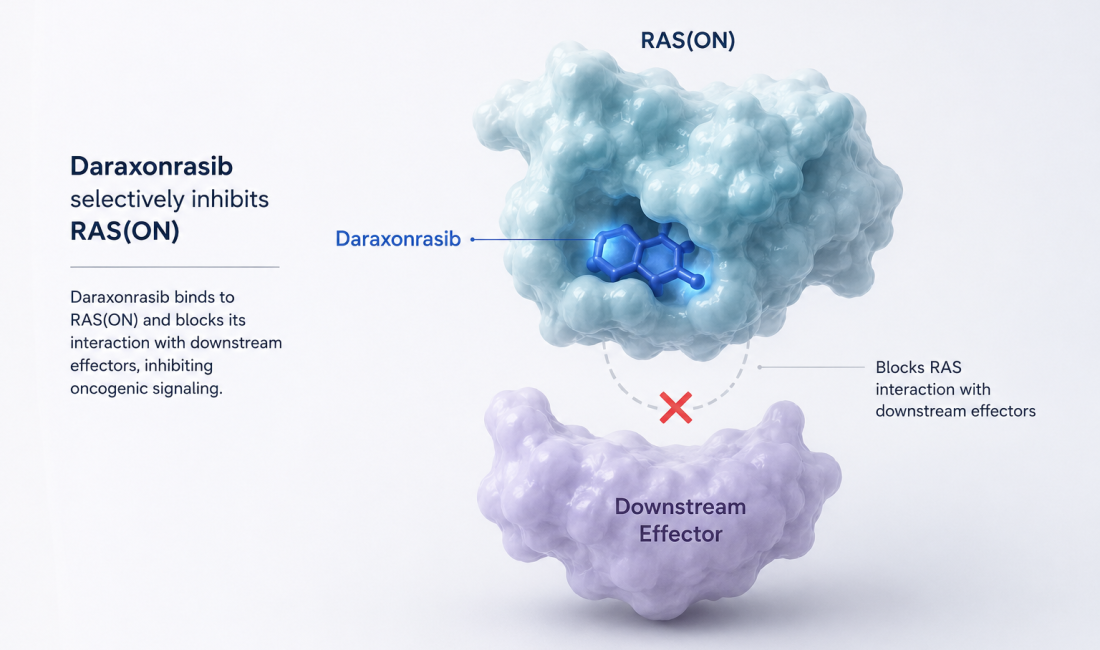
RASONQUE is an oral, RAS(ON) multi-selective noncovalent tri-complex inhibitor that targets active RAS signaling, a key driver of tumor growth across multiple malignancies. This approach differs from therapies that focus on a single inactive RAS state or specific RAS mutation.
The strategy is particularly relevant in PDAC, where RAS alterations are common and metastatic disease carries a poor prognosis. Approximately 80% of pancreatic cancer patients are diagnosed after the disease has spread, while the five-year relative survival rate for metastatic disease in the U.S. remains around 3%.
RASolute 303 Tests RASONQUE in First-Line PDAC
The ongoing global RASolute 303 Phase 3 trial is evaluating RASONQUE in patients with previously untreated metastatic PDAC. The study compares RASONQUE monotherapy and RASONQUE plus GnP against GnP alone, providing separate assessments of RASONQUE activity and its potential benefit when added to chemotherapy.
Unlike the earlier RMC-GI-102 cohort, RASolute 303 is enrolling patients regardless of tumor RAS genotype. This broader population could determine whether RASONQUE’s activity extends beyond genetically selected patients and support a wider role for the drug in first-line metastatic PDAC.
The trial will ultimately determine whether the preliminary activity observed with RASONQUE-based treatment translates into a clinically meaningful benefit in a controlled Phase 3 setting.
Earlier-Line Treatment Could Expand RASONQUE’s Role
Alan Sandler, M.D., chief development officer at Revolution Medicines, said the designation highlights the need for additional treatment options earlier in the course of metastatic PDAC.
He also pointed to the clinical benefit demonstrated in the Phase 3 RASolute 302 study, which supported RASONQUE’s FDA approval in previously treated metastatic PDAC. The company is now testing whether the inhibitor can deliver benefit earlier in treatment, including in combination with a widely used multiagent chemotherapy regimen.
Phase 3 Program Defines Next Milestone
RASolute 303 is the key clinical milestone for RASONQUE in first-line metastatic PDAC. Positive results could support expansion of its use into this earlier treatment setting, while parallel development continues in PDAC and metastatic RAS-mutant non-small cell lung cancer (NSCLC).
Outside the U.S., RASONQUE remains investigational and has not been approved by any regulatory authority.
Reference
Revolution Medicines Announces U.S. FDA Breakthrough Therapy Designation for RASONQUE™ (daraxonrasib) in Combination with Chemotherapy for First Line Metastatic Pancreatic Cancer, Revolution Medicine, 14 September 2026
Study of RAS(ON) Inhibitors in Patients With Gastrointestinal Solid Tumors, ClinicalTrials.gov ID NCT06445062

About the Writer
Mayuresh Sunil Salvi (Linkedin) is a PharmD professional and healthcare writer with a strong interest in pharmacovigilance, drug safety, and emerging medical research. He is passionate about exploring new drug discoveries, clinical research, and advances in evidence-based medicine. His interests also include ward rounds, prescription audits, and treatment analysis to support rational pharmacotherapy and improved patient care.