
GSK’s zidesamtinib delivered a 94% response rate and 90% 12-month PFS in first-line ROS1-positive NSCLC, supporting a planned FDA filing in 2026.
Written By: Kirti Kumbhar, M. Pharm (QA)
Reviewed By: Pharmacally Editorial Team
GSK’s zidesamtinib, given at 100 mg once daily, produced a 94% objective response rate in previously untreated patients with ROS1-positive non-small cell lung cancer, with 90% of patients remaining progression-free at 12 months. The phase I/II ARROS-1 trial also showed complete clearance of detectable brain metastases in 70% of patients with measurable intracranial disease, supporting a planned US regulatory submission for first-line use.
Strong response and durable disease control
The results come from the registrational ARROS-1 trial (NCT05118789), presented at the 2026 World Conference on Lung Cancer in Seoul. Among 94 efficacy-evaluable patients who had not previously received a ROS1 tyrosine kinase inhibitor (TKI), 88 responded to zidesamtinib, producing an ORR of 94% (95% CI, 87–98). Fourteen patients achieved a complete response, corresponding to a 15% complete response rate.
After a median follow-up of 15.2 months, responses remained durable. The proportion of patients maintaining a response was 94% at nine months and 86% at 12 months. Twelve-month progression-free survival was 90%, while median duration of response and median PFS had not been reached.
The intracranial findings were particularly relevant given the high risk of central nervous system involvement in ROS1-positive NSCLC. All 10 patients with measurable brain metastases at baseline responded, and seven achieved complete clearance of detectable brain tumors. At 12 months, 78% maintained an intracranial response. No CNS progression events occurred among patients without brain metastases at baseline.
Targeting ROS1 resistance and CNS disease
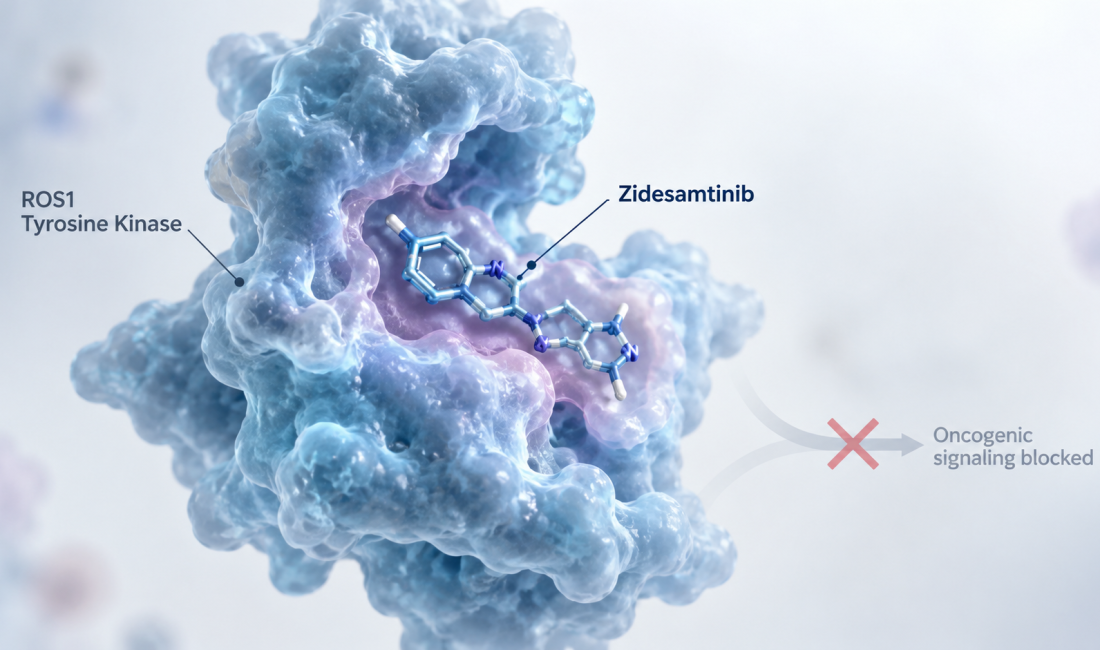
Zidesamtinib is an oral ROS1 TKI with activity against a broad range of ROS1 resistance mutations and disease that has spread to the brain. This profile addresses two persistent challenges in ROS1-positive NSCLC: acquired resistance and CNS progression during targeted treatment.
ROS1 alterations occur in approximately 2% of NSCLC cases and are associated with a high risk of brain metastases. Up to 40% of patients may have CNS involvement at diagnosis, making durable intracranial control an important consideration when selecting first-line therapy.
Tolerability supports continued treatment
The safety findings showed low rates of treatment discontinuation. The most common treatment-related adverse events, occurring in at least 15% of patients, were peripheral edema, weight gain, increased blood creatine phosphokinase, dysgeusia and increased aspartate aminotransferase. Most events were low grade.
Treatment-related adverse events led to dose reductions in 11% of patients and treatment discontinuation in 1%, indicating that most patients remained on treatment despite treatment-related toxicity.
Alexander Drilon, MD, the ARROS-1 primary investigator and Chief of the Early Drug Development Service at Memorial Sloan Kettering Cancer Center, said the findings are encouraging for patients who may require targeted therapy for years and need sustained disease control while limiting treatment disruption.
US first-line filing planned
The first-line findings could expand zidesamtinib’s role beyond its current indication. The FDA approved the drug in July 2026 for adults with locally advanced or metastatic ROS1-positive NSCLC previously treated with a ROS1 TKI.
The ARROS-1 phase II first-line cohort enrolled patients with locally advanced or metastatic ROS1-positive NSCLC who had not previously received a ROS1 TKI. Up to one prior line of chemotherapy and/or immunotherapy was permitted.
The 94 patients in the reported efficacy analysis were selected based on measurable disease assessed by blinded independent central review and treatment initiation by June 15, 2025, allowing at least nine months of follow-up. Across the broader ARROS-1 population, 532 patients with ROS1-positive NSCLC had received zidesamtinib 100 mg once daily across treatment lines, including 183 patients receiving it as their first TKI-targeted treatment.
With data from the ARROS-1 analysis supporting durable systemic and intracranial activity, GSK plans to submit a supplemental New Drug Application to the US FDA in 2026 seeking to expand zidesamtinib into first-line ROS1-positive NSCLC.
Reference
GSK presents positive registrational data to potentially expand Jideytro (zidesamtinib) to first-line ROS1-positive non-small cell lung cancer, GSK, 13 September 2026
A Study of Zidesamtinib (NVL-520) in Patients with Advanced NSCLC and Other Solid Tumors Harboring ROS1 Rearrangement (ARROS-1), ClinicalTrials.gov ID NCT05118789

About the Writer
Kirti Kumbhar (LinkedIn) is an M.Pharm graduate with experience in Quality Assurance at Lupin Limited and a strong interest in clinical research, regulatory affairs, and Trial Master File (TMF) management. She has developed knowledge of regulatory documentation, quality systems, compliance, and healthcare research through her professional experience. Passionate about clinical development and continuous learning, Kirti is committed to supporting high-quality healthcare documentation, regulatory excellence, and research-driven healthcare advancements.