
BioVersys’ BV100 receives FDA Fast Track Designation for HABP and VABP caused by carbapenem-resistant Acinetobacter baumannii.
Written By: Rishabh Sonawane, BPharm
Reviewed By: Pharmacally Editorial Team
BioVersys AG has received U.S. FDA Fast Track Designation for BV100, its intravenous rifabutin formulation being evaluated for hospital-acquired bacterial pneumonia (HABP) and ventilator-associated bacterial pneumonia (VABP) caused by carbapenem-resistant Acinetobacter baumannii-calcoaceticus complex (CRABC). The regulatory designation comes as BV100 advances through a pivotal Phase 3 program targeting a serious infection with limited treatment options and high mortality.
A Novel Approach to Carbapenem-Resistant Acinetobacter
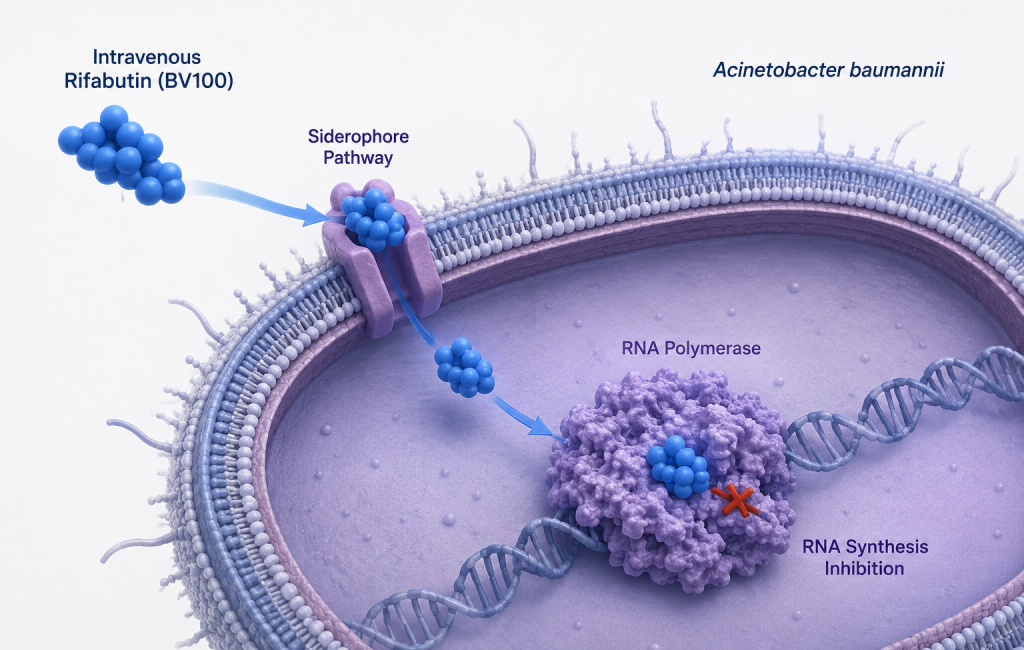
BV100 uses rifabutin, an established antibiotic, in a novel intravenous formulation that enables activity against Acinetobacter baumannii. Its mechanism relies on uptake through the bacterium’s siderophore pathway, allowing rifabutin to enter Gram-negative bacteria and reach RNA polymerase, its intracellular target.
This approach could provide a non-β-lactam option for infections caused by CRABC, an important consideration as resistance limits the effectiveness of conventional antibiotics.
The A. baumannii-calcoaceticus complex is a major healthcare-associated pathogen, particularly affecting critically ill and immunocompromised patients. It can cause severe pneumonia and bloodstream infections and can persist on hospital surfaces. Carbapenem-resistant strains have become especially difficult to treat, with mortality reported as high as 50%.
The World Health Organization classifies carbapenem-resistant A. baumannii as a priority-1 critical pathogen.
BV100 Advances Through Phase 3
BV100 is currently being evaluated in the global pivotal Phase 3 RIV-TARGET registrational study (NCT07326540). The company is also conducting the open-label Phase 2b RIV-CARE differentiation study (NCT07431307) in collaboration with ADVANCE-ID.
The development program follows a Phase 2 study (NCT05685615) in which BV100 was associated with a 50% reduction in overall mortality compared with best available therapy. The company did not provide additional Phase 3 efficacy or safety results with the Fast Track announcement.
The current regulatory designation applies specifically to HABP and VABP caused by CRABC. BV100 is also being developed for bloodstream infections caused by A. baumannii and related ABC infections.
Fast Track Could Accelerate Regulatory Engagement
Fast Track gives BioVersys more frequent interactions with the FDA, including opportunities for earlier discussions around clinical development, trial design and data requirements. The designation also makes BV100 eligible for rolling submission and review of portions of its marketing application as they become available.
The FDA previously granted BV100 Qualified Infectious Disease Product (QIDP) designation in May 2019 for VABP, HABP and bloodstream infections. QIDP status can provide incentives including priority review, eligibility for Fast Track and an additional five years of market exclusivity upon approval of the first qualifying indication.
Next Steps for BV100
Dr. Marc Gitzinger, CEO of BioVersys, said the Fast Track designation reflects the unmet need for new therapies against multidrug-resistant A. baumannii and should support more efficient development of BV100.
The immediate focus remains the Phase 3 RIV-TARGET trial and the Phase 2b RIV-CARE study. Their clinical results will determine whether BV100 can translate its novel bacterial uptake mechanism and earlier mortality findings into a treatment option for critically ill patients with drug-resistant Acinetobacter pneumonia.
Reference
BioVersys granted Fast-Track Designation from US FDA for BV100 | BioVersys

About the Writer
Rishabha Sonawane, B.Pharm (LinkedIn) is healthcare writer with a strong interest in medical writing, regulatory affairs, clinical research, and AI-driven drug discovery. He has completed specialized training from the NIH and ICMR in clinical pharmacology, clinical research, and scientific writing. Passionate about evidence-based healthcare communication, he focuses on translating complex scientific research into clear, accurate, and engaging medical content.