

Learn how hantaviruses spread from rodents to humans, how the virus infects the body, and the key differences between HFRS and HCPS, including symptoms, diagnosis, and prevention strategies.
Hantaviruses are a group of rodent-borne viruses that can cause serious disease in humans. They circulate naturally in rodent populations worldwide and are typically transmitted to people when microscopic particles of rodent urine, saliva, or droppings become airborne and are inhaled. While infections are uncommon, certain hantaviruses can cause life-threatening illness affecting the lungs, heart, and kidneys.
Where hantaviruses are found
Hantaviruses are distributed globally, with different strains linked to specific rodent hosts in particular regions. “Old World” hantaviruses (Europe and Asia) more often cause haemorrhagic fever with renal syndrome (HFRS), which primarily affects kidneys and blood vessels. “New World” hantaviruses (the Americas) can cause hantavirus cardiopulmonary syndrome (HCPS), a rapidly progressive respiratory disease. Rodents such as deer mice, field mice, and rats commonly carry these viruses without becoming ill, enabling long-term persistence in the environment.
How people become infected
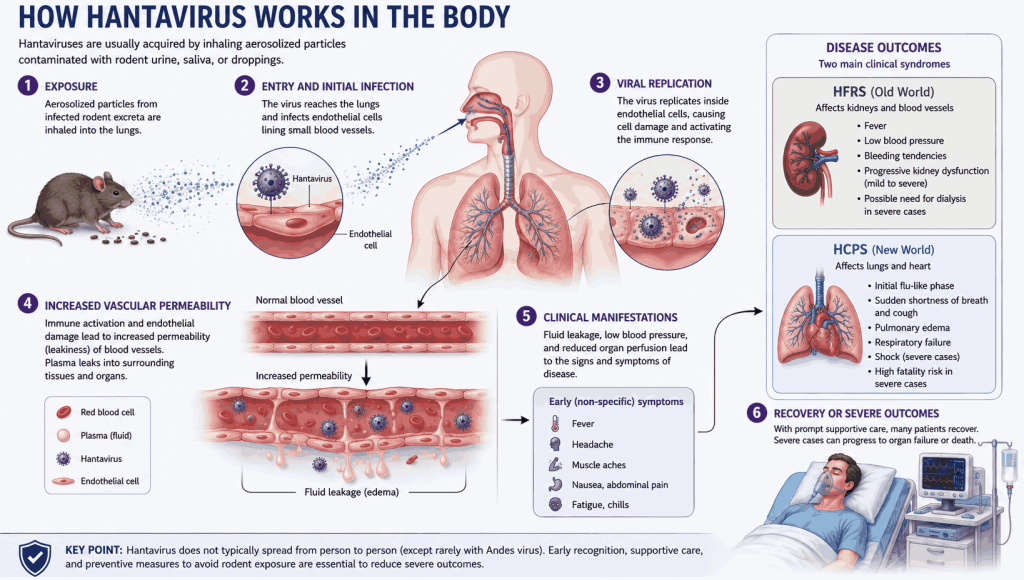
Humans usually acquire hantavirus through inhalation of airborne particles contaminated with infected rodent excreta in enclosed or poorly ventilated spaces barns, sheds, cabins, basements, and storage areas are common sites. Infection can also occur from direct contact with contaminated surfaces, touching the face after handling materials with fresh rodent droppings, or, rarely, from rodent bites. Most hantavirus strains do not spread from person to person; however, limited person-to-person transmission has been documented with Andes virus in parts of South America.
Virus structure and mechanism
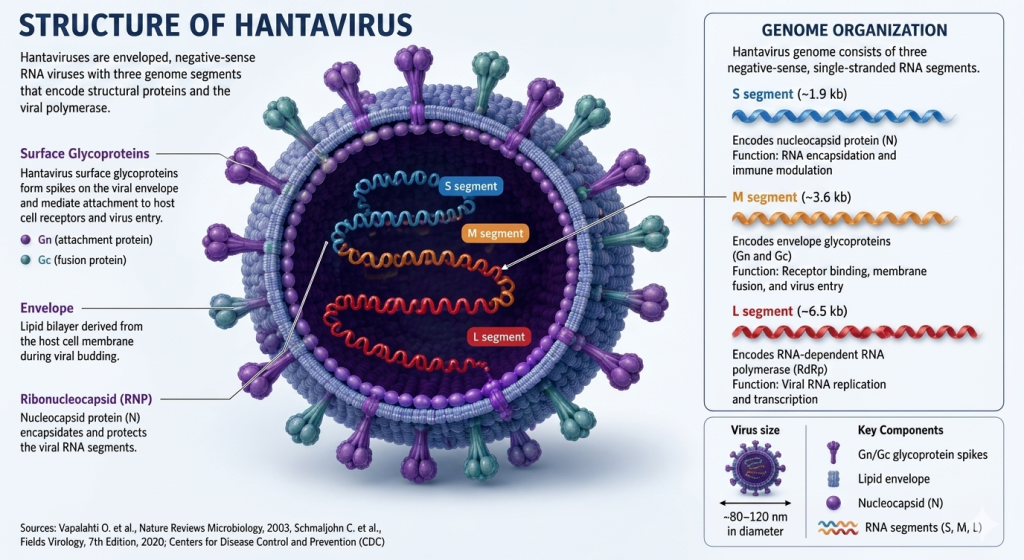
Hantaviruses are enveloped RNA viruses with three genome segments (S, M, L) that code for structural proteins and the viral polymerase. Surface glycoproteins bind host receptors and mediate cell entry. After inhalation and entry into the lungs, hantaviruses infect endothelial cells, the cells lining blood vessels. The host immune response to infected endothelial cells increases vascular permeability, which is central to the severe clinical features seen in both HFRS and HCPS.
Clinical presentation and progression
Incubation usually ranges from one to eight weeks. Early symptoms are non-specific fever, fatigue, headache, muscle aches, chills, nausea, and abdominal pain often resembling influenza. Disease course diverges by syndrome:
HFRS (Old World): fever, low blood pressure, bleeding tendencies, and progressive kidney dysfunction that may range from mild to severe.
HCPS (New World): initial flu-like phase followed by sudden onset of shortness of breath, cough, and rapid progression to pulmonary edema, respiratory failure, and shock in severe cases.
Diagnosis and management
Diagnosis relies on clinical suspicion plus laboratory confirmation serologic tests detecting hantavirus-specific IgM/IgG antibodies and PCR assays that detect viral RNA. There is no widely approved, specific antiviral therapy for most hantavirus infections; treatment is supportive. Early recognition and prompt hospital care supplemental oxygen, intensive monitoring, and careful fluid management improve outcomes. In some HFRS cases, antivirals or renal replacement therapy may be considered in specialized settings.
Prevention and public-health measures
Preventing hantavirus infection mainly depends on reducing contact with rodents and contaminated environments. Rodent control measures such as sealing homes and storage areas, removing nests, and safely storing food can help limit rodent infestations and reduce the risk of exposure to infected droppings and urine.
Safe cleaning practices are especially important because disturbing dried rodent waste may release virus-containing particles into the air. Public-health experts recommend ventilating enclosed spaces before cleaning and avoiding dry sweeping or vacuuming contaminated areas. Instead, disinfectants and wet-cleaning methods should be used to reduce the risk of inhaling infectious particles.
Protective equipment such as gloves, masks, and, in heavily contaminated settings, N95 respirators and eye protection may help reduce direct exposure during clean-up activities. Public-health surveillance and early reporting of suspected cases also remain important for identifying exposure sites, monitoring outbreaks, and improving community awareness.
Key Takeaways
Hantaviruses are rodent-borne viruses that can cause severe illnesses such as hemorrhagic fever with renal syndrome (HFRS) and hantavirus cardiopulmonary syndrome (HCPS), affecting the kidneys, lungs, and cardiovascular system. Humans are primarily infected through inhalation of virus-containing particles from rodent urine, saliva, or droppings in contaminated environments. Although infections are uncommon, severe cases can rapidly progress and become life-threatening. Early recognition of symptoms, timely medical care, proper rodent control, and safe cleaning practices remain essential for reducing the risk of infection and preventing serious complications.

About the Writer
Mahathi Palivela (LinkedIn) is pursuing PharmD and has a strong interest in Clinical Pharmacy and Patient safety. She is passionate about handling and analyzing patient data, and translating clinical insights into clear, meaningful summaries. She aims to apply this interest in Medical Writing and Pharmacovigilance, focusing on improving patient outcomes through careful data interpretation and communication.