
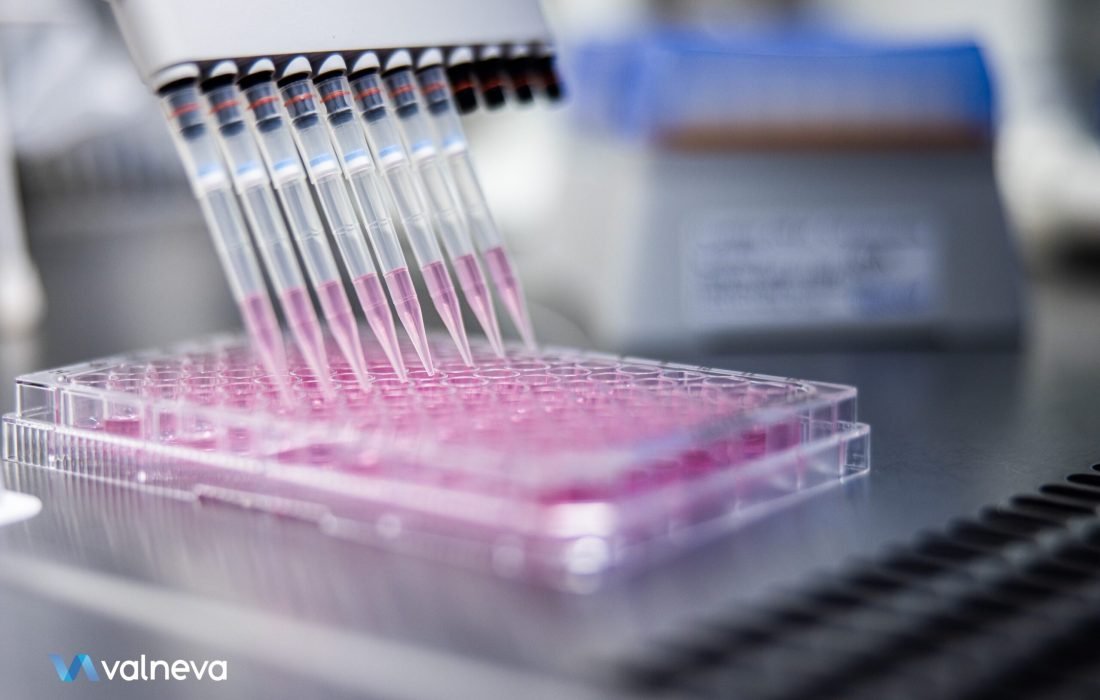
Valneva reports positive Phase 2 results for S4V2, showing infant immunogenicity and reduced shigellosis incidence in an adult challenge study.
Written By: Kalyani Boharapi, M. Pharm (RA)
Reviewed By: Pharmacally Editorial Team
Valneva SE, which is developing the tetravalent bioconjugate vaccine candidate Shigella4V2 (S4V2) through a strategic partnership with LimmaTech Biologics AG, reported positive results from two Phase 2 trials on November 9, 2026. S4V2 targets four major Shigella serotypes: Shigella sonnei and Shigella flexneri 2a, 3a and 6. The findings demonstrated encouraging immunogenicity and antibody persistence in infants, alongside a statistically significant reduction in shigellosis incidence in an adult controlled human infection model (CHIM) study.
Phase 2 Infant Trial Demonstrates Immunogenicity and Antibody Persistence
The Phase 2 S4V02 trial (NCT06523231), conducted in Kenya, evaluated two dose levels of S4V2 against a control meningococcal vaccine in 110 nine-month-old infants. Participants received a two-dose vaccination schedule.
S4V2 demonstrated a favorable safety and tolerability profile across both dose levels. Most solicited and unsolicited adverse events were mild to moderate in severity and did not differ statistically from the control group. All treatment-related adverse events resolved without complications.
Immunogenicity assessments showed statistically significant increases in anti-lipopolysaccharide (LPS) IgG antibody levels against all four targeted Shigella serotypes compared with the control vaccine. Geometric mean antibody titres peaked after the second dose and remained above baseline levels six months later.
These findings provide encouraging evidence of antibody persistence in infants. However, further evaluation of dose selection and vaccination schedules will be necessary to optimize the breadth and robustness of the immune response.
CHIM Trial Meets Primary Efficacy Endpoint
The Phase 2 S4V03 trial (NCT06615375) evaluated the safety, immunogenicity and preliminary efficacy of S4V2 in approximately 120 healthy adults aged 18–50 years who were seronegative for Shigella at baseline. The study was conducted across three clinical sites in the United States.
Following confirmation of the selected vaccine dose in the first study step, newly enrolled participants received two doses of S4V2 or placebo approximately one month apart. Approximately one month after the second vaccination, participants underwent controlled challenge with the virulent S. sonnei 53G strain.
The trial met its primary endpoint, demonstrating a statistically significant reduction in the incidence of S. sonnei-associated shigellosis among vaccinated participants compared with placebo recipients. Further efficacy and immunogenicity analyses are ongoing.
Importantly, this finding represents a preliminary clinical efficacy signal against S. sonnei in a controlled human challenge setting. It does not establish clinical protection against the three targeted S. flexneri serotypes or demonstrate effectiveness in naturally exposed populations.
Clinical Development and Regulatory Outlook
The US Food and Drug Administration (FDA) granted S4V2 Fast Track designation in 2024, recognizing its potential to address a serious condition and an unmet medical need. LimmaTech sponsored both Phase 2 trials, while the infant study received funding support from the Gates Foundation.
Shigellosis remains a major global public health concern, causing an estimated 165 million infections annually, including approximately 62.3 million cases in children younger than five years. The disease is the second leading cause of fatal diarrheal disease worldwide and is estimated to cause up to 600,000 deaths annually. Increasing antimicrobial resistance, including multidrug-resistant infections, further complicates treatment. No licensed vaccine is currently available to prevent shigellosis.
Valneva is evaluating the complete datasets from both trials to determine the next steps in clinical development. Further efficacy and immunogenicity analyses are ongoing, with the complete datasets expected to inform decisions on the next stages of clinical development.
Clinical Significance
The two Phase 2 studies provide complementary evidence supporting the continued evaluation of S4V2. The infant trial demonstrates encouraging immunogenicity and antibody persistence against all four targeted serotypes, while the adult CHIM study provides a preliminary efficacy signal against S. sonnei following controlled exposure.
However, translating these findings into broader protection will require further clinical evaluation, particularly in children and populations exposed to different Shigella serotypes. The complete datasets and subsequent development studies will be important in determining whether S4V2 can progress towards a preventive vaccine option for this significant global infectious disease burden.
Reference
Valneva Announces Positive Phase 2 Results for Tetravalent Shigella Vaccine Candidate S4V2, Valneva SE, November 9, 2026
Study to Expand Safety and Immunogenicity Data with Shigella Bioconjugate Vaccine (Shigella4V2) in 9-month-old Infants. (S4V02), ClinicalTrials.gov ID NCT06523231
A Human Challenge Study to Assess Protection of a Shigella Tetravalent Bioconjugate Vaccine (S4V03), ClinicalTrials.gov ID NCT06615375

About the Writer
Kalyani Boharapi (LinkedIn) is a pharmacy professional and healthcare writer currently pursuing an M.Pharm in Regulatory Affairs at Dr. D. Y. Patil College of Pharmacy, with interests in pharmaceutical regulations, drug development, and healthcare innovation. She has academic exposure to dossier preparation, scientific writing, and regulatory documentation. Kalyani has also completed certification courses in Generative AI, AI in Pharma, and Bioinformatics, and actively participates in pharmaceutical conferences to stay updated with emerging trends and advancements in the healthcare and pharmaceutical industry.