
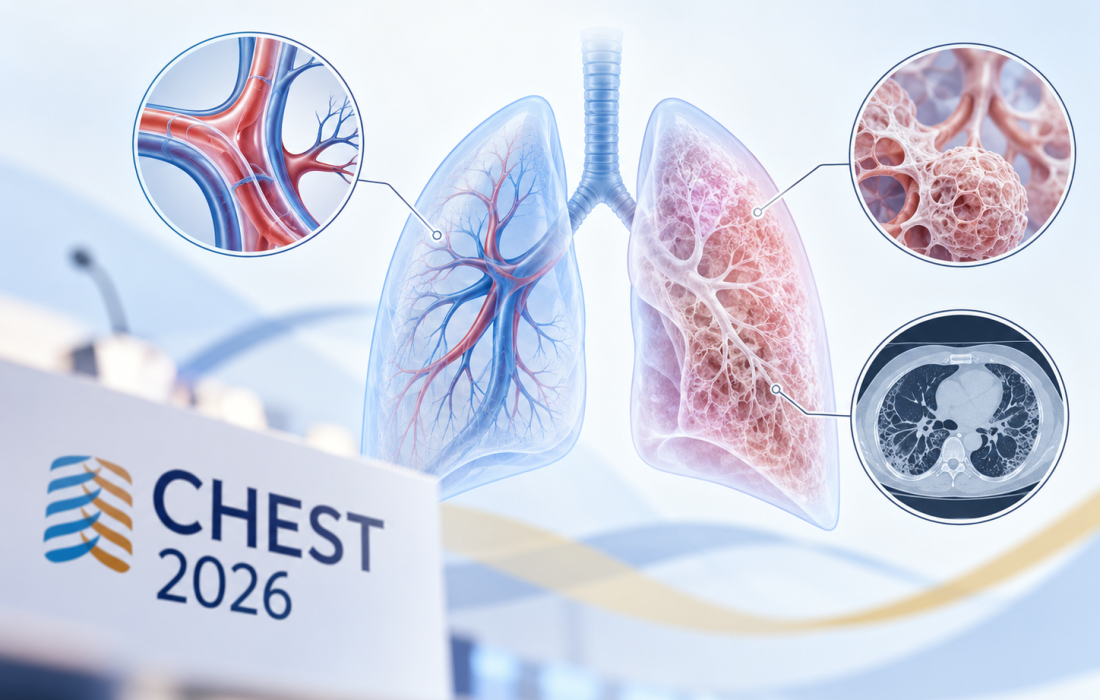
United Therapeutics presents CHEST 2026 data on ralinepag in pulmonary arterial hypertension, treprostinil in IPF, and earlier PH-ILD detection.
Written By: Kalyani Boharapi, M. Pharm (QA)
Reviewed By: Pharmacally Editorial Team
United Therapeutics will present seven studies at the CHEST 2026 Annual Meeting, including analyses of investigational ralinepag in pulmonary arterial hypertension (PAH), nebulized treprostinil in idiopathic pulmonary fibrosis (IPF), and emerging approaches to pulmonary hypertension associated with interstitial lung disease (PH-ILD). The findings will address treatment outcomes, disease progression and opportunities to identify PH-ILD earlier.
The meeting, hosted by the American College of Chest Physicians, will take place October 18-21, 2026, in Phoenix, Arizona. The company will deliver two oral presentations and five poster presentations spanning its commercial and development portfolio, alongside a symposium examining screening strategies for PH-ILD.
Ralinepag Analysis Examines Clinical Worsening Across Risk Groups
A prespecified subgroup analysis of the Phase 3 ADVANCE OUTCOMES study found that ralinepag reduced the risk of clinical worsening in patients with PAH, regardless of the number of noninvasive low-risk criteria they met at baseline.
The analysis examines whether treatment effects remain consistent across patients with different baseline risk profiles. Noninvasive risk criteria help clinicians assess disease severity and guide treatment decisions without relying exclusively on invasive hemodynamic measurements.
The findings could inform how ralinepag fits into PAH treatment strategies, although the available announcement does not provide effect estimates, confidence intervals or subgroup-specific results needed to assess the magnitude and consistency of benefit.
The US Food and Drug Administration (FDA) has accepted the New Drug Application for ralinepag, an investigational therapy for PAH. It has not been approved for any indication.
Nebulized Treprostinil Shows Reduced IPF Progression Risk
A post-hoc analysis of the Phase 3 TETON-2 study found that nebulized treprostinil significantly reduced the risk of multiple disease progression events compared with placebo in patients with IPF.
IPF is a progressive fibrotic lung disease associated with declining lung function and substantial morbidity. Evidence that a treatment reduces repeated progression events could provide a broader view of its potential clinical benefit beyond an individual endpoint.
However, the announcement does not specify the progression events included in the analysis, the relative risk reduction or the statistical estimates. These details will be important for interpreting the magnitude and clinical relevance of the findings.
The FDA has accepted a supplemental New Drug Application for nebulized treprostinil in IPF. The therapy remains investigational for this indication.
PH-ILD Studies Highlight Earlier Detection and Advanced Disease
Interim analyses from the prospective PHINDER study used validated mortality risk models to evaluate patients with interstitial lung disease (ILD). Patients with ILD, particularly those with IPF, had numerically higher mortality risk scores, supporting further investigation of earlier pulmonary hypertension screening in this population.
The findings are relevant because PH can complicate ILD and contribute to worsening functional capacity and clinical outcomes. Earlier recognition may help clinicians identify patients who need further assessment, although mortality risk scores alone do not establish the presence of PH or demonstrate that screening improves survival.
A separate interim analysis from the multicenter DeciPHer-ILD registry found that enrolled patients with PH-ILD had impaired hemodynamics, worse functional class and reduced exercise capacity, indicating substantial disease burden at enrollment.
Together, the studies highlight two complementary challenges: identifying PH before advanced clinical deterioration and improving the characterization of patients already diagnosed with PH-ILD.
Regulatory Outlook
United Therapeutics will also sponsor the symposium Time to Look Closer: Emerging Data and Screening Insights in PH-ILD, which will feature preliminary PHINDER data.
Franck Rahaghi, MD, the company’s chief medical officer, said the presentations address the diverse needs of patients with PAH, PH-ILD and IPF, with a focus on treatment development, earlier disease detection and improved understanding of treatment strategies.
The CHEST 2026 presentations will add clinical context to two pending FDA applications and ongoing research into PH-ILD screening. The full datasets, including effect sizes, safety findings and methodological details, will be important for determining how strongly the results support changes in clinical practice.
Clinical Interpretation
Collectively, the findings address three important challenges in pulmonary disease: reducing clinical worsening in PAH, limiting disease progression in IPF, and identifying PH-ILD earlier. Ralinepag’s subgroup results may support its potential relevance across different baseline risk profiles, while the treprostinil analysis provides additional insight into IPF progression. The PHINDER and DeciPHer-ILD findings reinforce the need to evaluate earlier PH detection in ILD, although further evidence is needed to establish whether earlier screening improves clinical outcomes.
Reference
United Therapeutics Presents New Data at the CHEST 2026 Annual Meeting, United Therapeutics, 13 October 2026
A Study Evaluating the Efficacy and Safety of Ralinepag to Improve Treatment Outcomes in PAH Patients, ClinicalTrials.gov ID NCT03626688
Multinational Study of Efficacy and Safety of Inhaled Treprostinil in Subjects with Idiopathic Pulmonary Fibrosis (TETON-2), ClinicalTrials.gov ID NCT05255991
Pulmonary Hypertension Screening in Patients with Interstitial Lung Disease for Earlier Detection (PHINDER), ClinicalTrials.gov ID NCT05776225

About the Writer
Kalyani Boharapi (LinkedIn) is a pharmacy professional and healthcare writer currently pursuing an M.Pharm in Regulatory Affairs at Dr. D. Y. Patil College of Pharmacy, with interests in pharmaceutical regulations, drug development, and healthcare innovation. She has academic exposure to dossier preparation, scientific writing, and regulatory documentation. Kalyani has also completed certification courses in Generative AI, AI in Pharma, and Bioinformatics, and actively participates in pharmaceutical conferences to stay updated with emerging trends and advancements in the healthcare and pharmaceutical industry.