
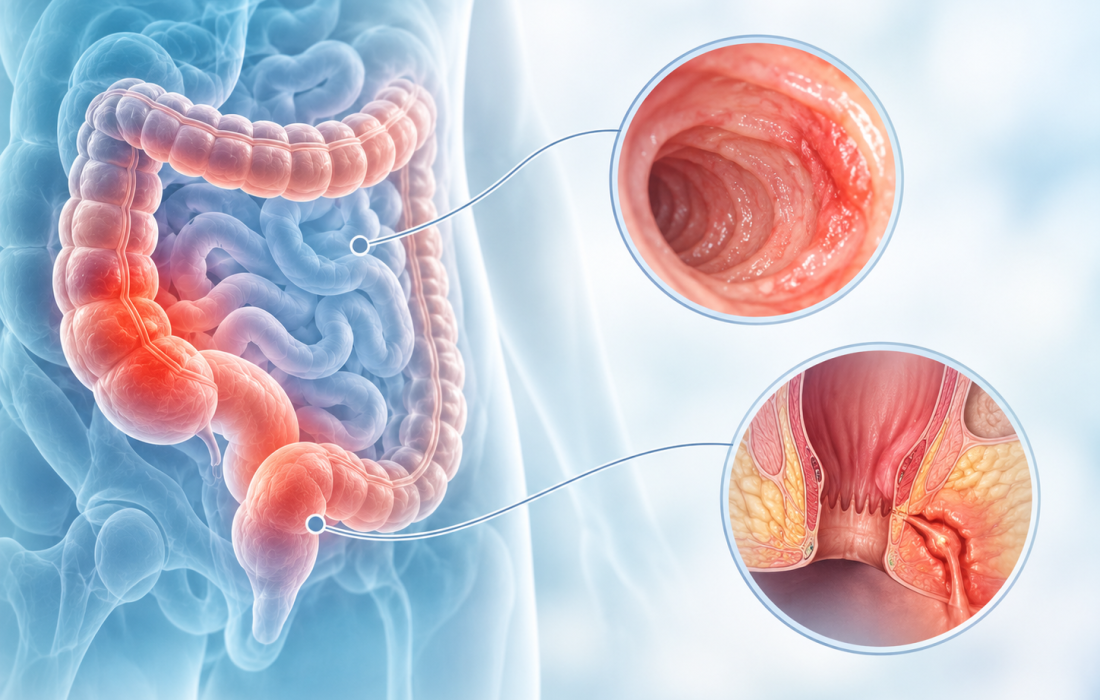
Johnson & Johnson reports three-year Crohn’s disease remission data for TREMFYA and 48-week fistula outcomes from the Phase 3 GALAXI and FUZION studies.
Written By: Neha Vishwakarma, PharmD
Reviewed By: Pharmacally Editorial Team
Johnson & Johnson reported new data on TREMFYA® (guselkumab) in Crohn’s disease (CD) on October 19, 2026, including three-year outcomes from the Phase 3 GALAXI 2 and 3 studies and 48-week results from the Phase 3 FUZION study in perianal fistulizing disease.
Presented at United European Gastroenterology Week (UEG Week) 2026, the findings extend evidence for long-term disease control and address one of Crohn’s disease’s most difficult complications. However, the studies provide different types of evidence and r equire separate interpretation.
GALAXI studies assess remission through three years
GALAXI 2 and 3 are identically designed Phase 3 studies evaluating guselkumab in adults with moderately to severely active Crohn’s disease who had an inadequate response or intolerance to conventional therapy or biologics.
Following intravenous induction, patients received subcutaneous maintenance treatment with either:
- 100 mg every eight weeks (q8w)
- 200 mg every four weeks (q4w)
At Week 144, clinical remission, defined as a Crohn’s Disease Activity Index (CDAI) score below 150, was reported in:
- 94% (172/183) of patients receiving 100 mg q8w
- 91% (185/204) of patients receiving 200 mg q4w
These findings indicate sustained clinical remission among patients included in the long-term analyses.
Endoscopic remission remains lower than clinical remission
Ninety-day corticosteroid-free clinical remission at Week 144 was 89% (162/183) with 100 mg q8w and 88% (179/204) with 200 mg q4w.
Endoscopic remission was lower:
- 52% (89/172) with 100 mg q8w
- 61% (119/195) with 200 mg q4w
Endoscopic remission was defined as an SES-CD score of 4 or lower, a reduction of at least two points, and no subscore greater than 1.
The difference between clinical and endoscopic remission is clinically relevant. Symptom-based improvement does not necessarily indicate equivalent control of intestinal inflammation, making endoscopic outcomes an important complementary measure of disease activity.
Treatment retention and long-term safety require context
Overall, 432 of 582 patients (74%) remained on treatment through Week 144. However, the efficacy findings were based on as-observed analyses that excluded patients without evaluable Week 144 data and those who discontinued or underwent dose adjustment.
Consequently, the reported remission percentages describe selected patients with available data rather than outcomes across the entire randomized population. Patients who discontinue treatment may have different outcomes, limiting the generalizability of these percentages to everyone who started therapy.
Safety findings through Week 144 were consistent with guselkumab’s established safety profile in Crohn’s disease. Reported adverse reactions included respiratory tract infections, diarrhoea and injection-site reactions.
FUZION extends evidence in perianal fistulizing disease
FUZION is a randomized, double-blind, placebo-controlled Phase 3 study in adults with Crohn’s disease and one or more active draining perianal fistulas.
Combined fistula remission incorporates clinical and radiological assessments. It requires closure of all external openings without drainage, no new fistulas or abscesses, and no fluid collections larger than 2 cm on blinded central MRI review.
At Week 24, combined fistula remission was achieved by:
- 28.3% of patients receiving guselkumab 100 mg q8w
- 27.0% receiving guselkumab 200 mg q4w
- 10.3% receiving placebo
Both active-treatment comparisons were statistically significant.
Week 48 findings are influenced by dose adjustment
At Week 48, combined fistula remission was 35% in the original 100 mg q8w group, compared with 28% at Week 24. In the 200 mg q4w group, remission remained broadly stable, at 26% versus 27% at Week 24.
An important qualification is that 55 patients in the original 100 mg q8w group underwent blinded dose adjustment to 200 mg q4w at Week 24. Therefore, the Week 48 result of 35% cannot be attributed solely to continued treatment with the original 100 mg regimen.
The findings support maintained or improved remission under the study’s treatment strategy, but they do not establish the superiority of either maintenance dose. More than 90% of randomized patients completed treatment through Week 48.
Johnson & Johnson describes FUZION as the only dedicated randomized, placebo-controlled trial demonstrating efficacy for an IL-23 inhibitor in perianal fistulizing Crohn’s disease. This is a company-reported distinction, not evidence that guselkumab is superior to other treatments, because no head-to-head comparison was reported.
Clinical interpretation and next steps
Together, GALAXI and FUZION extend the evidence for guselkumab across two distinct treatment challenges in Crohn’s disease.
GALAXI suggests that clinical remission can be sustained through three years among patients who remain on treatment, although endoscopic remission is less frequent and attrition limits generalizability. FUZION adds longer-term evidence in perianal fistulizing disease, where treatment remains challenging, but the Week 48 findings require consideration of dose adjustment and the absence of a reported Week 48 placebo comparison.
The findings do not establish comparative superiority or guarantee similar outcomes in routine clinical practice. Further follow-up will be important: the GALAXI long-term extension is assessing outcomes through five years, while additional FUZION analyses may help clarify responses across biologic-naïve and biologic-experienced populations.
References
Johnson & Johnson announces new data showing TREMFYA® (guselkumab) is the only IL-23 to deliver durable fistula remission through 48 weeks in Crohn’s disease with perianal fistula, Johnson and Johnson, 19 October 2026
A Study of Guselkumab in Participants with Fistulizing, Perianal Crohn’s Disease (FUZION CD), ClinicalTrials.gov ID NCT05347095
A Study of the Efficacy and Safety of Guselkumab in Participants with Moderately to Severely Active Crohn’s Disease (GALAXI), ClinicalTrials.gov ID NCT03466411

About the Writer
Neha Vishwakarma (LinkedIn) is a Pharm.D professional with experience in clinical pharmacy, pharmacovigilance, and clinical research. She has hands-on experience in ADR assessment, ICSR processing, medication safety, and clinical data evaluation. Her research background in surgical site infections and antibiotic use supports her focus on evidence-based healthcare writing.