
Johnson & Johnson announces Phase 4 STAR study results showing TREMFYA (guselkumab) significantly improves axial symptoms and MRI-confirmed inflammation in psoriatic arthritis.
Written By: Mayuri Vaja, PharmD
Reviewed By: Pharmacally Editorial Team
Johnson & Johnson has announced topline results from the Phase 4 STAR study showing that TREMFYA® (guselkumab) significantly improved axial disease symptoms and reduced MRI-confirmed inflammation in biologic-naïve adults with active psoriatic arthritis (PsA) and axial involvement.
The study met its primary endpoint at Week 24, with TREMFYA demonstrating a significant improvement in the Bath Ankylosing Spondylitis Disease Activity Index (BASDAI) compared with placebo. BASDAI is a patient-reported measure that assesses several manifestations of axial disease, including spinal pain, stiffness and fatigue. TREMFYA also met major secondary endpoints evaluating axial disease activity and objective inflammation assessed by MRI.
STAR Study Evaluates MRI-Confirmed Axial PsA
The STAR study (NCT04929210) is a Phase 4, multicenter, randomized, double-blind, placebo-controlled study designed specifically to evaluate TREMFYA in adults with active PsA and axial involvement.
The study prospectively required objective evidence of axial inflammation confirmed by centrally read magnetic resonance imaging (MRI). A total of 411 participants were enrolled worldwide.
Eligible participants had active PsA with MRI-confirmed axial inflammation and elevated C-reactive protein (CRP) despite previous treatment with non-biologic disease-modifying antirheumatic drugs, apremilast and/or nonsteroidal anti-inflammatory drugs.
Participants received TREMFYA or placebo during the initial 24-week placebo-controlled treatment period, followed by a 24-week active-treatment period. The primary endpoint was the change from baseline in BASDAI at Week 24.
TREMFYA Shows Improvements in Axial Disease Activity and MRI Inflammation
TREMFYA met the study’s primary endpoint by demonstrating a statistically significant improvement in BASDAI compared with placebo at Week 24.
The treatment also met major secondary endpoints evaluating axial disease activity using the Ankylosing Spondylitis Disease Activity Score with C-reactive protein (ASDAS-CRP). In addition, MRI assessments demonstrated a significant reduction in objective inflammation in the sacroiliac joints.
The findings provide evidence across both patient-reported disease activity and imaging-based assessment. BASDAI captures symptoms experienced by patients, whereas MRI provides an objective assessment of inflammatory activity in affected axial structures.
Johnson & Johnson described STAR as the first dedicated randomized, double-blind, placebo-controlled study of an IL-23 inhibitor in patients with PsA and axial involvement confirmed by MRI. The company has also described TREMFYA as the first and only IL-23 inhibitor to demonstrate significant improvement in spinal pain and stiffness in this setting.
Detailed efficacy, safety and MRI findings are expected to be presented at an upcoming scientific congress. The full dataset will provide additional information on the magnitude and clinical relevance of the observed treatment effects.
Axial Involvement Remains an Unmet Need in PsA
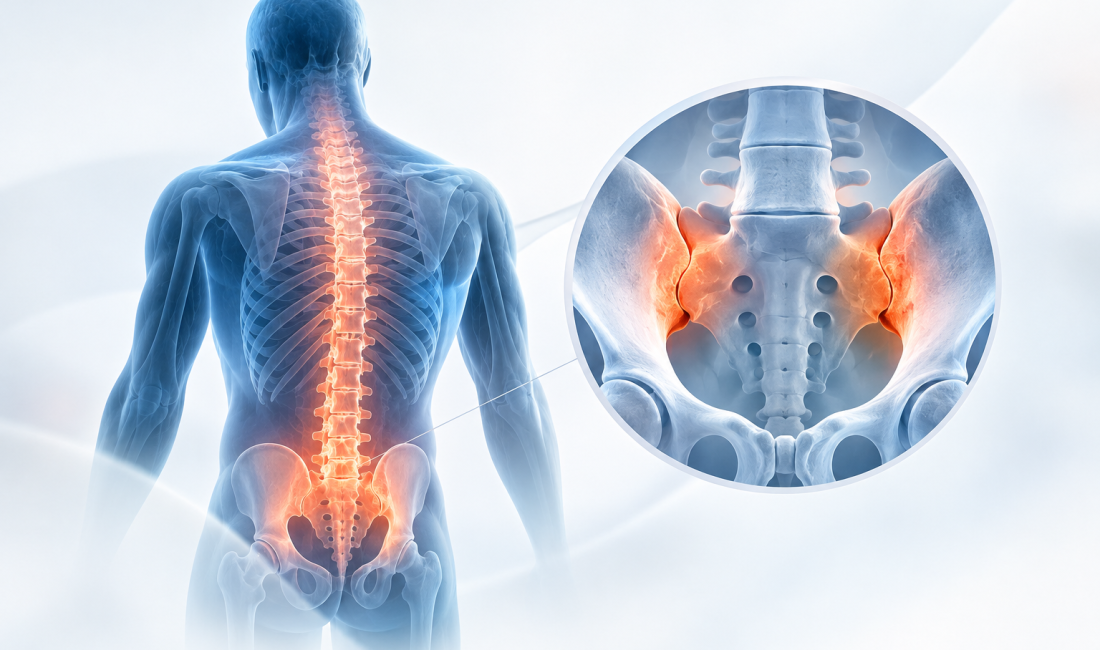
Axial involvement is a domain of PsA in which inflammation affects the spine and sacroiliac joints. Patients may experience inflammatory back pain, morning stiffness, fatigue, reduced mobility and impaired physical function.
Axial involvement can occur in both early and established PsA. However, prospective clinical studies specifically designed to evaluate this disease domain remain limited. There are also currently no universally accepted classification criteria specifically for axial PsA.
The STAR study was designed to address this evidence gap by prospectively identifying patients with objective MRI-confirmed axial inflammation rather than relying solely on clinical symptoms.
TREMFYA Expands Its PsA Evidence Base
TREMFYA (Guselkumab) is a fully human monoclonal antibody that selectively binds the p19 subunit of interleukin-23 (IL-23), preventing its interaction with the IL-23 receptor. Johnson & Johnson has also reported that guselkumab can bind CD64, a receptor expressed on IL-23-producing cells, based on in-vitro studies. The clinical significance of this CD64 binding remains uncertain
In the United States, TREMFYA is approved for adults and eligible children with active PsA, as well as for several other inflammatory conditions. Johnson & Johnson has also reported a recent FDA label expansion allowing TREMFYA to be used to inhibit progression of structural joint damage in adults with active PsA.
In the STAR study, the overall safety profile of TREMFYA was consistent with its established safety profile in PsA, and no new safety signals were reported in the topline analysis.
The STAR findings add to the clinical evidence for guselkumab in PsA with axial involvement. However, detailed efficacy, safety and MRI analyses expected at a future scientific congress will be important for further characterizing the magnitude and clinical relevance of these findings.
Reference
Johnson & Johnson Announces TREMFYA® (guselkumab) Is the First and Only IL-23 Inhibitor to Show Significant Improvement in Spinal Pain and Stiffness in Landmark Axial Psoriatic Arthritis (PsA) Study, Johnson & Johnson, 25 September 2026
A Study of Guselkumab Administered Subcutaneously in Bio-naive Participants with Active Psoriatic Arthritis Axial Disease (STAR), ClinicalTrials.gov ID NCT04929210

About the Writer
Mayuri Vaja (Linkedin) is a Pharm.D professional with a strong interest in clinical research, pharmacovigilance, and medical writing, supported by certifications in pharmacovigilance and academic projects exploring AI in healthcare and drug safety.
With a growing focus on evidence-based healthcare and scientific communication, she is developing expertise in clinical research and translating healthcare evidence into clear, meaningful content.
As a Pharmacally healthcare writer, Mayuri is committed to creating accurate, research-driven, and clinically relevant healthcare content while continuously strengthening her professional skills.