
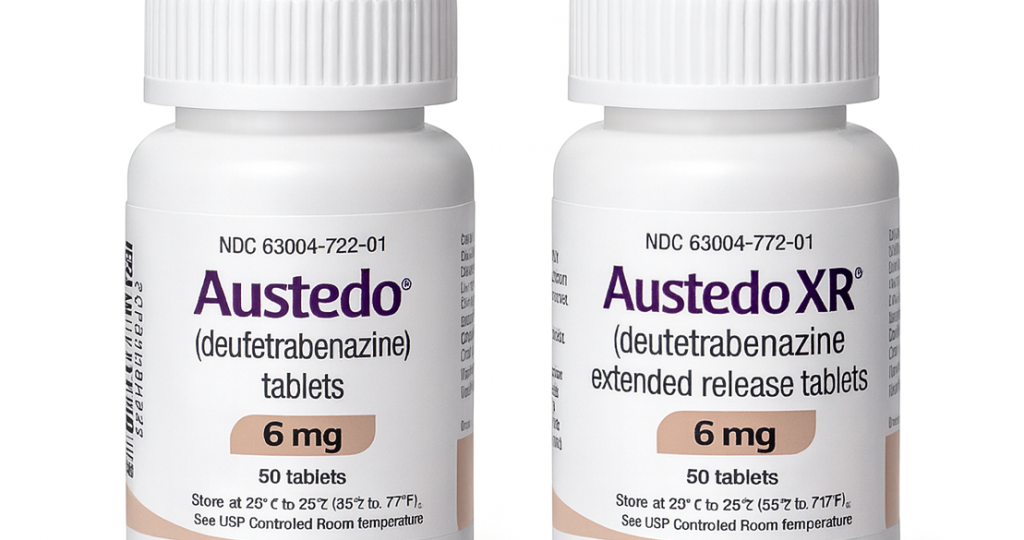
Teva Pharmaceuticals presented real-world data at ATMRD 2026 showing AUSTEDO® and AUSTEDO XR® significantly reduce Huntington’s disease chorea, with patient and caregiver reports highlighting meaningful improvements in daily functioning, emotional well-being, and social participation.
Written By: Farha Farheen, PharmD
Reviewed By: Pharmacally Editorial Team
Teva Pharmaceuticals unveiled new real-world findings at the Advanced Therapeutics in Movement & Related Disorders® Congress demonstrating that treatment with AUSTEDO® (deutetrabenazine) tablets and AUSTEDO XR® (deutetrabenazine) extended-release tablets significantly improves symptoms of Huntington’s disease (HD) chorea. Importantly, reductions in chorea were associated with meaningful improvements in quality of life for both patients and caregivers.
Chorea, one of the hallmark symptoms of Huntington’s disease, affects approximately 90% of patients and can significantly impair daily functioning, independence, emotional well-being, and social interactions.
Real-World Patient and Caregiver Insights
The study, conducted via the myHDstory® platform in collaboration with the Huntington Study Group, represents the first and only decentralized real-world investigation to assess the impact of HD chorea and its treatment from both patient and caregiver perspectives.
Adult patients with HD chorea and caregivers across the United States completed surveys evaluating symptom burden, treatment goals, and quality-of-life changes. Patients receiving AUSTEDO® or AUSTEDO XR® also completed the Patient Global Impression of Change (PGIC) scale, while caregivers reported the effects of caregiving responsibilities on their own well-being.
Quality-of-Life Gains Beyond Symptom Control
Before treatment, patients and caregivers identified goals centered on independence, emotional health, social engagement, and daily functioning. Survey responses highlighted the substantial burden of chorea, with patients reporting negative impacts on social life, emotional well-being, daily activities, and vocational or recreational activities. Caregivers similarly described challenges across social functioning, emotional health, daily activities, and vocational or recreational responsibilities.
Following treatment, 74% of patients reported improvement in chorea symptoms according to PGIC assessments. More than 85% achieved goals related to daily activities such as eating, dressing, and walking, as well as social participation, including spending time with friends and family. Caregivers also reported meaningful benefits, with 77% noting improvements in emotional well-being and social activities, including reduced stress, guilt, and emotional burden.
Expert Perspectives on Independence and Burden
Dr. Eric Hughes, Executive Vice President of Global R&D and Chief Medical Officer at Teva, emphasized that HD chorea places a significant physical, emotional, and functional burden on patients and caregivers. He noted that the findings reinforce Teva’s patient-centered approach and demonstrate how effective chorea management can positively impact daily life.
Dr. Daniel Claassen, Professor of Neurology at Vanderbilt University Medical Center, CEO of the Huntington Study Group, and principal investigator of the study, underscored that chorea affects a patient’s independence and identity while creating substantial challenges for caregivers. He highlighted that these real-world findings demonstrate the importance of symptom control in preserving independence and reducing family burden.
About AUSTEDO® and AUSTEDO XR®
AUSTEDO® and AUSTEDO XR® are FDA-approved VMAT2 inhibitors indicated for the treatment of chorea associated with Huntington’s disease and tardive dyskinesia in adults. AUSTEDO XR® offers a convenient once-daily extended-release formulation. Neither medication has been established as safe or effective for pediatric use.
These findings are based on real-world, survey-based data rather than controlled clinical trial results, providing valuable insight into the broader benefits of effective chorea management beyond symptom reduction alone.
Reference

About the Writer
Farha Farheen, PharmD (LinkedIn) is a pharmacy professional with a strong interest in pharmacovigilance and clinical research. She has completed her Doctor of Pharmacy (Pharm.D) along with her internship as a Clinical Pharmacist. She has hands-on experience in adverse drug reaction (ADR) reporting, safety data documentation, and pharmacovigilance workflows, and is proficient in using VigiFlow. She is also a patent holder for an antibacterial formulation enriched with bioactive substances, granted by the German Patent and Trademark Office.