
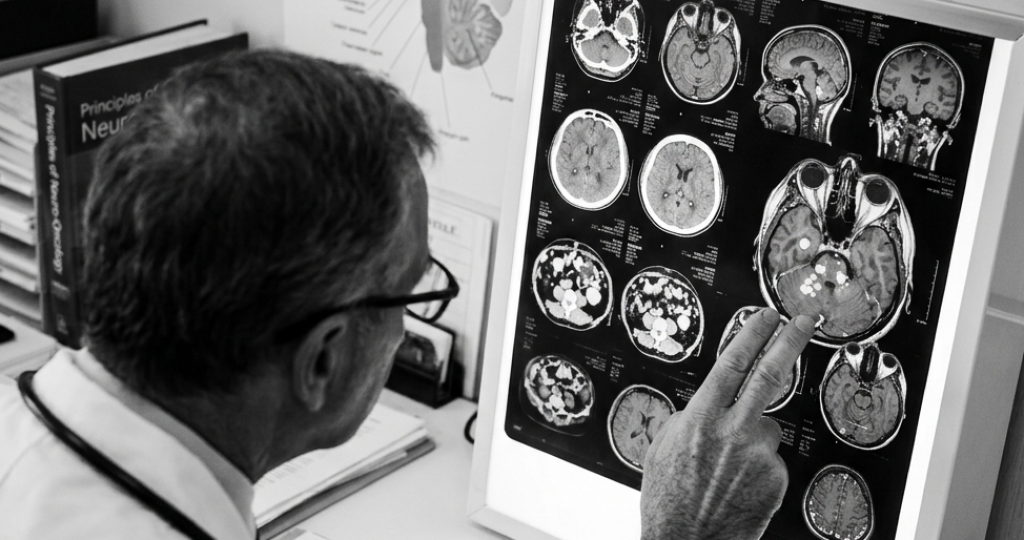
Radiopharm reported positive Phase 2b results for RAD101 PET imaging, achieving 93% MRI concordance in recurrent brain metastases and supporting a planned U.S. Phase 3 registrational trial.
Written By: Nalam Karthik, PharmD
Reviewed By: Pharmacally Editorial Team
Radiopharm Theranostics has reported positive topline results from its Phase 2b clinical trial evaluating RAD101, an investigational fluorine-18 (¹⁸F)-labeled PET imaging agent, in patients with suspected recurrence of brain metastases following stereotactic radiosurgery (SRS). The study met its primary endpoint, demonstrating 93% concordance between RAD101 PET imaging and magnetic resonance imaging (MRI) across all 30 evaluable patients.
The findings support advancement into a U.S. multicenter Phase 3 registrational trial, which the company plans to initiate in the fourth quarter of 2026. RAD101 has also received U.S. FDA Fast Track Designation, allowing more frequent interactions with the agency during development and providing access to regulatory features such as rolling review, when applicable, to help streamline the development process.
RAD101 Targets Fatty Acid Synthase to Improve Brain Metastasis Imaging
RAD101 is a small-molecule PET imaging agent that selectively binds to fatty acid synthase (FASN), an enzyme frequently overexpressed in brain metastases arising from solid tumors. After radiolabeling with fluorine-18, the tracer enables PET imaging of metabolically active tumor tissue.
Distinguishing recurrent brain metastases from radiation-induced treatment effects remains a major clinical challenge. Although contrast-enhanced MRI is the standard imaging modality, post-radiotherapy changes often resemble tumor recurrence, making treatment decisions difficult. Clinicians may also use PET tracers such as ¹⁸F-fluorodeoxyglucose (FDG) and amino acid tracers in selected cases, but these agents are used off-label for suspected recurrent brain metastases and none is currently approved by the U.S. FDA specifically for this indication. A dedicated PET imaging agent could therefore improve diagnostic confidence and guide patient management more accurately.
Phase 2b Trial Met Its Primary Endpoint
The open-label, single-arm U.S. Phase 2b study (NCT06777433) enrolled 30 evaluable patients with suspected recurrent brain metastases from solid tumors after SRS.
The primary endpoint assessed concordance between PET-positive lesions identified with RAD101 and equivocal lesions detected on gadolinium-enhanced MRI. The study achieved this endpoint with 93% concordance, while imaging demonstrated selective uptake of RAD101 within metabolically active tumors, including lesions that remained inconclusive on MRI.
Among the first 14 patients with available six-month follow-up and/or biopsy confirmation, preliminary analysis showed 86% sensitivity (12 of 14 patients) for detecting recurrent disease, representing an encouraging early signal for the study’s secondary objective. Specificity, the complementary measure of diagnostic accuracy, remains under evaluation and is expected to be reported in the fourth quarter of 2026. No new safety concerns were disclosed in the announcement.
Positive Results Support Registrational Development
Chief Executive Officer and Managing Director Riccardo Canevari said the complete dataset validates RAD101’s potential to address one of neuro-oncology’s most difficult diagnostic challenges. He added that achieving the primary endpoint provides a strong foundation for ongoing discussions with the FDA as the company finalizes the design of its planned registrational Phase 3 trial.
Radiopharm has also entered a manufacturing and distribution partnership with Siemens Healthineers, which will produce and distribute ¹⁸F-labeled RAD101 doses for the upcoming U.S. pivotal study.
Phase 3 Trial Planned as Clinical Need Grows
More than 300,000 people in the United States are diagnosed with brain metastases each year, and the incidence continues to increase as advances in systemic cancer therapies improve survival. Despite this growing patient population, no FDA-approved PET imaging agent is currently available specifically to distinguish recurrent brain metastases from radiation-related treatment effects.
Radiopharm estimates the total addressable U.S. market for brain metastasis imaging exceeds $600 million. With positive Phase 2b results, FDA Fast Track Designation, and a Phase 3 registrational study planned for late 2026, RAD101 is positioned to become one of the first imaging agents developed specifically for this challenging diagnostic setting.
Reference

About the Writer
Nalam Karthik (LinkedIn) is a healthcare writer and PharmD graduate with interests in pharmacovigilance, drug safety, clinical data analysis, and quality assurance. He is passionate about translating clinical and pharmaceutical knowledge into accessible healthcare content while staying engaged with advancements in drug development and patient safety initiatives.