
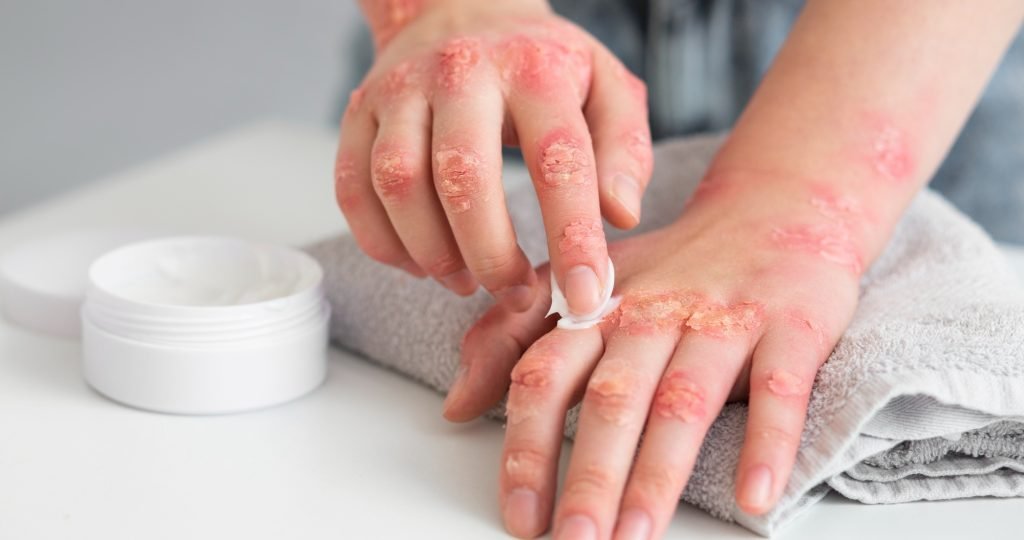
Organon presented pooled Phase 3 ADORING trial data showing VTAMA (tapinarof) cream delivered early, statistically significant improvements in pediatric and adult patients with moderate to severe atopic dermatitis at SPD 2026.
Written By: Shaik Yasmeen, PharmD
Reviewed By: Pharmacally Editorial Team
Organon has presented the first age-stratified pooled analysis from the pivotal Phase 3 ADORING 1 (NCT05014568) and ADORING 2 (NCT05032859) trials, providing new evidence that VTAMA (tapinarof) cream 1% delivers consistent clinical benefit across pediatric and adult patients with moderate to severe atopic dermatitis. The findings, presented at the 2026 Society for Pediatric Dermatology (SPD) Annual Meeting in Minneapolis, are the first to separately evaluate treatment outcomes across predefined pediatric age groups and adults, offering a clearer understanding of efficacy across the disease spectrum.
VTAMA Targets a Key Immune Pathway in Atopic Dermatitis
VTAMA cream is the first and only topical aryl hydrocarbon receptor (AhR) agonist approved by the U.S. Food and Drug Administration for the treatment of atopic dermatitis in adults and children aged two years and older, as well as plaque psoriasis in adults. By activating the AhR pathway, tapinarof helps regulate skin barrier function while reducing inflammatory signaling, providing a steroid-free treatment option for chronic inflammatory skin disease.
Atopic dermatitis affects an estimated 26 million people in the United States, with children representing the largest affected population. Persistent itching, skin inflammation, and recurrent flares frequently impair sleep, quality of life, and long-term disease control, underscoring the need for effective nonsteroidal therapies that can be used across a broad age range.
Phase 3 Analysis Demonstrated Early and Sustained Clinical Benefit
The post hoc analysis pooled data from 813 adults and children aged two years and older with moderate to severe atopic dermatitis who were randomized in a 2:1 ratio to receive once-daily VTAMA cream or vehicle for eight weeks.
More than 80% of participants were between 2 and 17 years of age, enabling investigators to evaluate efficacy across four predefined age groups: 2–6 years, 7–11 years, 12–17 years, and adults aged 18 years or older.
Clinical responses emerged by week 2, the first post-treatment assessment, and continued to improve through week 8 across every age subgroup.
The analysis evaluated two key efficacy measures: Validated Investigator Global Assessment for Atopic Dermatitis (vIGA-AD) response and achievement of at least 75% improvement in Eczema Area and Severity Index (EASI75). At week 8, VTAMA cream demonstrated statistically significant improvements over vehicle across both endpoints in every age group.
Age Group | vIGA-AD Response (VTAMA vs. Vehicle) | P-value | EASI75 Response (VTAMA vs. Vehicle) | P-value |
2–6 years | 56.3% vs. 11.8% | P<0.0001 | 70.2% vs. 20.5% | P<0.0001 |
7–11 years | 44.9% vs. 23.8% | P=0.0172 | 53.6% vs. 31.3% | P=0.0158 |
12–17 years | 48.8% vs. 13.4% | P<0.0001 | 62.2% vs. 18.3% | P<0.0001 |
Adults (≥18 years) | 38.0% vs. 18.1% | P=0.0280 | 50.8% vs. 20.6% | P=0.0020 |
The safety profile remained consistent with previous Phase 3 findings. The most common treatment-emergent adverse events were folliculitis, headache, and nasopharyngitis, and these events were generally mild to moderate in severity. Treatment-related discontinuations occurred less frequently with VTAMA cream than with vehicle, and no new safety signals were identified in the pooled age-stratified analysis.
Clinical Implications
Lead investigator Luz Fonacier, MD, said the age-specific findings provide clinicians with greater confidence when counseling patients and families across different stages of life. She noted that despite differences in age, VTAMA cream produced clinically meaningful and consistent improvements in skin clearance among both pediatric and adult patients.
Juan Camilo Arjona Ferreira, MD, Head of Research and Development and Chief Medical Officer at Organon, said the consistency of treatment responses across pediatric age groups, including improvements observed as early as week 2, reinforces the role of VTAMA cream as an important steroid-free treatment option for patients with moderate to severe atopic dermatitis.
Regulatory Path Forward
The SPD presentation marks the first public release of pooled Phase 3 efficacy data stratified by age, expanding the clinical evidence supporting VTAMA across pediatric and adult populations. Long-term outcomes continue to be evaluated in the 48-week open-label ADORING 3 extension study (NCT05142774), which is assessing the durability of response and long-term safety.
The findings also complement current U.S. FDA-approved labeling and support existing American Academy of Dermatology recommendations for VTAMA cream in pediatric and adult patients with atopic dermatitis. Together, these data strengthen the evidence for VTAMA as a nonsteroidal treatment option capable of delivering rapid and consistent clinical benefit across a broad range of patients.
Reference

About the Writer
Shaik Yasmeen (LinkedIn) is a Pharm.D graduate with interests in clinical pharmacy, pharmacovigilance, and medical writing. She has gained experience through hospital clinical postings, patient case reviews, case presentations, and literature evaluation. Passionate about evidence-based healthcare, she is committed to creating accurate and engaging medical content while continuously expanding her professional knowledge.