
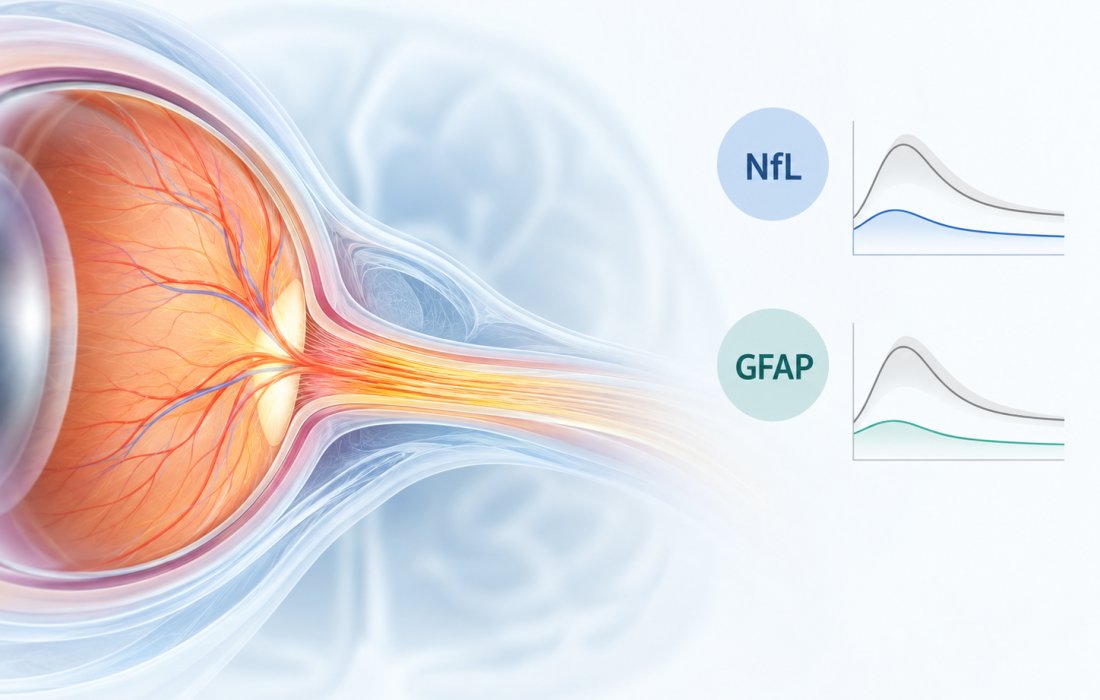
Oculis reports lower plasma NfL and GFAP rises with privosegtor in the Phase 2 ACUITY optic neuritis trial, adding biomarker evidence for further study.
Written By: Anamika Koshti, PharmD
Reviewed By: Pharmacally Editorial Team
Oculis has reported new biomarker findings from the Phase 2 ACUITY trial (NCT04762017) of privosegtor, an investigational candidate for acute optic neuritis (ON). Presented at the 10th Joint ACTRIMS-ECTRIMS Meeting in Toronto, the analysis showed smaller post-onset increases in plasma neurofilament light chain (NfL) and glial fibrillary acidic protein (GFAP) with privosegtor than with placebo. The differences were most apparent at early timepoints following symptom onset.
The findings add a biological dimension to previously reported visual function and retinal structure results. However, the available release does not provide numerical biomarker estimates or statistical tests, preventing an independent assessment of the magnitude and reliability of these differences.
Why Blood Biomarkers Matter in Acute Optic Neuritis
Optic neuritis involves inflammation of the optic nerve and can cause visual impairment. It may occur as part of multiple sclerosis (MS) or other inflammatory and demyelinating disorders. Corticosteroids are commonly used to manage acute episodes, but established neuroprotective treatments that directly preserve retinal ganglion cells and their axons remain unavailable.
NfL is a biomarker associated with neuroaxonal injury, while GFAP is associated with astrocytic activation and injury-related responses in the central nervous system. Measuring these proteins in blood may help characterize the biological changes following an acute attack. Their levels, however, do not independently establish whether a treatment preserves vision or prevents long-term disability.
Privosegtor Shows Different Biomarker Patterns from Placebo
At Day 5, the mean increase in plasma NfL was greater in the placebo group than in the privosegtor group. NfL levels remained stable through Month 6 in patients receiving privosegtor, whereas levels in the placebo group remained above baseline at Month 1 before returning to baseline by Month 6.
GFAP followed a similar early pattern. Its mean increase at Day 5 was greater with placebo, and levels remained above baseline from Month 1 through Month 6 in the placebo group. In contrast, GFAP levels remained below baseline over the same period in the privosegtor group.
These patterns are consistent with a potentially lower burden of neuroaxonal injury and reduced reactive astrogliosis following treatment. Nevertheless, the findings do not establish that privosegtor directly suppresses a secondary neurodegenerative cascade. The release presents the results graphically without numerical estimates, confidence intervals, p-values or the number of patients included in the biomarker analysis. Dose-specific effects are also not established by the reported information.
How the Findings Compare with Earlier ACUITY Results
ACUITY was a randomized, double-blind, placebo-controlled Phase 2 trial that evaluated intravenous privosegtor at 2 or 3 mg/kg/day for five days alongside corticosteroids. The study randomized 36 patients, of whom 33 received treatment and were included in the prespecified modified intent-to-treat analysis.
In January 2025, Oculis reported a favorable difference in mean change from baseline in low-contrast visual acuity (LCVA) of approximately 18 letters at Month 3 and 15 letters at Month 6 for privosegtor plus corticosteroids versus placebo plus corticosteroids. The reported p-values were 0.004 and 0.012, respectively.
The company also reported favorable retinal structural findings measured by optical coherence tomography. Ganglion cell-inner plexiform layer (GCIPL) thickness showed a 43% favorable difference at Month 3, maintained through Month 6, with p-values of 0.049 and 0.052, respectively. Retinal nerve fiber layer (RNFL) thickness showed a 28% favorable difference at Month 3 and 30% at Month 6, with p-values of 0.045 and 0.033.
Together, the visual, retinal and biomarker findings provide convergent evidence supporting further investigation. However, these results come from a small Phase 2 trial, and the new biomarker analysis does not independently confirm clinical neuroprotection.
Headache and acne were the most frequently reported treatment-related adverse events in the privosegtor-plus-steroid group, each occurring in two patients (10.5%). The topline release reported no drug-related serious adverse events or adverse events leading to treatment withdrawal or study discontinuation.
Implications for the PIONEER Development Program
Privosegtor has received FDA Breakthrough Therapy designation, EMA PRIME designation and orphan-drug designations for optic neuritis. Oculis is advancing a registrational PIONEER program that includes trials in optic neuritis and non-arteritic anterior ischemic optic neuropathy. The company has also outlined plans to pursue development in acute MS relapses.
In August 2026, Oculis and Accure Therapeutics entered into an asset purchase agreement under which Oculis would acquire worldwide development and commercial rights to privosegtor. The transaction was expected to close by February 28, 2027; the agreement should not be interpreted as a completed acquisition without subsequent confirmation.
Clinical Interpretation
The new ACUITY biomarker analysis adds biological support to the earlier visual acuity and retinal structure findings. Smaller early increases in NfL and GFAP, alongside the reported differences in their subsequent trajectories, are consistent with a potentially favorable effect on injury-related processes after acute optic neuritis.
The absence of numerical biomarker results and statistical testing, together with the small Phase 2 population, limits the strength of the conclusions. Oculis has also cautioned that biomarker changes may not predict or correlate with favorable clinical outcomes.
The findings therefore support continued clinical evaluation of privosegtor, but do not establish neuroprotection or durable visual benefit. The registrational trials will be important in determining whether these biological signals translate into clinically meaningful outcomes.
References
Oculis to Present Late-Breaking Phase 2 ACUITY Biomarker Analyses of Privosegtor in Optic Neuritis at the 10th Joint ACTRIMS-ECTRIMS Meeting, Oculis, 20 October 2026
OCS-05 in Patients with Optic Neuritis (ACUITY), ClinicalTrials.gov ID NCT04762017

About the Writer
Anamika Koshti (LinkedIn) is a PharmD professional and healthcare writer with interests in clinical research, pharmacovigilance, and evidence-based medicine. She has authored peer-reviewed publications on Alzheimer’s disease and PCOS, presented research at national conferences, and gained hands-on experience in medical content development and clinical data interpretation. She is committed to translating complex medical research into accurate, accessible content for healthcare professionals and patients.