
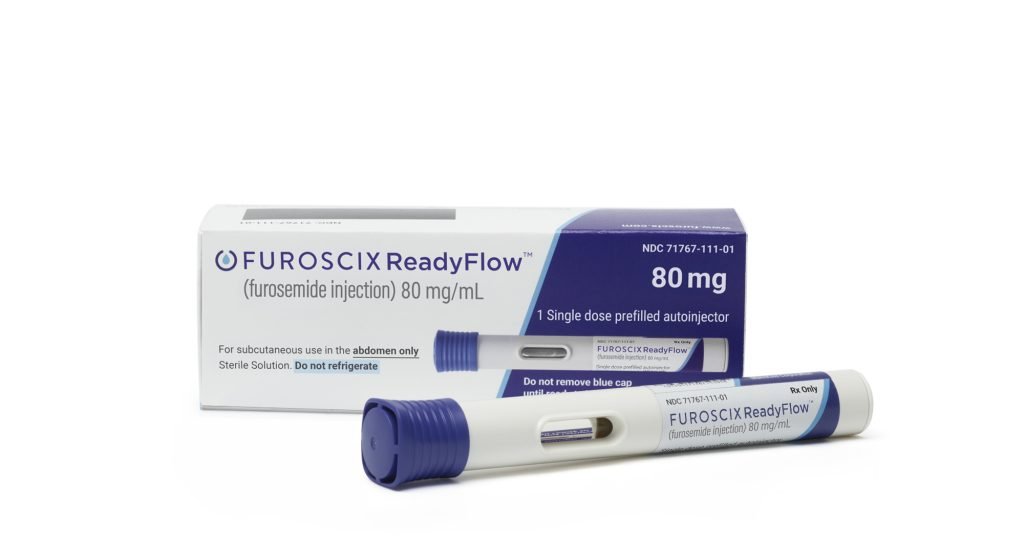
FDA approves MannKind’s Furoscix ReadyFlow, the first subcutaneous furosemide autoinjector with IV-equivalent exposure for edema in HF and CKD.
Written By: Anamika Koshti, Pharm D
Reviewed By: Pharmacally Editorial Team
On July 24, 2026, MannKind Corporation announced that the U.S. Food and Drug Administration has approved Furoscix ReadyFlow (furosemide injection) for the treatment of edema (fluid overload) in adults with heart failure (HF) or chronic kidney disease (CKD). Furoscix ReadyFlow is the first and only autoinjector delivering subcutaneous furosemide with IV-equivalent exposure, based on comparisons of area under the curve (AUC) and pharmacodynamic (PD) endpoints, and is designed for self-administration outside the hospital setting.
The Problem It Addresses: Fluid Overload in HF and CKD
Heart failure affects approximately 6.7 million adults in the United States and is projected to reach more than 8 million by 2030. Fluid overload is among the primary drivers of worsening symptoms in both heart failure and chronic kidney disease and is one of the most frequent reasons patients with these conditions require emergency department visits, hospitalisation, or readmission. CKD frequently coexists with heart failure, further complicating fluid management and increasing the risk of recurrent events. Hospitalisation accounts for approximately 80% of heart failure-related healthcare costs in the United States, with annual heart failure costs expected to exceed $70 billion by 2030. Earlier outpatient intervention for worsening fluid overload carries the potential to reduce emergency department visits, hospitalisation, and readmission while helping break the cycle of recurrent acute decompensation.
What Is Furoscix ReadyFlow and How Does It Work?
Furoscix ReadyFlow delivers furosemide 80 mg/mL subcutaneously via a ready-to-use autoinjector, completing administration in under 10 seconds in a single injection. The drug is absorbed into the bloodstream, and symptom relief may begin within an hour or less. Its IV-equivalent exposure is established on the basis of AUC and pharmacodynamic endpoint comparisons with intravenous furosemide. The autoinjector is designed to be simple enough for patients to self-administer at home at the earliest sign of fluid accumulation, without requiring hospital-based infusion equipment.
How It Differs from the Existing Furoscix On-Body Infusor?
Furoscix (furosemide injection) delivered via the On-body infusor has been approved for adults with heart failure since 2022 and for CKD since 2025, and remains available. Furoscix ReadyFlow represents the second FDA-approved formulation of subcutaneous Furoscix, introducing a new autoinjector delivery system while using the same active ingredient. The existing On-body infusor requires approximately five hours to deliver the full dose. Furoscix ReadyFlow shortens that same delivery to under 10 seconds, making earlier outpatient intervention more practical and expanding opportunities for subcutaneous furosemide use across outpatient, post-discharge, and home-based care settings. The approved autoinjector is expected to be commercially available in the United States by the end of August 2026.
Clinical Evidence Supporting Approval
The FDA approval is supported by clinical data showing that Furoscix ReadyFlow achieved its primary pharmacokinetic endpoint. The study also demonstrated equivalent urine output, sodium excretion, and potassium excretion at 6, 8, and 12 hours compared with intravenous furosemide, demonstrating comparable pharmacodynamic effects. Furoscix ReadyFlow was generally well tolerated, with a safety profile consistent with the known effects of oral and intravenous furosemide. The most common adverse events were administration site and skin reactions, including bruising, redness, swelling, and injection site pain.
Expert and Company Perspectives
Hunter Champion, MD, PhD, Director of the Heart Failure and Pulmonary Hypertension Program at Southeastern Cardiology Associates and Emory University Healthcare Network, noted that an at-home option with IV-equivalent furosemide exposure delivered through a simple autoinjector gives clinicians a tool to intervene at the first signs of fluid overload, helping appropriate patients manage congestion outside the hospital while reducing the burden associated with hospital-based treatment.
Michael Castagna, PharmD, Chief Executive Officer of MannKind Corporation, described the approval as a meaningful step forward for patients, practitioners, payers, and hospitals, noting that Furoscix ReadyFlow has the potential to advance how fluid overload is managed outside traditional care settings and could help ease fluid burden for patients while reducing pressure on the healthcare system.
What This Means for Patients
The approval of Furoscix ReadyFlow provides patients with heart failure or chronic kidney disease a home-based diuretic option that delivers IV-equivalent furosemide exposure through a rapid subcutaneous autoinjector. The approval also expands opportunities for appropriate patients to receive treatment across outpatient, post-discharge, and home-based care settings. Early self-administration at the first signs of worsening fluid overload may support timely intervention before emergency department visits or hospitalisation become necessary.
Reference

About the Writer
Anamika Koshti (LinkedIn) is a PharmD professional and healthcare writer with interests in clinical research, pharmacovigilance, and evidence-based medicine. She has authored peer-reviewed publications on Alzheimer’s disease and PCOS, presented research at national conferences, and gained hands-on experience in medical content development and clinical data interpretation. She is committed to translating complex medical research into accurate, accessible content for healthcare professionals and patients.