
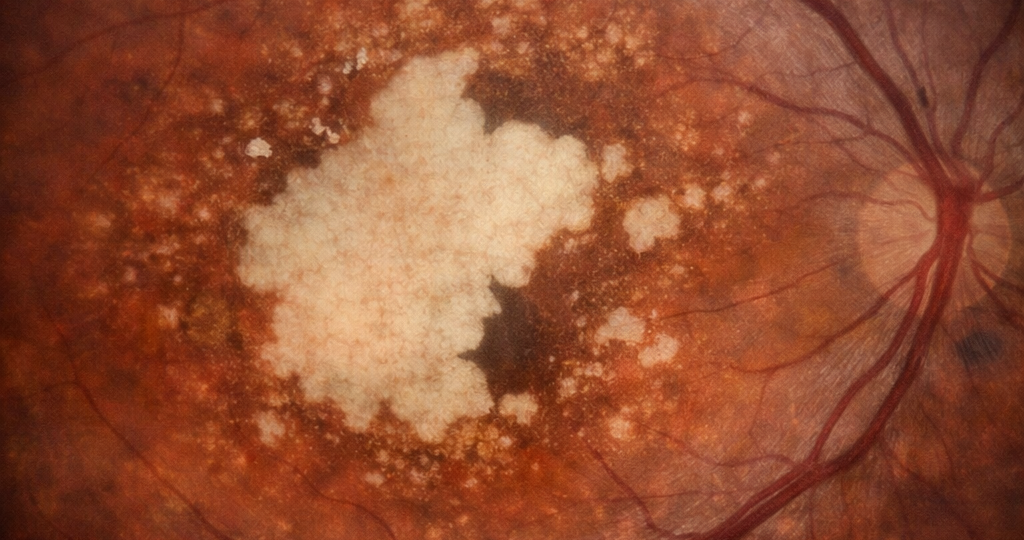
Inflammasome Therapeutics’ K8 reduced geographic atrophy lesion growth by 54% and improved visual acuity in a Phase 2 trial, supporting planned global Phase 3 development.
Medically Reviewed By:
Dr. Mayur Jawale, MBBS, MS-Ophthalmology,
Assisted By: Dr. Preethi Putti, PharmD
Inflammasome Therapeutics’ investigational dual inflammasome inhibitor K8 reduced the rate of geographic atrophy lesion growth by 54% and demonstrated a statistically significant visual acuity advantage in a Phase 2 study. The findings support advancement into a planned global Phase 3 program for geographic atrophy secondary to age-related macular degeneration.
Inflammasome Therapeutics has reported positive Phase 2 results for its investigational therapy K8 (kamuvudine-8) in patients with geographic atrophy (GA), a late-stage form of age-related macular degeneration (AMD). Over six months, K8 significantly slowed disease progression and showed an early signal of visual function preservation without identifying major safety concerns. The results were presented at the American Society of Retina Specialists (ASRS) Annual Meeting in Montreal.
K8 Targets Inflammasome-Driven Retinal Degeneration
K8 is an investigational dual inflammasome inhibitor delivered through a bioerodible sustained-release intravitreal implant administered once every three months. Unlike currently approved therapies that target the complement pathway, K8 suppresses inflammasome activation, an inflammatory mechanism implicated in retinal cell death and progression of geographic atrophy.
Geographic atrophy affects an estimated eight million people worldwide, including approximately 1.5 million people in the United States and 2.5 million in Europe. The disease causes irreversible loss of retinal cells, leading to progressive vision impairment and blindness, while treatment options capable of preserving visual function remain limited.
Phase 2 Trial Demonstrated Significant Reduction in Lesion Growth
The multicenter U.S. Phase 2 study (NCT06164587) enrolled 30 participants with bilateral geographic atrophy across nine clinical centers, evaluating 60 eyes. Participants received K8 implants in the worse-seeing eye, while the fellow eye served as an untreated control. Three dose levels were investigated: 0.3 mg, 0.7 mg, and 1.05 mg, with treatment administered at baseline and Month 3.
The primary endpoint assessed the rate of geographic atrophy growth using the U.S. Food and Drug Administration’s preferred linear mixed-effects slope model.
The 0.7 mg dose achieved the strongest efficacy, reducing the mean rate of geographic atrophy growth by 54% compared with pooled control eyes over six months (p=0.016). Across all three dose cohorts, K8 consistently slowed lesion growth relative to controls.
A prespecified analysis of patients with extrafoveal lesions also demonstrated a 4.0-letter adjusted mean improvement in best-corrected visual acuity (BCVA) across all K8-treated eyes compared with controls over six months (p=0.004).
For comparison, currently approved therapies for geographic atrophy reduced lesion growth by approximately 13% to 14% during the first six months of their pivotal Phase 3 studies and did not demonstrate significant visual acuity benefits during that period.
Favorable Safety Profile Supports Continued Development
No safety signals of concern were observed throughout the six-month study.
Investigators reported no drug-related serious adverse events, dose-limiting toxicities, endophthalmitis, intraocular inflammation, retinal vasculitis, optic neuropathy, or conversion to neovascular age-related macular degeneration.
K8 was administered using a preloaded 24-gauge intravitreal injector. The implant does not require refrigeration and provides sustained drug release over approximately three months, supporting a potential once-quarterly dosing schedule.
Experts Highlight Potential Clinical Significance
Professor Jayakrishna Ambati, Director of the Center for Advanced Vision Science at the University of Virginia and founder of Inflammasome Therapeutics, said the combination of lesion growth reduction and improved visual function suggests K8 may preserve retinal cells while improving the function of stressed cells by reducing inflammation. He added that the findings support confirmation in Phase 3 studies.
Professor Anat Loewenstein of Tel Aviv Medical Center noted that achieving both anatomical and functional benefits addresses a major unmet need in geographic atrophy, while Professor Frank Holz of the University of Bonn described the Phase 2 findings as highly encouraging and supportive of rapid advancement into pivotal studies.
Dr. Charles C. Wykoff, Retina Consultants of Texas, also said the fellow-eye controlled design and observed efficacy provide a strong rationale for larger confirmatory trials.
Global Phase 3 Program Planned
Inflammasome Therapeutics plans to initiate a global pivotal Phase 3 program after discussions with regulatory authorities. The company will seek regulatory feedback on the study design while continuing development of K8 for geographic atrophy.
K8 remains an investigational therapy and has not been approved by the U.S. Food and Drug Administration or any other regulatory authority. Its safety and efficacy have yet to be established in larger confirmatory trials.
What This Means for Patients
The Phase 2 findings suggest that K8 could offer a meaningful advance for people with geographic atrophy by slowing retinal damage while also helping preserve vision, two treatment goals that remain difficult to achieve with current therapies. However, these results come from a small, six-month study, and K8 is still investigational. Larger Phase 3 trials are needed to confirm its long-term safety and effectiveness before it can become a treatment option for patients.
Reference

About the Writer
Dr.Preethi Putti, PharmD (LinkedIn) is a pharmaceutical researcher with experience in healthcare and pharmaceutical market research and competitive intelligence. She specializes in analyzing drug pipelines, clinical data, and industry trends and translating complex scientific data into clear and structured medical content. Strong foundation in clinical research, data interpretation, and evidence-based healthcare analysis. Committed to advancing a global career in clinical research and healthcare innovation.