
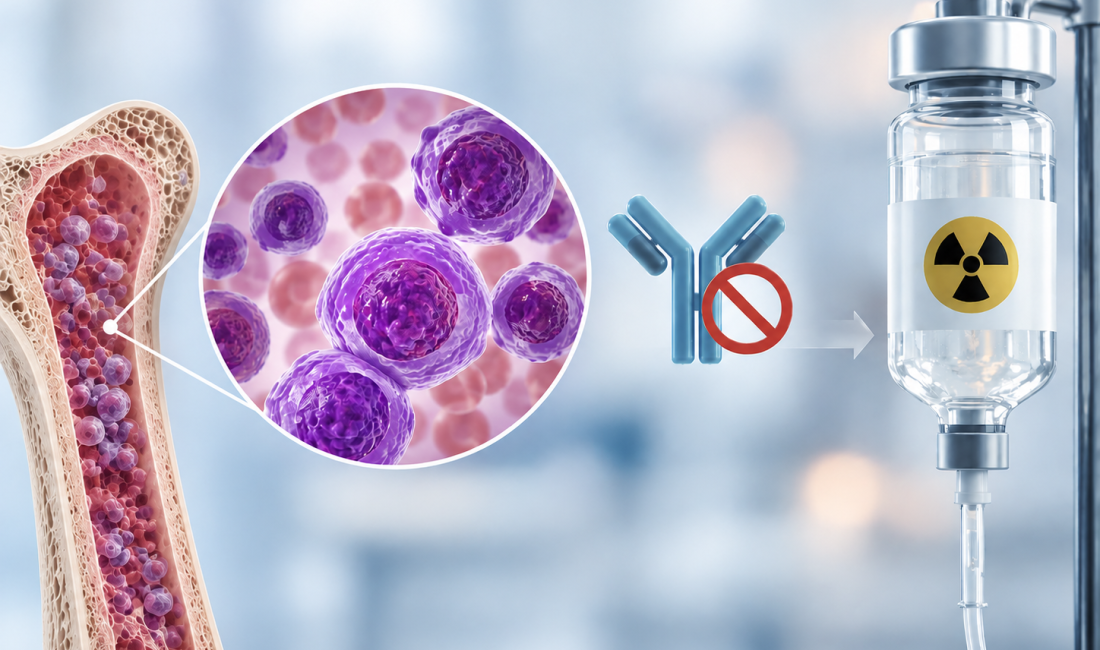
Iopofosine I 131 showed an 87.5% overall response rate and 79.2% major response rate in BTK inhibitor-resistant Waldenström macroglobulinemia.
Written By: Aasritha Thippavajjala, PharmD
Reviewed By: Pharmacally Editorial Team
Cellectar Biosciences will present new Phase 2 CLOVER-WaM subgroup data (NCT02952508) showing that iopofosine I 131 produced an 87.5% overall response rate and 79.2% major response rate in heavily pretreated patients with Waldenström macroglobulinemia (WM) who received the therapy immediately after BTK inhibitor treatment.
Strong Responses After BTK Inhibitor Therapy
The analysis focused on patients with WM who were refractory or resistant to BTK inhibitors and had received at least two prior lines of therapy. In this difficult-to-treat population, responses to iopofosine I 131 lasted for more than 16 months, according to the company.
Cellectar will present the findings at the International Workshop for Waldenström Macroglobulinemia (IWWM), scheduled for October 14–16, 2026, in Palm Springs, California. The presentation, titled “Iopofosine I 131 After BTK Inhibitors in Waldenström Macroglobulinemia: CLOVER-WaM Subgroup Efficacy and Safety,” is scheduled for October 15.
What Is Waldenström Macroglobulinemia?
Waldenström macroglobulinemia is a rare, slow-growing B-cell non-Hodgkin lymphoma also known as lymphoplasmacytic lymphoma. The disease is characterized by abnormal lymphoplasmacytic cells, typically involving the bone marrow, that produce excess monoclonal immunoglobulin M (IgM). High levels of IgM can increase blood viscosity and contribute to complications such as hyperviscosity-related symptoms.
Targeted Radioisotope Delivery
Iopofosine I 131 is a phospholipid drug conjugate (PDC) that delivers iodine-131, a therapeutic radioisotope, to cancer cells. Cellectar is developing the drug as a targeted cancer treatment intended to concentrate radiation exposure at malignant cells while limiting off-target effects.
The program has advanced through Phase 2 development in relapsed or refractory WM, multiple myeloma and central nervous system lymphoma. The FDA has granted iopofosine I 131 Breakthrough Therapy Designation, along with multiple Orphan Drug, Rare Pediatric Disease and Fast Track designations across cancer indications. The European Medicines Agency has also granted PRIME designation.
Phase 3 Development Planned
The latest subgroup analysis supports Cellectar’s plan to move iopofosine I 131 into a confirmatory Phase 3 study in WM. The company expects to begin dosing patients in early 2027.
Cellectar also plans to submit a New Drug Application (NDA) to the FDA seeking accelerated approval during the first half of 2027. Because the therapy has Breakthrough Therapy Designation, the company expects a six-month FDA review and has projected a potential approval by the end of 2027. These timelines remain subject to regulatory review and clinical development outcomes.
Broader Development Program
Cellectar is evaluating its PDC platform across additional cancer settings. Its pipeline includes CLR 121125, an iodine-125 Auger-emitting program being studied in triple-negative breast cancer, lung cancer and colorectal cancer, as well as CLR 121225, an actinium-225 program targeting solid tumors including pancreatic cancer.
For iopofosine I 131, the upcoming IWWM presentation will provide additional clinical and safety detail from the CLOVER-WaM subgroup analysis. The reported response rates and duration of response provide the current basis for advancing the program toward confirmatory Phase 3 testing and a potential accelerated regulatory pathway.
Reference
Cellectar Biosciences to Present Compelling Efficacy Data from Phase 2 CLOVER WaM Subset Analysis of Iopofosine I 131 in Patients Refractory/Resistant to BTK Inhibitor Therapy at International Workshop for Waldenström Macroglobulinemia, Cellectar Biosciences, 29 September 2026
Study of Iopofosine I-131 (CLR 131) in Select B-Cell Malignancies (CLOVER-1) With Expansion in Waldenstrom (CLOVER-WaM), ClinicalTrials.gov ID NCT02952508

About the Writer
Aasritha Thippavajjala (Linkedin) is a pharm D student and aspiring medical writer with medical writing, clinical training experience and a strong interest in clinical research and patient safety She has hands-on exposure to clinical pharmacy activities including medication profile assessment, clinical case review, identification of potential drug-related problems, ADR awareness, patient counselling, and clinical documentation. She has also gained experience in medical literature review, evidence synthesis, and scientific communication through her published review article on digital twin-based patient simulation and her poster presentation at the 74th Indian Pharmaceutical Congress. Certified in ICH Good Clinical Practice (E6(R3)) and Scientific Writing in Health Research, she is passionate about applying her clinical knowledge and research skills to medical writing ,clinical research and contributing to accurate, evidence-based healthcare.