
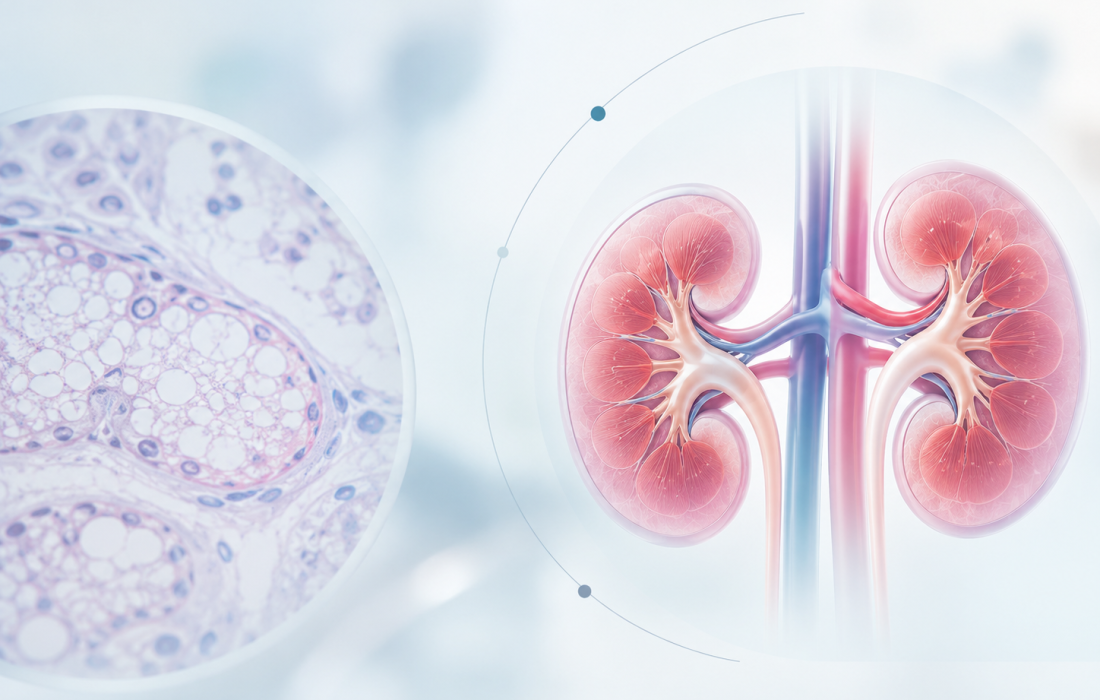
Idorsia launches the Phase 3 FAB-KLEAR study of lucerastat in Fabry disease as Nxera secures regional rights and renal outcomes remain a key focus.
Written By: Kalyani Boharapi, M. Pharm (RA)
Reviewed By: Pharmacally Editorial Review
Idorsia Has initiated FAB-KLEAR, a pivotal Phase 3 clinical study evaluating the investigational oral substrate reduction therapy lucerastat for its effect on kidney globotriaosylceramide (Gb3) accumulation in adult patients with Fabry disease. Announced on October 28, 2026, the trial commencement coincides with a global co-development and commercialization agreement with Nxera Pharma.
Under the terms of the agreement, Nxera will make an upfront payment of CHF 7 million, contribute to global Phase 3 development costs, and acquire exclusive rights to develop and commercialize lucerastat in Japan and select Asia-Pacific territories, excluding mainland China. Idorsia retains commercial rights in all other global regions and remains eligible for tiered royalties on net sales within Nxera’s territories. The transaction follows Nxera’s exercise of a pre-existing licensing option.
FAB-KLEAR Targets Histological Kidney Gb3 Reduction
FAB-KLEAR (NCT07778667) is an open-label Phase 3 trial enrolling 16 treatment-naïve or pseudo-naïve adult male patients diagnosed with Fabry disease. Pseudo-naïve participants are defined as individuals who previously received disease-specific treatments (such as enzyme replacement therapy) but have undergone a wash-out period of at least six months prior to enrollment.
The primary endpoint is the absolute change from baseline to Month 18 in the kidney Gb3 Barisoni Lipid Inclusion Scoring System (BLISS) score, which quantifies the average number of Gb3 inclusions per kidney peritubular capillary to provide direct histological proof of therapeutic clearance. Secondary endpoints include changes in plasma Gb3 concentrations, long-term safety, and pharmacokinetic profiles. FAB-KLEAR forms part of an FDA-aligned registration strategy designed to support potential global regulatory filings as early as 2029.
The broader Phase 3 clinical program also features FAB-SWITCH, a 74-patient active-controlled study evaluating lucerastat against standard-of-care enzyme replacement therapies (ERTs) on long-term renal function metrics. Together, these complementary studies aim to establish dual proof-of-concept across tissue biomarker depletion (kidney Gb3) and functional renal endpoints (eGFR trajectory), aligning with feedback received from the European Medicines Agency (EMA).
MODIFY Outcomes and Biopsy Data Provide Clinical Rationale
The clinical rationale for the new Phase 3 program builds on long-term follow-up from the Phase 3 MODIFY trial, which enrolled 118 adults with Fabry disease across 14 countries randomized 2:1 to lucerastat or placebo. Although MODIFY did not meet its primary six-month endpoint of reducing neuropathic pain, lucerastat demonstrated significant, sustained reductions in plasma and urinary Gb3 levels relative to placebo during long-term open-label extensions involving 107 patients.
An interim analysis presented at WORLDSymposium 2026 evaluated patients treated with lucerastat for at least 42 months (with maximum exposures exceeding six years). Results demonstrated a deceleration in estimated glomerular filtration rate (eGFR) loss during treatment compared with patients’ historical pretreatment trajectories. The overall annual eGFR slope improved from −3.50 mL/min/1.73 m²/year in the two-year historical period to −1.64 mL/min/1.73 m²/year during lucerastat therapy.
Renal stabilization signals were particularly pronounced across high-risk sub-populations:
- Classic Fabry Males: eGFR slope altered from −4.32 to −2.05 mL/min/1.73 m²/year.
- Baseline Impairment (eGFR <90 mL/min/1.73 m²): Slope altered from −6.18 to −2.49 mL/min/1.73 m²/year.
- Anti-Drug Antibodies (ADAs) Against ERT: Slope altered from −7.75 to −3.43 mL/min/1.73 m²/year.
Long-term treatment was accompanied by a sustained 51% reduction in plasma Gb3 and a favorable safety profile. Complementary kidney biopsy data from six adult males with classic Fabry disease treated for a median of 56 months showed low-to-no residual Gb3 inclusions in peritubular capillaries compared with baseline metrics (mean baseline BLISS score of 2.41 ± 1.59). While these non-randomized, historical-control observations require validation in controlled settings, they provide key rationale for the ongoing FAB-KLEAR and FAB-SWITCH registration studies.
Mechanism of Action
Lucerastat is an investigational, orally bioavailable glucosylceramide synthase (GCS) inhibitor designed to reduce the biosynthesis of glycosphingolipids, including Gb3. By inhibiting substrate production upstream, lucerastat functions independently of functional alpha-galactosidase A enzyme levels, underlying GLA gene mutation types, or neutralizing anti-drug antibody status. Lucerastat has been granted Orphan Drug Designation in both the United States and the European Union.
Clinical Significance
FAB-KLEAR will test whether lucerastat produces a measurable reduction in kidney Gb3 accumulation, while FAB-SWITCH will assess renal function against established ERTs. Earlier studies provide sustained biomarker reductions and encouraging, but non-randomized, long-term renal observations. The Phase 3 program must establish whether these findings translate into sufficiently robust evidence to support regulatory submissions, potentially as early as 2029.
Reference
Idorsia initiates pivotal Phase 3 study for lucerastat in Fabry disease and enters co-development and commercialization agreement with Nxera, Idorsia, 28 October 2026
Efficacy and Safety of Lucerastat Oral Monotherapy in Adult Subjects with Fabry Disease (MODIFY), ClinicalTrials.gov ID NCT03425539
A Study to Evaluate the Long-term Safety and Tolerability of Lucerastat in Adult Subjects with Fabry Disease, ClinicalTrials.gov ID NCT03737214

About the Writer
Kalyani Boharapi (LinkedIn) is a pharmacy professional and healthcare writer currently pursuing an M.Pharm in Regulatory Affairs at Dr. D. Y. Patil College of Pharmacy, with interests in pharmaceutical regulations, drug development, and healthcare innovation. She has academic exposure to dossier preparation, scientific writing, and regulatory documentation. Kalyani has also completed certification courses in Generative AI, AI in Pharma, and Bioinformatics, and actively participates in pharmaceutical conferences to stay updated with emerging trends and advancements in the healthcare and pharmaceutical industry.