
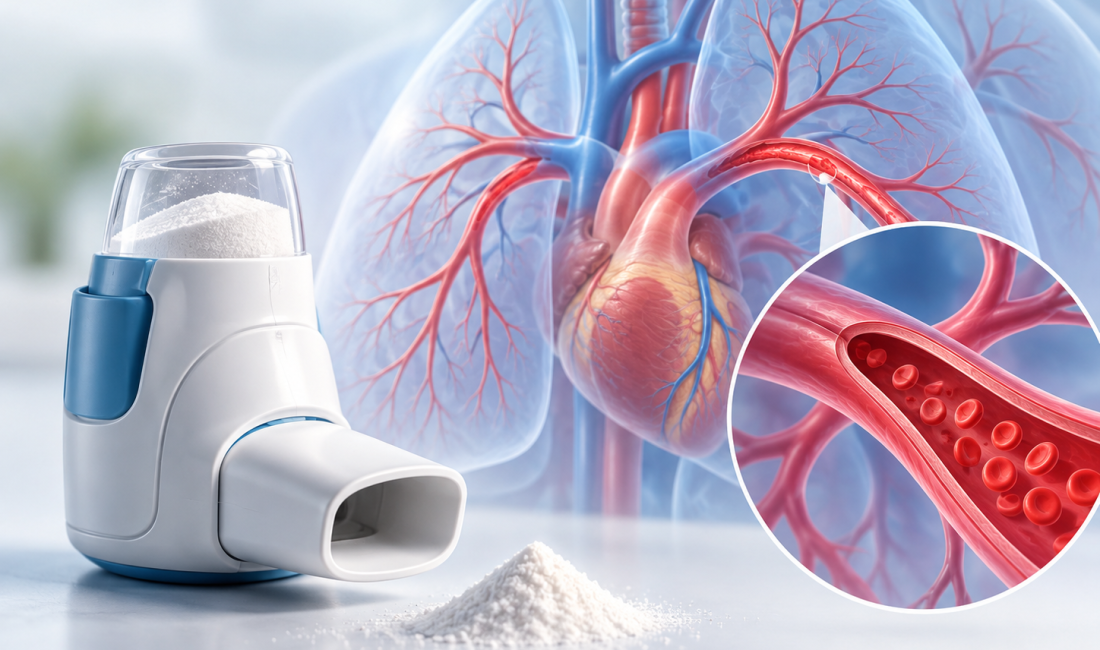
Gossamer Bio files its first FDA NDA for inhaled seralutinib in pulmonary arterial hypertension, supported by PROSERA and TORREY clinical data.
Written By: Umesh Hanumante,
M.Pharm (Reg. Affairs)
Reviewed By: Pharmacally Editorial Team
Gossamer Bio has submitted a New Drug Application (NDA) to the U.S. Food and Drug Administration (FDA) for seralutinib, an inhaled dry-powder therapy being developed for the treatment of pulmonary arterial hypertension (PAH). The submission marks the company’s first NDA and follows regulatory discussions with the FDA regarding the clinical and statistical findings from the Phase 3 PROSERA study.
Seralutinib Targets Pathways Involved in Pulmonary Vascular Remodeling
PAH is a progressive disorder characterized by pulmonary vascular constriction and structural remodeling, resulting in increased pulmonary vascular resistance and potentially progressive right ventricular dysfunction. Current PAH therapies primarily target vasodilatory pathways, including endothelin, nitric oxide and prostacyclin signaling.
Seralutinib is an inhaled tyrosine kinase inhibitor designed to target platelet-derived growth factor receptors (PDGFRα and PDGFRβ), colony-stimulating factor 1 receptor (CSF1R), and c-KIT. These signaling pathways are involved in cellular proliferation, inflammation and fibrotic processes associated with pulmonary vascular remodeling.
The dry-powder formulation is administered directly to the lungs and is intended to provide localized exposure while targeting cellular pathways implicated in disease progression.
Phase 3 PROSERA Provided the Primary Clinical Evidence
The NDA is supported by the Phase 3 PROSERA study (NCT05934526), a randomized, double-blind, placebo-controlled trial that enrolled 390 patients with PAH receiving background therapy. The primary endpoint was the change from baseline in six-minute walk distance (6MWD) at Week 24.
Seralutinib produced a median improvement in 6MWD of 28.2 meters compared with 13.5 meters with placebo, corresponding to a placebo-adjusted treatment effect of 13.3 meters. The nominal p-value was 0.0320. However, the result did not meet the prespecified statistical significance threshold of 0.025 for the primary endpoint.
Gossamer subsequently conducted additional analyses of the PROSERA dataset, including assessments of secondary clinical measures. The company has characterized these findings, together with data from the Phase 2 TORREY study, as supporting the overall benefit-risk assessment submitted to the FDA.
TORREY Data Supported the Development Program
The NDA also incorporates findings from the Phase 2 TORREY study, which evaluated seralutinib in patients with PAH receiving background therapy.
In the 86-patient study, seralutinib demonstrated a 14.3% placebo-adjusted improvement in pulmonary vascular resistance (PVR) at Week 24, with a between-group difference of 96.1 dyn·s/cm⁵ and a p-value of 0.0310.
The TORREY findings provided earlier evidence that targeting pulmonary vascular remodeling pathways with inhaled seralutinib could affect hemodynamic measures associated with PAH.
FDA Discussions Preceded the NDA Submission
Before submitting the application, Gossamer held a Pre-NDA Type B meeting with the FDA in June 2026. According to the company, the FDA considered the magnitude and statistical significance of the PROSERA treatment effect to be matters for review rather than issues preventing submission of the NDA.
The company subsequently completed the NDA package and submitted it to the agency in September 2026. FDA acceptance for filing remains pending. If accepted, the application will undergo the agency’s standard review of the submitted efficacy, safety, manufacturing and other regulatory information.
Regulatory and Development Outlook
Gossamer said it expects the FDA to complete its initial filing review later in 2026. The company has previously indicated that, if the NDA is accepted, a potential FDA action could occur in the third quarter of 2027, although this remains dependent on the agency’s review and is not an FDA commitment.
The company’s development of seralutinib in pulmonary hypertension associated with interstitial lung disease (PH-ILD) is being evaluated separately. Enrollment in the Phase 3 SERANATA study was paused following the PROSERA results while Gossamer assessed the broader clinical dataset and engaged with regulators.
The NDA submission therefore represents an important regulatory milestone for seralutinib, while the FDA’s forthcoming review will determine whether the totality of clinical evidence supports approval in PAH.
Reference
Gossamer Bio Submits New Drug Application to U.S. FDA for Seralutinib for the Treatment of Pulmonary Arterial Hypertension, Gossamer Bio, 23September 2026
Efficacy and Safety of Seralutinib in Adult Subjects With PAH (PROSERA), ClinicalTrials.gov ID NCT05934526

About the Writer
Umesh Hanumante (M.Pharm) (LinkedIn) is a pharmacy professional and healthcare writer with a background in Regulatory Affairs, pharmaceutical innovation, and clinical research. He has around two years of industry experience as an Executive PMT at Troikaa Pharmaceuticals Ltd and qualified GPAT 2024. His areas of interest include regulatory compliance, dossier preparation, clinical trials, emerging therapies, and advancements in the global pharmaceutical and healthcare sector.