
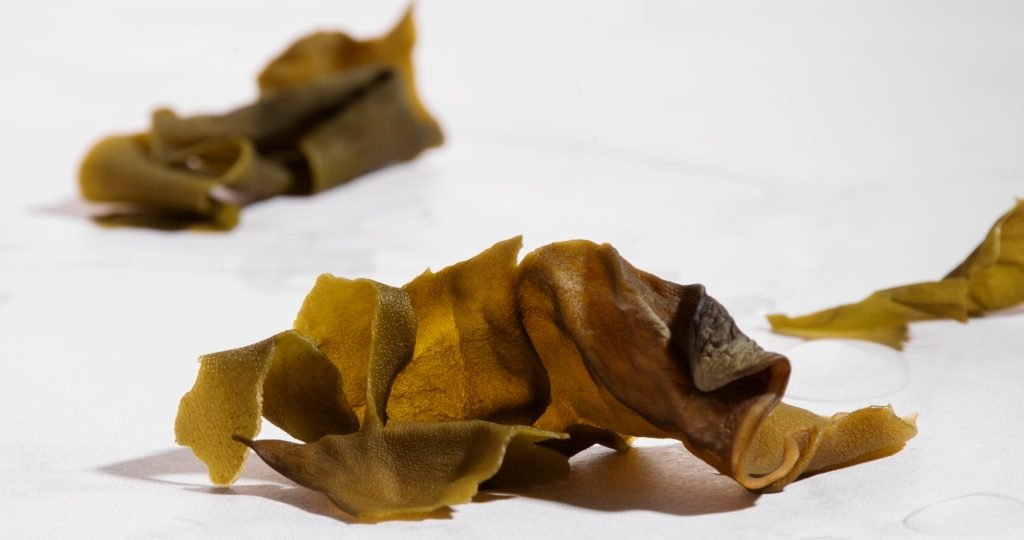
A randomized placebo-controlled trial found that Undaria pinnatifida-derived fucoidan significantly improved benign prostatic hyperplasia (BPH) symptoms and quality of life over 90 days while demonstrating a favorable safety profile.
Written By: Mayuresh Salvi, PharmD
Reviewed By: Pharmacally Editorial Team
Benign prostatic hyperplasia (BPH) is one of the most common age-related conditions affecting men and frequently leads to bothersome lower urinary tract symptoms (LUTS). A newly published randomized, double-blind, placebo-controlled clinical trial has reported that daily supplementation with fucoidan extracted from the brown seaweed Undaria pinnatifida significantly reduced BPH symptom severity compared with placebo after 90 days, while demonstrating a favorable safety profile.
Scientific and Clinical Context
BPH results from non-cancerous enlargement of the prostate, causing bladder outlet obstruction and symptoms including urinary frequency, urgency, nocturia, weak stream, intermittency, and incomplete bladder emptying. Although alpha-blockers and 5-alpha reductase inhibitors remain standard treatments, adverse effects and variable tolerability have driven interest in evidence-based non-pharmacological approaches.
Fucoidan is a sulfated polysaccharide naturally present in brown seaweeds. Previous laboratory and animal studies have shown anti-inflammatory, antioxidant, immunomodulatory, and potential anti-androgenic effects, including reductions in prostate weight, inflammatory cytokines, testosterone, dihydrotestosterone, and prostate-specific antigen (PSA). However, robust clinical evidence in patients with BPH has been limited until now.
Trial Design and Clinical Findings
The 90-day study enrolled 95 men aged 45 to 80 years with clinically and radiologically confirmed moderate BPH and International Prostate Symptom Scores (IPSS) between 8 and 19. Participants were randomized in a 1:1 ratio to receive either 1 g/day of Undaria pinnatifida fucoidan (two 500 mg capsules) or placebo. The primary endpoint was change in total IPSS, with secondary endpoints including urinary flow rate, post-void residual volume (PVR), PSA, and quality-of-life assessments.
Clinical benefit became evident after two months of treatment. By Day 60, participants receiving fucoidan experienced significantly greater improvement in total IPSS than those receiving placebo (p=0.0234). The treatment effect strengthened by Day 90, when the mean IPSS reduction reached 3.40 points compared with 0.93 points in the placebo group (p=0.0015).
The intervention also produced significant improvements in both major symptom domains. Voiding symptoms improved nine-fold more than placebo by Day 90 (p=0.0006), while storage symptoms also declined significantly (p=0.0150). Individual symptom improvements included incomplete emptying, urinary frequency, intermittency, and straining. Quality-of-life scores related to urinary symptoms improved significantly at both Day 60 and Day 90.
Clinically meaningful improvement was observed in a greater proportion of patients receiving fucoidan. By Day 90, 51.1% of treated participants achieved at least a 3-point reduction in total IPSS compared with 28.9% of placebo recipients (p=0.0314), supporting both statistical and clinical relevance of the findings.
Safety Profile
Objective urinary measurements showed numerical improvement but did not differ significantly between treatment groups. Urinary flow rate increased modestly with fucoidan, while reductions in post-void residual volume occurred in both groups without significant between-group differences. Serum PSA levels also remained unchanged throughout the study.
Safety findings were reassuring. Twenty-two adverse events were reported during the trial, with only three considered potentially related to study treatment. These consisted of mild itching in two participants receiving fucoidan and one rash in the placebo group. All events resolved without complications, and vital signs remained within normal ranges throughout the study.
Clinical Perspective and Future Outlook
The investigators concluded that Undaria pinnatifida fucoidan produced statistically and clinically meaningful improvements in BPH symptoms and urinary symptom-related quality of life while maintaining good tolerability. They also noted important limitations, including the relatively short 90-day follow-up and the absence of significant effects on objective urinary parameters or PSA.
Longer-duration studies with larger patient populations will be needed to determine whether symptom improvements are sustained over time and whether fucoidan can influence disease progression or complement established pharmacological therapies. Nevertheless, the findings provide one of the strongest randomized clinical datasets to date supporting fucoidan as a potential nutraceutical option for men with moderate BPH.
Reference

About the Writer
Mayuresh Sunil Salvi (Linkedin) is a PharmD professional and healthcare writer with a strong interest in pharmacovigilance, drug safety, and emerging medical research. He is passionate about exploring new drug discoveries, clinical research, and advances in evidence-based medicine. His interests also include ward rounds, prescription audits, and treatment analysis to support rational pharmacotherapy and improved patient care.