
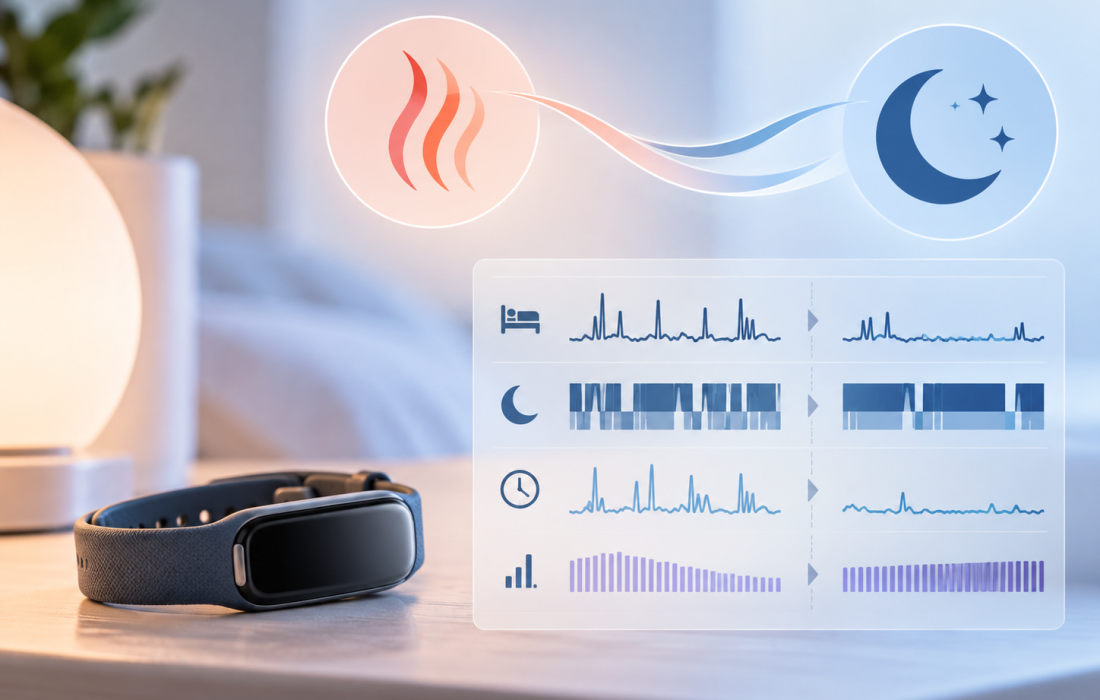
Fezolinetant 45 mg improved vasomotor symptoms and sleep measures through week 12 in the Phase 4 OPTION-VMS real-world study.
Written By: Creola Gonsalves, MS Biotech
Reviewed By: Pharmacally Editorial Team
Astellas Pharma U.S. presented preliminary findings from the Phase 4 OPTION-VMS study at the 2026 International Menopause Society (IMS) 20th World Congress on Menopause. The real-world analysis found that women treated with VEOZAH (fezolinetant) 45 mg experienced statistically significant improvements in bothersome vasomotor symptoms (VMS), including hot flashes and night sweats, at week 12, the study’s primary endpoint. Improvements were also observed at weeks 4 and 8.
VMS frequently disrupt sleep and daily functioning during menopause. Sleep disturbances affect an estimated 40% to 60% of menopausal women, while women with moderate to severe hot flashes are nearly three times more likely to report frequent nighttime awakenings than women without hot flashes.
Objective and Patient-Reported Sleep Improvements
The preliminary analysis evaluated sleep using both patient-reported outcomes and objective actigraphy data collected through a medical-grade wearable device.
Women receiving fezolinetant showed statistically significant improvements in patient-reported sleep disturbance, measured using the PROMIS Sleep Disturbance Short Form 8b, at weeks 4, 8 and 12. Scores moved from the mild sleep disturbance range at baseline into the no-sleep-disturbance range by week 4, with improvements maintained through week 12.
Objective sleep measures also improved significantly at all three time points. These included wakefulness after sleep onset (WASO), sleep efficiency, sleep latency and nighttime awakenings. By week 12, women treated with fezolinetant experienced a mean reduction of 2.6 nighttime awakenings from baseline.
The improvement in VMS exceeded the prespecified minimal clinically important difference, supporting the clinical relevance of the observed symptom reduction. The study was not designed to compare the effectiveness of fezolinetant with other non-hormonal treatment groups.
OPTION-VMS Evaluates Real-World Treatment Outcomes
OPTION-VMS (NCT06049797) is a Phase 4, longitudinal observational study involving women aged 40 to 75 years with menopausal hot flashes and night sweats who received non-hormonal therapy in routine clinical practice.
The study includes women prescribed fezolinetant, SSRIs/SNRIs and other non-hormonal therapies, including gabapentin and oxybutynin. The primary endpoint assessed changes in bothersome VMS at week 12 using the Menopause-Specific Quality of Life (MENQOL) VMS domain score. Additional outcomes include sleep quality, menopause-related quality of life, sexual health, mood, work productivity and safety.
No new safety signals were identified in the preliminary fezolinetant analysis. Two participants experienced mild, non-serious elevations in liver laboratory tests; neither case resulted in treatment or study discontinuation.
Fezolinetant Targets the KNDy Neuron Pathway
Fezolinetant is a selective neurokinin 3 (NK3) receptor antagonist that blocks neurokinin B signaling within the hypothalamic kisspeptin/neurokinin/dynorphin (KNDy) neuronal pathway. This pathway contributes to thermoregulatory control during menopause.
By reducing excessive KNDy neuron signaling, fezolinetant modulates the brain’s temperature-regulation system and reduces the frequency and severity of moderate to severe VMS.
Additional Real-World Data Expected
The OPTION-VMS findings add to the real-world evidence for fezolinetant, particularly regarding sleep outcomes. Astellas is also presenting interim findings from the ongoing GRACE study in Germany and ADELE-AU study in Australia at IMS 2026.
GRACE (NCT07455812) is a 24-week observational study evaluating effectiveness, safety, symptom improvement, quality of life, sleep disturbance and treatment satisfaction among women receiving fezolinetant in Germany. ADELE-AU is evaluating real-world sleep outcomes among Australian women treated with fezolinetant for moderate to severe VMS.
These studies are expanding the real-world evidence base for fezolinetant, with sleep outcomes providing additional insight into treatment effects beyond control of menopausal vasomotor symptoms.
Reference
New Preliminary Real-World VEOZAH™ (fezolinetant) Data Highlights Improvements in Menopause-Related Symptoms and Sleep Outcomes, Astellas, 02 October 2026
A Study Following Women in Menopause Treated with a Non-hormonal Therapy for Hot Flashes and Night Sweats (OPTION-VMS), ClinicalTrials.gov ID NCT06049797

About the Writer
Creola Gonsalves (Linkedin) is an M.S. Biotechnology postgraduate with a strong interest in clinical research, evidence interpretation, and healthcare writing, with a focus on translating life-science knowledge into meaningful real-world insights.
She is trained in Good Clinical Practice (GCP), clinical research principles, and critical interpretation of randomized clinical trials, with certifications from NIH and Stanford University.
Her research background in biotechnological applications and microbial research strengthens her ability to understand scientific evidence and develop clear, accurate, and research-driven healthcare content.