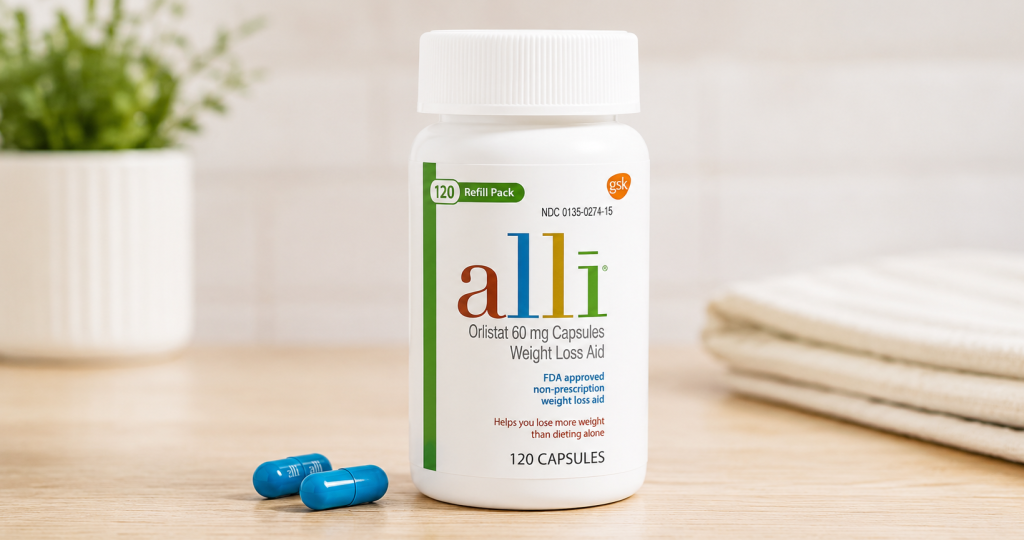
FDA updates the Drug Facts Label for alli (orlistat 60 mg) to warn of rare risks of acute kidney injury and kidney stones, aligning renal safety information across all orlistat products.
The U.S. Food and Drug Administration (FDA) has approved new safety warnings for alli (orlistat 60 mg), the only nonprescription weight-loss medication available in the United States. The revised Drug Facts Label highlights the rare risk of acute kidney injury and kidney stone formation and advises individuals with a history of kidney disease or kidney stones to consult a healthcare provider before use.
Mechanism and Risk Profile
Orlistat acts as a gastrointestinal lipase inhibitor, reducing dietary fat absorption and caloric intake. While gastrointestinal adverse effects remain the most commonly reported side effects, rare renal complications have been associated with oxalate accumulation.
Orlistat-associated fat malabsorption may increase intestinal oxalate absorption, potentially leading to hyperoxaluria, calcium oxalate kidney stones, oxalate nephropathy, and, in severe cases, acute kidney injury. FDA concluded that these risks are not dose-dependent, meaning they may occur with both OTC alli (60 mg) and prescription Xenical (120 mg).
The labeling update harmonizes renal safety information across all FDA-approved orlistat products.
FDA Safety Review
The labeling revision follows an FDA review of postmarketing safety reports and published medical literature covering the period from alli’s approval in February 2007 through December 2023.
FDA identified 12 cases of kidney-related complications associated with alli use, including nine reports from the FDA Adverse Event Monitoring System (AEMS) and three cases reported in the medical literature. Patients ranged from 36 to 76 years of age. Among cases with available treatment-duration information, kidney injury occurred after a median of 2.5 months of use.
Reported complications included acute kidney injury, oxalate nephropathy, hyperoxaluria, and calcium oxalate nephrolithiasis. The cases were clinically significant, with eight patients requiring hospitalization and five requiring dialysis. Seven patients experienced improvement following discontinuation and treatment.
FDA concluded that available postmarketing evidence, combined with the biological plausibility of oxalate-mediated kidney injury, supported strengthening the renal safety warnings for alli.
Patient and Clinician Guidance
The updated Drug Facts Label advises consumers with a history of kidney disease or kidney stones to consult a healthcare provider before taking alli.
Patients should discontinue treatment and seek medical attention if they develop symptoms suggestive of kidney injury or kidney stones, including back or groin pain, painful urination, blood in the urine, swelling of the feet or legs, or reduced urine output.
Healthcare professionals are advised to counsel patients on these rare risks and promptly evaluate suspected renal complications. Additional monitoring may be appropriate for individuals with pre-existing kidney conditions.
Clinical Implications
Kidney complications associated with orlistat remain uncommon relative to its widespread use. However, FDA determined that the available evidence warranted stronger consumer warnings to improve awareness and support earlier recognition of potentially serious renal adverse events.
The labeling update brings renal safety information for alli into alignment with prescription orlistat products and reinforces the importance of monitoring for rare but potentially serious kidney complications during treatment.
Reference