
FDA grants accelerated approval to TUDRIQEV plus nivolumab for unresectable advanced melanoma after PD-1 therapy failure, supported by IGNYTE trial data.
Written By: Mayuresh Salvi, PharmD
Reviewed By: Pharmacally Editorial Team
The U.S. Food and Drug Administration has granted accelerated approval to TUDRIQEV™ (vusolimogene oderparepvec-wtpg) in combination with nivolumab for the treatment of adults with unresectable advanced cutaneous melanoma whose disease progressed during or after treatment with a PD-1 blocking antibody-based regimen. The approval provides a new therapeutic option for patients with anti-PD-1 refractory melanoma, a setting associated with poor prognosis and limited effective treatments.
The accelerated approval is based on objective response rate (ORR) and duration of response (DoR) observed in the Phase 1/2 IGNYTE trial (NCT03767348). Continued approval will depend on verification of clinical benefit in the ongoing confirmatory Phase 3 IGNYTE-3 study (NCT06264180).
New Option for a High-Unmet-Need Melanoma Population
Immune checkpoint inhibitors have transformed melanoma treatment, but many patients eventually develop resistance or fail to respond. More than half of patients with advanced melanoma experience disease progression within six months of PD-1 inhibitor therapy, and median overall survival after progression is typically less than one year.
TUDRIQEV is the first FDA-approved oncolytic viral therapy specifically indicated for this anti-PD-1 refractory melanoma population. The treatment combines intratumoral viral immunotherapy with systemic PD-1 blockade to stimulate both direct tumor destruction and broader anti-tumor immune activation.
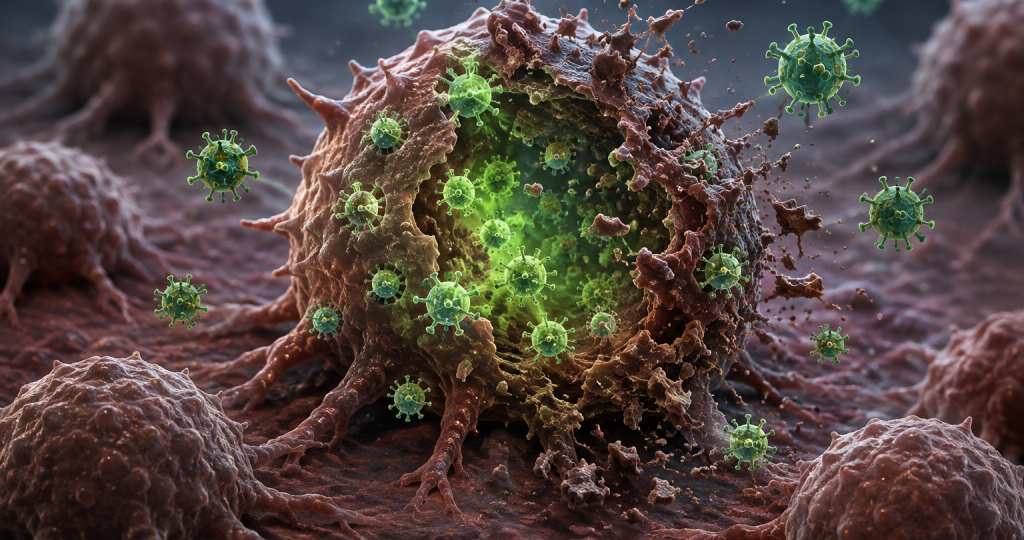
The genetically modified herpes simplex virus type 1 (HSV-1) therapy selectively replicates inside tumor cells, causing tumor lysis while releasing tumor-associated antigens. It also expresses granulocyte-macrophage colony-stimulating factor (GM-CSF) and a fusogenic glycoprotein (GALV-GP-R−), which enhance immune activation and tumor cell killing.
IGNYTE Trial Demonstrated Durable Responses
The FDA approval is supported by results from the multicenter, open-label Phase 1/2 IGNYTE trial. Among 140 enrolled patients, 91 patients with at least one non-injected lesion formed the efficacy-evaluable population. These patients had unresectable Stage IIIB, IIIC, or IV melanoma that progressed after at least eight weeks of anti-PD-1-based therapy, with or without prior anti-CTLA-4 treatment.
TUDRIQEV plus nivolumab achieved an objective response rate (ORR) of 24.2%, with a median duration of response of 14.1 months. The study enrolled a clinically challenging population, including 80% of patients with Stage IV disease, 54% with PD-L1-negative tumors, 45% with lung metastases, 24% with liver metastases, and 13% who had previously received adjuvant anti-PD-1 therapy. These findings, which demonstrated durable responses in a heavily pretreated population, were previously published in the Journal of Clinical Oncology.
Favorable Safety Profile Supports Clinical Use
TUDRIQEV combined with nivolumab demonstrated a manageable safety profile. Most treatment-related adverse events were Grade 1 or Grade 2 and transient, with no commonly reported Grade 4 or Grade 5 treatment-related adverse events.
The most frequently reported adverse reactions included nausea, diarrhea, vomiting, constipation, decreased appetite, abdominal pain, fatigue, pyrexia, chills, injection-site reactions, influenza-like illness, infections, musculoskeletal pain, arthralgia, headache, dizziness, cough, dyspnea, rash, pruritus, and hemorrhage.
The prescribing information also includes warnings regarding potential herpes virus transmission, herpes infection or reactivation, and complications associated with intratumoral injection procedures.
Treatment consists of direct intratumoral injections every two weeks, with dose selection based on tumor size. Deep or visceral tumors may be injected using image-guided techniques, while nivolumab treatment begins during the third week of therapy.
FDA Highlights Clinical Need
The FDA noted that patients whose melanoma no longer responds to PD-1 inhibitors face limited treatment options.
Karim Mikhail, B. Pharm., M.S., Acting Director of the FDA’s Center for Biologics Evaluation and Research (CBER), said the approval provides oncologists with an important new treatment option for patients with advanced melanoma who have exhausted PD-1-based immunotherapy.
The application received both Breakthrough Therapy and Priority Review designations before approval.
FDA Clears TUDRIQEV After Extensive Review
The approval concludes a lengthy and closely scrutinized regulatory review for TUDRIQEV. The therapy previously received two Complete Response Letters (CRLs) after the FDA determined that the single-arm IGNYTE trial did not provide sufficient evidence for accelerated approval. Ahead of the latest review, FDA briefing documents again questioned aspects of the efficacy data, although the application later gained support during the Cellular, Tissue, and Gene Therapies Advisory Committee meeting, where experts emphasized the high unmet need in anti-PD-1 refractory melanoma. The FDA ultimately granted accelerated approval while requiring confirmation of clinical benefit through the ongoing Phase 3 IGNYTE-3 trial.
Commercial Launch and Confirmatory Trial Underway
Replimune plans to make TUDRIQEV available in the United States through its ReplimuneConnect Plus patient support program, which provides reimbursement assistance, access services, and financial support for eligible patients.
Meanwhile, the global Phase 3 IGNYTE-3 trial continues to evaluate TUDRIQEV in combination with nivolumab to confirm clinical benefit, a requirement of the FDA’s accelerated approval pathway. Positive results from the confirmatory study will be necessary for conversion to full regulatory approval.
References
About the Writer
Mayuresh Sunil Salvi (Linkedin) is a PharmD professional and healthcare writer with a strong interest in pharmacovigilance, drug safety, and emerging medical research. He is passionate about exploring new drug discoveries, clinical research, and advances in evidence-based medicine. His interests also include ward rounds, prescription audits, and treatment analysis to support rational pharmacotherapy and improved patient care.