
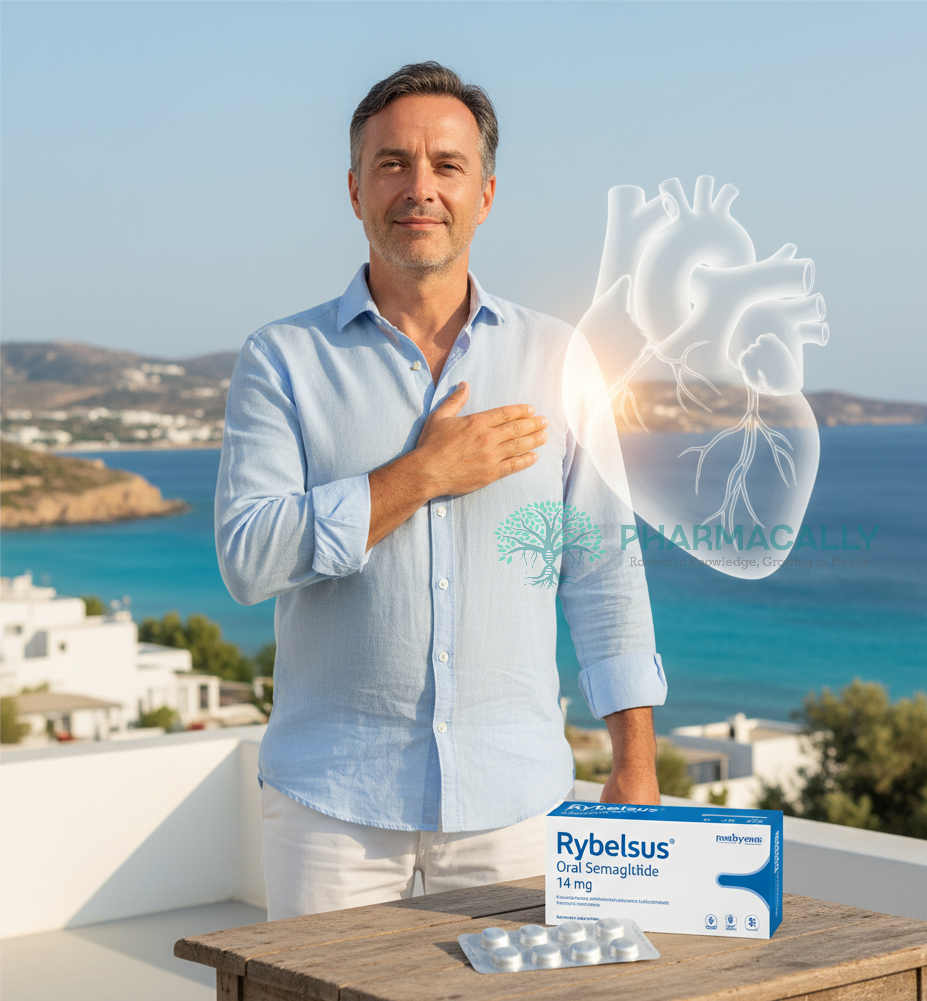
Rybelsus (oral Semaglutide) has been approved by the US FDA for reducing the risk of major adverse cardiovascular events including heart attack and stroke in adults with type-2 diabetes who are at high cardiovascular risk, marking a significant advancement in preventive cardiology and diabetes management.
Written By: Abhinay Wadekar, BPharm
Reviewed By: Pharmacally Editorial Team
The US FDA has expanded the indication for Rybelsus (oral semaglutide) to include the reduction of major adverse cardiovascular events (MACE) defined as cardiovascular death, nonfatal heart attack, or nonfatal stroke in adults with type 2 diabetes and high cardiovascular risk. This approval is based on robust evidence from the SOUL cardiovascular outcomes trial, which demonstrated that oral semaglutide significantly lowers cardiovascular risk, even in patients who have not previously experienced a cardiovascular event. Novo Nordisk A/S is the marketing Authorization Holder of Rybelsus.
Study Design and Key Results
The SOUL trial (Semaglutide Cardiovascular Outcomes Trial) was designed to evaluate the cardiovascular efficacy of oral semaglutide in adults with type 2 diabetes who have established atherosclerotic cardiovascular disease and/or chronic kidney disease. SOUL was an international, multicenter, randomized, double-blind, placebo-controlled, parallel-group, event-driven phase 3b trial conducted at 444 sites across 33 countries. It compared oral semaglutide at a target dose of 14 mg once daily (with dose escalation from 3 mg to 7 mg) versus matching placebo, both added to standard of care for diabetes and cardiovascular risk management.
The trial enrolled 9,650 adults aged 50 years or older diagnosed with T2D and glycated hemoglobin (HbA1c) between 6.5% and 10.0%. Participants had established ASCVD (coronary artery disease, cerebrovascular disease, or symptomatic peripheral arterial disease) and/or CKD (estimated glomerular filtration rate below 60 mL/min/1.73 m²).
The primary endpoint was the time from randomization to the first occurrence of a major adverse cardiovascular event (MACE), defined as cardiovascular death, nonfatal myocardial infarction (heart attack), or nonfatal stroke.
Secondary endpoints included several cardiovascular and renal outcomes, such as:
Expanded cardiovascular composite outcomes
Progression of chronic kidney disease
Outcomes related to peripheral artery disease and heart failure
The trial was event-driven, continuing until 1,225 adjudicated primary endpoint events occurred. Median follow-up was approximately 49.5 months.
Results
Oral semaglutide demonstrated a 14% relative risk reduction in the primary composite MACE endpoint compared to placebo. This was driven predominantly by reductions in nonfatal myocardial infarction, with consistent benefits observed across subgroups regardless of baseline use of other cardiovascular medications like SGLT2 inhibitors.
The treatment was generally well-tolerated, with the most common adverse events being gastrointestinal in nature (nausea, diarrhea), consistent with the GLP-1 receptor agonist class profile. Serious adverse events were fewer in the semaglutide group, largely due to reduced cardiovascular events.
Group | Patients | MACE Events | MACE Rate (%) | Relative Risk Reduction |
Oral Semaglutide (14 mg) | 4,825 | 300 | 6.2 | 14% |
Placebo | 4,825 | 345 | 7.1 | Reference |
Category | Details |
Trial type | Randomized, double-blind, placebo-controlled |
Sample size | 9,650 adults |
Population | T2D with ASCVD and/or CKD, aged ≥50 years |
Primary endpoint | Time to first MACE (CV death, nonfatal MI, stroke) |
Follow-up duration | Median ~49.5 months |
Relative risk reduction | 14% reduction in MACE with oral semaglutide |
Safety profile | Mostly gastrointestinal adverse events; well tolerated |
Safety Profile
The safety profile of Rybelsus in the SOUL trial was consistent with previous studies, with no new safety signals identified. The most common adverse events were gastrointestinal, including nausea and diarrhea, which are typical for GLP-1 receptor agonists. Serious adverse events were lower in the semaglutide group compared to placebo, mainly due to fewer cardiovascular events and infections.
Mechanism of Action
Rybelsus is a glucagon-like peptide-1 (GLP-1) receptor agonist. It mimics the natural hormone GLP-1, which helps regulate blood sugar, appetite, and digestion. Beyond its metabolic effects, oral semaglutide has demonstrated protective effects on the heart and blood vessels, likely due to its anti-inflammatory and anti-atherogenic properties.
Public Health Implications
This approval represents a major step in preventive cardiology, offering a needle-free, oral option for reducing cardiovascular risk in millions of adults with type-2 diabetes. Given the high global burden of diabetes and cardiovascular disease, Rybelsus could play a crucial role in reducing morbidity and mortality associated with these conditions.
Key Opinion
Dr. John B. Buse, Professor of Medicine at the University of North Carolina School of Medicine and co-chair of the SOUL steering committee, emphasized that “even in the absence of a previous heart attack or stroke, adults with type 2 diabetes face an increased risk of cardiovascular events, underscoring the need for therapies that go beyond managing blood sugar.” He added that “having an oral GLP-1 therapy to help improve glycemic control was an innovation in and of itself. This new indication showcases the versatility of semaglutide while expanding options for millions of people”.
Rybelsus (oral semaglutide) is now the first oral GLP-1 receptor agonist approved by the US FDA for reducing the risk of heart attack and stroke in adults with type-2 diabetes and high cardiovascular risk. This approval is supported by strong clinical evidence from the SOUL trial, demonstrating a 14% reduction in major adverse cardiovascular events. The drug offers a convenient, oral option for cardiovascular risk reduction, with a well-established safety profile and broad applicability across patient subgroups.
References
FDA approves Novo Nordisk’s oral semaglutide for cardiovascular (CV) risk reduction in adults with type 2 diabetes who are at high risk, including those who have not had a prior CV event, 17 Oct 2025, PRNewswire, https://www.prnewswire.com/news-releases/fda-approves-novo-nordisks-oral-semaglutide-for-cardiovascular-cv-risk-reduction-in-adults-with-type-2-diabetes-who-are-at-high-risk-including-those-who-have-not-had-a-prior-cv-event-302588005.html
A Heart Disease Study of Semaglutide in Patients with Type 2 Diabetes (SOUL), ClinicalTrials.gov ID NCT03914326, https://clinicaltrials.gov/study/NCT03914326
McGuire DK et al, Oral Semaglutide and Cardiovascular Outcomes in High-Risk Type 2 Diabetes, N Engl J Med. 2025 May 29;392(20):2001-2012. Doi: 10.1056/NEJMoa2501006. Epub 2025 Mar 29. PMID: 40162642.