
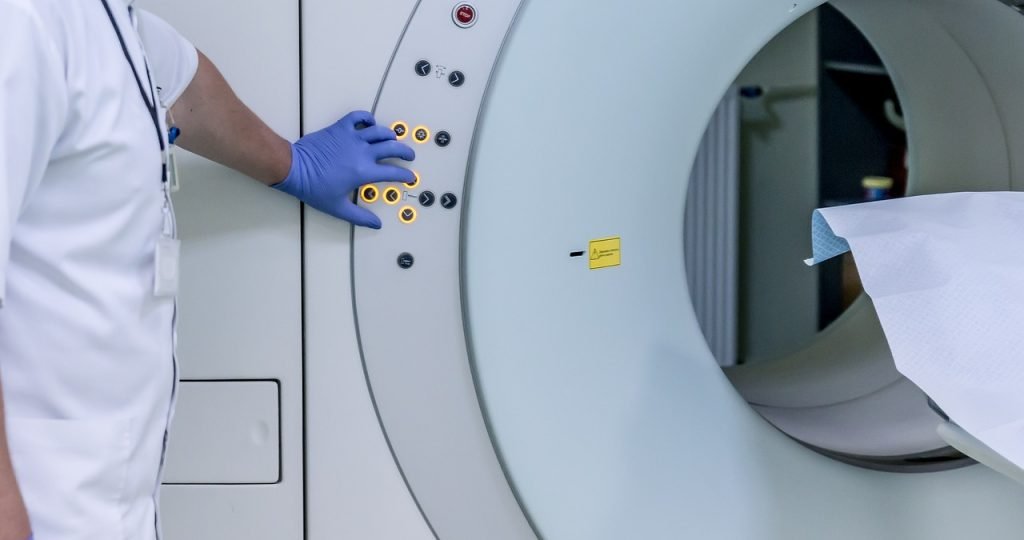
FDA approves Bayer’s AMBELVIST (gadoquatrane), the lowest-dose macrocyclic gadolinium MRI contrast agent in the U.S., supported by Phase III QUANTI data in adults and children.
Written By: Chikkula Pavan Kumar, PharmD
Reviewed By: Pharmacally Editorial Team
Bayer has secured U.S. Food and Drug Administration approval for AMBELVIST® (gadoquatrane), a new intravenous macrocyclic gadolinium-based contrast agent (mGBCA) for contrast-enhanced magnetic resonance imaging (MRI). The approval covers adults and pediatric patients, including term neonates, for detecting and visualizing lesions with abnormal vascularity in both central nervous system (CNS) and non-CNS body regions.
AMBELVIST enters the market as the lowest-dose macrocyclic GBCA approved in the United States. The recommended dose is 0.01 mmol/kg body weight, delivering 0.04 mmol gadolinium (Gd)/kg. This represents a 60% reduction in gadolinium exposure compared with conventional macrocyclic agents administered at 0.1 mmol Gd/kg and a 20% reduction compared with gadopiclenol-based imaging agents containing 0.05 mmol Gd/kg.
Next-Generation Contrast Agent with Novel Tetrameric Structure
Gadoquatrane is a next-generation macrocyclic GBCA featuring a novel tetrameric molecular structure. The design distinguishes it from currently available macrocyclic contrast agents and supports effective contrast enhancement at a substantially lower gadolinium dose.
High Relaxivity Supports Lower-Dose Imaging
The agent also exhibits high relaxivity, a measure of MRI signal enhancement. Higher relaxivity can improve lesion visualization and image contrast, allowing clinicians to obtain diagnostic-quality scans while using less gadolinium. This may be particularly relevant for patients with chronic neurological disorders, cancer, and other conditions that require serial MRI examinations over many years.
Contrast-enhanced MRI plays a central role in modern diagnostic imaging, helping clinicians detect abnormalities, monitor disease progression, and guide treatment decisions across a broad range of diseases.
Phase III QUANTI Studies Supported Approval
The FDA approval was supported by the global pivotal Phase III QUANTI clinical program, which comprised the QUANTI CNS (NCT05915702), QUANTI OBR (NCT05915728), and QUANTI Pediatric (NCT05915026) studies evaluating gadoquatrane across CNS, non-CNS body imaging, and pediatric populations
The studies showed that combining pre-contrast and post-contrast MRI images obtained with AMBELVIST improved lesion visualization compared with pre-contrast imaging alone despite the reduced gadolinium dose. Descriptive analyses further demonstrated that lesion visualization scores and lesion detection rates were comparable to those achieved with macrocyclic GBCAs containing 0.1 mmol Gd/kg.
The approval also extends to pediatric patients, including term neonates. Evidence included pharmacokinetic and safety data from 93 pediatric patients aged 28 days to less than 18 years who received a single 0.01 mmol/kg dose and underwent MRI examinations across various body regions.
Commercial Launch Expands Bayer’s MRI Portfolio
The approval adds a new product to Bayer’s radiology portfolio, which traces its history in MRI contrast agents back to the launch of the first gadolinium-based contrast agent in 1988.
Christopher Hancock, MD, Director of Neuroradiology at HALO Diagnostics Desert Cities and an investigator in the QUANTI studies, said the approval provides clinicians with an additional contrast-enhanced MRI option that can reduce gadolinium exposure while preserving the diagnostic information needed for patient management.
Jill Carbone, Vice President and Head of Radiology, North America Product & Pipeline at Bayer, noted that the approval aligns with evolving clinical guidance encouraging use of the lowest gadolinium dose necessary to obtain adequate diagnostic images.
Safety Profile and Label Information
AMBELVIST carries a Boxed Warning regarding risks associated with intrathecal administration and nephrogenic systemic fibrosis. The product is contraindicated in patients with a history of severe hypersensitivity reactions to the agent.
Additional warnings and precautions include hypersensitivity reactions, gadolinium retention, acute kidney injury, and potential interference with lesion visualization.
Clinical Implications of the Approval
With FDA clearance secured, AMBELVIST expands the range of macrocyclic contrast agents available to U.S. radiologists and introduces a lower-gadolinium imaging option for patients who require repeated contrast-enhanced MRI examinations. The approval positions Bayer to strengthen its presence in diagnostic imaging while addressing growing clinical interest in minimizing gadolinium exposure without compromising diagnostic performance.
Reference

About the Writer
Chikkula Pavan Kumar (LinkedIn), PharmD is a Doctor of Pharmacy with a keen interest in clinical pharmacy, pharmacovigilance, and evidence-based practice. In his words, he is passionate about patient safety and translating complex medical information into clear, research-driven communication.