
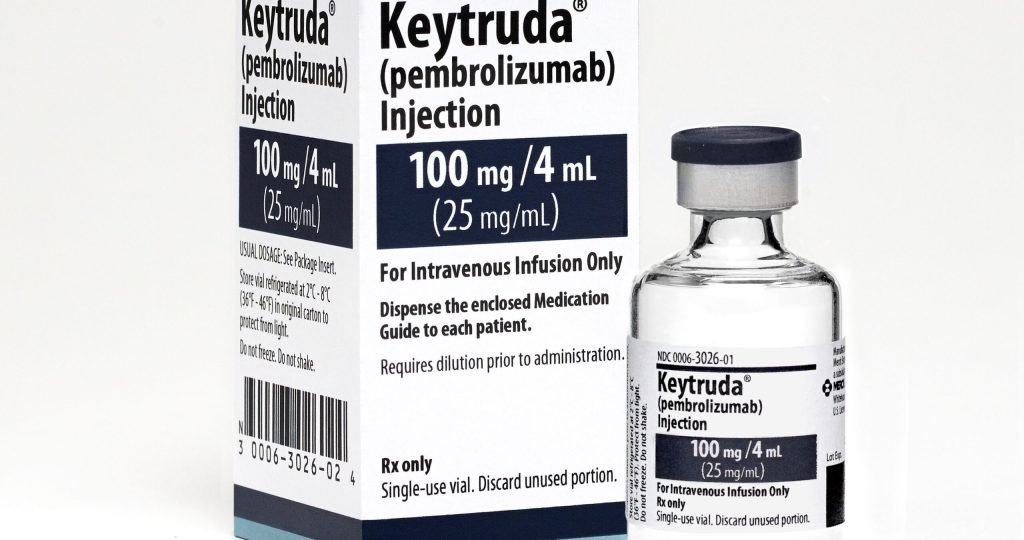
The FDA has approved KEYTRUDA and KEYTRUDA QLEX in combination with Trodelvy for first-line treatment of PD-L1-positive advanced triple-negative breast cancer, based on Phase 3 data showing a 35% reduction in disease progression or death.
Written By: Dr. Preethi Putti, PharmD
Reviewed By: Pharmacally Editorial Team
The U.S. Food and Drug Administration (FDA) has approved KEYTRUDA® (pembrolizumab) and KEYTRUDA QLEX™ (pembrolizumab and berahyaluronidase alfa-pmph), each in combination with Trodelvy® (sacituzumab govitecan-hziy), for the first-line treatment of adults with unresectable locally advanced or metastatic PD-L1-positive (CPS ≥10) triple-negative breast cancer (TNBC).
The approval establishes the first PD-1 inhibitor combined with a Trop-2-directed antibody-drug conjugate (ADC) for advanced TNBC and offers a chemotherapy-free immunotherapy-based option for eligible patients.
Clinical Context
Pembrolizumab is a programmed death receptor-1 (PD-1) immune checkpoint inhibitor that restores T-cell activity against cancer cells. Trodelvy is a Trop-2-directed antibody-drug conjugate that selectively delivers a cytotoxic payload to Trop-2-expressing tumor cells. Together, the combination enhances anti-tumor immune activity while directly targeting cancer cells.
Triple-negative breast cancer accounts for approximately 10% to 15% of breast cancers and lacks estrogen, progesterone, and HER2 receptors, limiting targeted treatment options. The disease is associated with rapid progression, high recurrence rates, and poor survival, particularly in metastatic settings.
Phase 3 Trial Results
The approval is supported by the Phase 3 KEYNOTE-D19/ASCENT-04 (NCT05382286) trial, which enrolled 443 patients with previously untreated unresectable locally advanced or metastatic PD-L1-positive TNBC. Participants received either pembrolizumab plus Trodelvy or pembrolizumab plus investigator’s choice of chemotherapy.
The study met its primary endpoint, showing that the investigational combination reduced the risk of disease progression or death by 35% compared with pembrolizumab plus chemotherapy (HR 0.65; 95% CI 0.51-0.84; p=0.0009). Median progression-free survival improved to 11.2 months versus 7.8 months with chemotherapy.
The objective response rate reached 61% with the combination compared with 55% for chemotherapy, while complete responses occurred in 12% and 8% of patients, respectively. Overall survival remains a key secondary endpoint under continued evaluation.
Safety Profile
The safety findings were consistent with the known profiles of pembrolizumab and sacituzumab govitecan. Serious adverse events occurred in 38% of treated patients, with febrile neutropenia, neutropenia, diarrhea, fatigue, and pneumonia reported most frequently. Fatal adverse reactions occurred in 3.2% of patients.
The most common adverse events included neutropenia, anemia, leukopenia, diarrhea, nausea, fatigue, alopecia, elevated liver enzymes, constipation, rash, vomiting, and abdominal pain. Pembrolizumab also continues to carry warnings for severe immune-mediated toxicities affecting multiple organs.
Clinical Implications
Sara Tolaney, MD, MPH, of Dana-Farber Cancer Institute and a principal investigator of the KEYNOTE-D19/ASCENT-04 trial, said first-line treatment is critical in metastatic TNBC because many patients never receive subsequent therapies. She believes the approval offers a potentially practice-changing option for patients with PD-L1-positive disease.
Dr. Gursel Aktan, Vice President of Global Clinical Development at Merck Research Laboratories, said the approval introduces the first PD-1 inhibitor and Trop-2-directed ADC combination for advanced TNBC, providing a new first-line treatment that significantly delays disease progression compared with pembrolizumab plus chemotherapy.
Regulatory Path Forward
The approval expands pembrolizumab’s role in breast cancer and introduces a new first-line treatment strategy for PD-L1-positive advanced TNBC. KEYTRUDA QLEX also offers a subcutaneous formulation that can be administered in one to two minutes by healthcare providers, potentially improving treatment convenience while maintaining comparable efficacy and safety to intravenous KEYTRUDA.
The combination is already recognized as a Category 1 preferred first-line option in the 2026 NCCN Clinical Practice Guidelines for eligible patients, further supporting its integration into routine clinical practice.
Reference

About the Writer
Dr.Preethi Putti, PharmD (LinkedIn) is a pharmaceutical researcher with experience in healthcare and pharmaceutical market research and competitive intelligence. She specializes in analyzing drug pipelines, clinical data, and industry trends and translating complex scientific data into clear and structured medical content. Strong foundation in clinical research, data interpretation, and evidence-based healthcare analysis. Committed to advancing a global career in clinical research and healthcare innovation.