
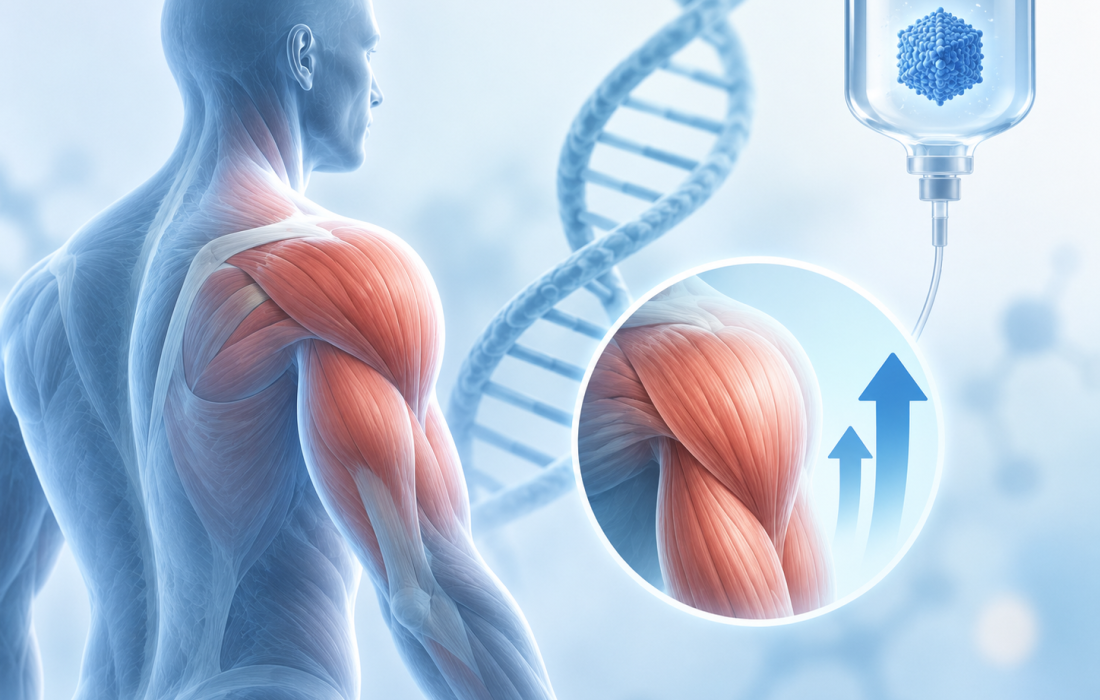
Epicrispr reports six-month data showing increased lean muscle volume and strength with investigational EPI-321 in six patients with FSHD
Written By: Neha Vishwakarma, PharmD
Reviewed By: Pharmacally Editorial Team
Epicrispr Biotechnologies has reported updated six-month clinical data from its ongoing Phase 1/2 study of EPI-321, an investigational epigenetic therapy for facioscapulohumeral muscular dystrophy (FSHD). The updated analysis included six patients and was presented at the 31st Annual Congress of the World Muscle Society in Hiroshima, Japan.
Whole-body MRI showed increases in lean muscle volume across total-, upper- and lower-body composite measures. In the upper body, lean muscle volume increased 3.0% with EPI-321 compared with a predicted 3.5% decline in a matched digital-twin comparator. Upper-body quantitative muscle testing (QMT) improved 4.1%, compared with a 0.3% decline in an external comparator from the ReSolve FSHD natural-history study.
EPI-321 Targets the Biology of FSHD
FSHD is a progressive genetic neuromuscular disease characterized by muscle degeneration and weakness. The disease is associated with abnormal expression of DUX4, a gene that is normally largely silenced in skeletal muscle. There are currently no approved disease-modifying therapies for FSHD.
EPI-321 is designed to silence DUX4 expression through epigenetic modulation without altering the underlying DNA sequence. The therapy is delivered as a single intravenous infusion using an AAV vector and is intended to durably regulate disease-causing gene expression.
Six-Month Data Build on Earlier Three-Patient Results
The Phase 1/2 study is an open-label, first-in-human trial evaluating the safety, tolerability, biological activity and preliminary clinical activity of EPI-321 in adults with FSHD.
The trial ultimately enrolled and dosed 12 patients across two dose cohorts, with six patients receiving 2 × 10¹³ vg/kg and six receiving 4 × 10¹³ vg/kg.
In June, Epicrispr reported six-month data from the first three evaluable patients in Cohort 1, all of whom showed increases in lean muscle volume. Their average increase was approximately 370 mL. At that time, nine patients had been treated, including six at 2 × 10¹³ vg/kg and three at 4 × 10¹³ vg/kg.
The October update expanded the six-month dataset to six patients, building on the earlier three-patient results. The company said that additional patients had reached six months of follow-up. However, the October announcement does not specify which dose cohort is represented by the six-patient six-month efficacy dataset.
Muscle Volume and Strength Results
At month six, the greatest difference in lean muscle volume was observed in the upper body, where FSHD commonly manifests early. Upper-body lean muscle volume increased 3.0% in the six EPI-321-treated patients, compared with a predicted 3.5% decline in their matched digital-twin comparator. The digital twin was constructed from longitudinal FSHD natural-history data rather than representing a concurrent randomized control group.
Strength findings also moved in a favorable direction. Upper-body QMT improved 4.1% with EPI-321 compared with a 0.3% decline in the matched ReSolve natural-history comparator.
At the individual muscle level, elbow extension strength increased 8.1%, while elbow extensor lean muscle volume increased 3.2%. The corresponding comparators showed declines of 1.1% and 9.0%, respectively. Epicrispr noted that strength and MRI measures moved in the same direction in several muscle groups.
These findings provide an encouraging early signal, but they do not establish that EPI-321 has a disease-modifying clinical benefit.
Safety Remains an Early Consideration
Epicrispr reported a manageable safety and tolerability profile and stated that no EPI-321-related serious adverse events were observed in the six-month update.
However, the safety dataset remains limited by the small number of treated patients and the early follow-up period. External reporting by Endpoints News also noted a case of severe liver enzyme elevation, highlighting the importance of continued safety monitoring with this systemic AAV-delivered therapy.
Early Findings Require Longer Follow-Up
The October findings are based on only six patients in an open-label study and rely partly on modeled and external comparators rather than a randomized placebo-controlled group. The digital-twin comparison also depends on the assumptions used to model expected disease progression.
The available announcement does not provide individual patient-level data, confidence intervals or detailed statistical analyses for these six-month comparisons. In addition, improvements in MRI-derived muscle volume and strength do not yet establish whether EPI-321 will produce meaningful and durable improvements in patient function.
Epicrispr plans to present 12-month data from all patients in the study in the second half of 2027. Those longer-term results, together with controlled clinical evaluation, will be important for determining whether the early increases in muscle volume and strength translate into a clinically meaningful treatment effect.
Reference
Epicrispr Reports Positive Six-Month Data at The World Muscle Society Meeting Demonstrating Increased Lean Muscle Volume and Muscle Strength in FSHD Patients Treated with EPI-321, Epicrispr, 05 October 2026
A First-in-human Study of EPI-321 in Facioscapulohumeral Muscular Dystrophy (FSHD), ClinicalTrials.gov ID NCT06907875

About the Writer
Neha Vishwakarma (Linkedin) is a Pharm.D professional with experience in clinical pharmacy, pharmacovigilance, and clinical research. She has hands-on experience in ADR assessment, ICSR processing, medication safety, and clinical data evaluation. Her research background in surgical site infections and antibiotic use supports her focus on evidence-based healthcare writing.