
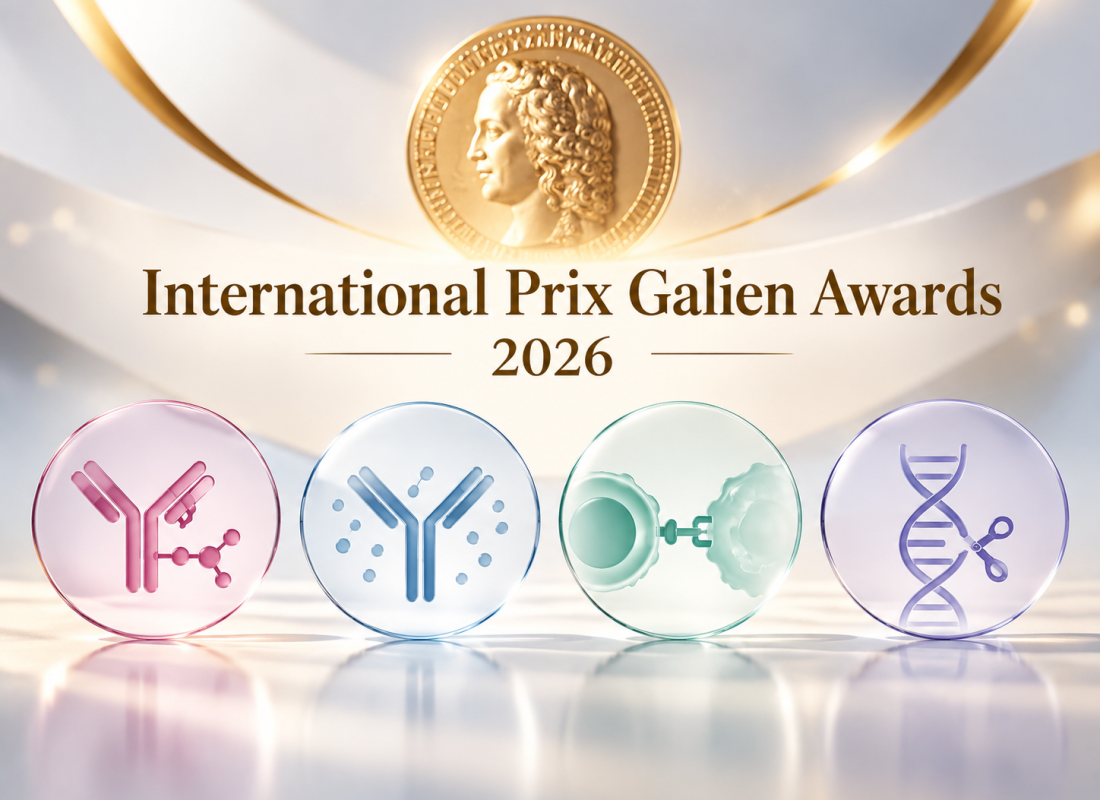
Enhertu, Dupixent, Keytruda and Casgevy win 2026 International Prix Galien Awards, recognising advances in pharmaceutical and biotechnology innovation.
Written By: Creola Gonsalves, MS Biotech
Reviewed By: Pharmacally Editorial Team
The Galien Foundation has recognised four medicines across its Best Biotechnology Product and Best Pharmaceutical Product categories at the 2026 International Prix Galien Awards, highlighting advances in targeted cancer therapy, immune-mediated disease treatment and gene-editing technology.
Presented on October 29, 2026, in New York, the awards recognised Daiichi Sankyo and AstraZeneca’s Enhertu (trastuzumab deruxtecan) and Regeneron and Sanofi’s Dupixent (dupilumab) in the biotechnology category. In the pharmaceutical category, MSD’s Keytruda (pembrolizumab) and Vertex Pharmaceuticals’ Casgevy (exagamglogene autotemcel) received recognition.
Together, these medicines reflect four distinct scientific approaches to addressing significant therapeutic challenges across oncology, immunology and inherited blood disorders.
Best Biotechnology Product: Enhertu and Dupixent
Enhertu: Advancing Targeted Cancer Treatment Through Antibody-Drug Conjugate Technology
Enhertu, developed by Daiichi Sankyo and AstraZeneca, is a HER2-directed antibody-drug conjugate (ADC) that combines a monoclonal antibody with a potent cytotoxic payload. It links trastuzumab, which recognises HER2-expressing cells, to deruxtecan, a topoisomerase I inhibitor, through a cleavable linker.
Following binding to HER2-expressing cancer cells, the ADC is internalised and releases its cytotoxic payload, resulting in DNA damage and cell death. The membrane-permeable payload can also affect neighbouring tumour cells, contributing to a bystander effect.
Its clinical impact is particularly evident in breast cancer, where evidence has established HER2-low and HER2-ultralow disease as relevant treatment populations. Enhertu has also demonstrated activity across other HER2-expressing malignancies, including gastric and lung cancers.
This approach has expanded the therapeutic relevance of HER2-targeted treatment beyond conventional HER2-positive disease. However, its use requires attention to important safety risks, particularly interstitial lung disease and pneumonitis, alongside haematological and cardiac monitoring.
Dupixent: Targeting a Shared Biological Pathway Across Inflammatory Diseases
Dupixent, jointly developed by Regeneron and Sanofi, is a fully human monoclonal antibody that inhibits signalling through interleukin-4 (IL-4) and interleukin-13 (IL-13), two central drivers of type 2 inflammation.
Unlike treatments directed at individual disease manifestations, dupilumab targets a shared inflammatory pathway implicated in several allergic and inflammatory conditions. Its established indications include atopic dermatitis, asthma, chronic rhinosinusitis with nasal polyps, eosinophilic oesophagitis, prurigo nodularis and chronic obstructive pulmonary disease, with approved uses varying by jurisdiction.
By targeting a shared inflammatory pathway, Dupixent demonstrates how a single biological mechanism can support treatment across several clinically distinct conditions. Its expanding range of indications has also strengthened interest in understanding common immunological pathways underlying different inflammatory diseases.
Best Pharmaceutical Product: Keytruda and Casgevy
Keytruda: Expanding the Role of Immune Checkpoint Inhibition in Oncology
Keytruda, developed by MSD, is a programmed cell death protein 1 (PD-1) immune checkpoint inhibitor that has become an important component of modern cancer treatment.
Pembrolizumab binds to the PD-1 receptor on T cells and prevents its interaction with PD-L1 and PD-L2. This blocks an inhibitory immune signalling pathway that tumours can exploit to suppress immune surveillance, helping restore T-cell activity against cancer cells.
Its use has expanded across multiple malignancies, including melanoma, non-small cell lung cancer, head and neck cancer and renal cell carcinoma. Depending on the cancer indication, treatment setting and biomarker status, Keytruda is administered alone or in combination with chemotherapy and other anticancer medicines.
Its expanding use across cancer types has reinforced the importance of biomarker-guided treatment selection, including PD-L1 expression and microsatellite instability. The medicine has also contributed to establishing immune checkpoint inhibition as a major therapeutic strategy across oncology.
However, responses are not universal, and immune-related adverse events remain an important consideration in treatment decisions. Treatment selection therefore continues to depend on tumour characteristics, clinical evidence and individual patient factors.
Casgevy: Bringing CRISPR-Based Gene Editing into Clinical Treatment
Casgevy, developed by Vertex Pharmaceuticals in collaboration with CRISPR Therapeutics, represents a different approach to treating inherited diseases through gene editing.
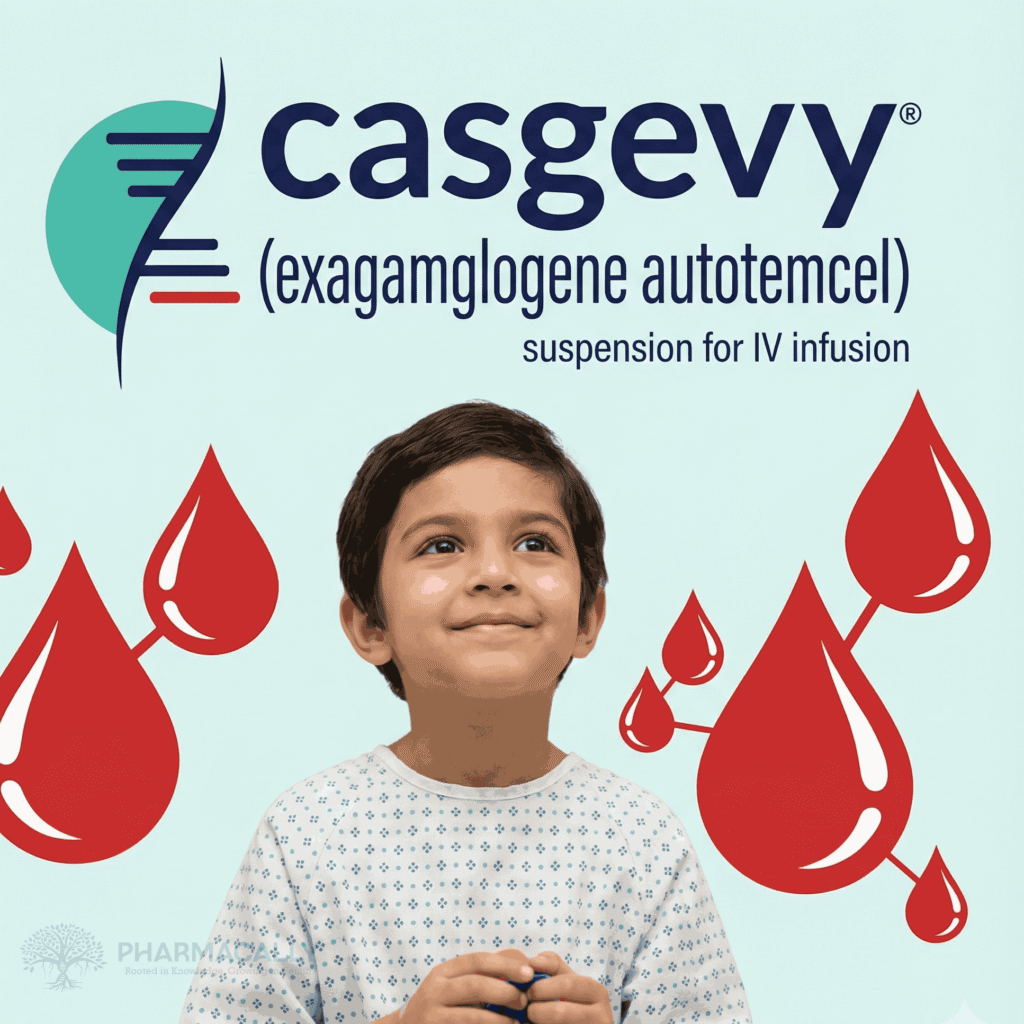
It is an autologous, ex vivo CRISPR/Cas9 gene-edited cell therapy approved for eligible patients with sickle cell disease and transfusion-dependent beta-thalassemia.
The treatment involves collecting a patient’s own CD34-positive haematopoietic stem cells and editing the erythroid-specific enhancer region of the BCL11A gene. This reduces BCL11A expression in developing red blood cells, increasing the production of fetal haemoglobin (HbF).
In sickle cell disease, increased fetal haemoglobin reduces the polymerisation of sickle haemoglobin, helping prevent red blood cell sickling and recurrent vaso-occlusive crises. In transfusion-dependent beta-thalassemia, increased fetal haemoglobin improves globin-chain balance and can reduce or eliminate the need for regular red blood cell transfusions.
Casgevy became the first approved CRISPR-based medicine, marking a major milestone in the clinical application of genome editing. Its approach addresses the underlying biological mechanisms of inherited diseases rather than focusing solely on symptom management.
Nevertheless, treatment involves substantial clinical complexity, including stem cell collection, myeloablative conditioning chemotherapy, specialised treatment centres and prolonged follow-up. Long-term safety, durability of response, accessibility and treatment costs remain important considerations.
The Next Challenge: Translating Innovation into Wider Patient Access
The next phase for these medicines will depend not only on their scientific contributions but also on how effectively their benefits can be translated into sustainable healthcare delivery. Advanced therapies such as Casgevy require specialised manufacturing infrastructure, conditioning regimens and long-term monitoring, while biologics and targeted oncology treatments raise questions about affordability and equitable access.
As pharmaceutical innovation increasingly moves towards precision medicine, antibody-based therapies and genetic interventions, healthcare systems will need to balance clinical benefit with treatment costs, infrastructure requirements and long-term outcomes. Value-based healthcare approaches, supported by robust real-world evidence, may become increasingly important in evaluating the broader contribution of these therapies.
The recognition of these four medicines therefore highlights both the progress achieved in therapeutic innovation and the challenge of ensuring that scientific advances translate into meaningful patient benefits across healthcare systems.

About the Writer
Creola Gonsalves (Linkedin) is an M.S. Biotechnology postgraduate with a strong interest in clinical research, evidence interpretation, and healthcare writing, with a focus on translating life-science knowledge into meaningful real-world insights.
She is trained in Good Clinical Practice (GCP), clinical research principles, and critical interpretation of randomized clinical trials, with certifications from NIH and Stanford University.
Her research background in biotechnological applications and microbial research strengthens her ability to understand scientific evidence and develop clear, accurate, and research-driven healthcare content.