
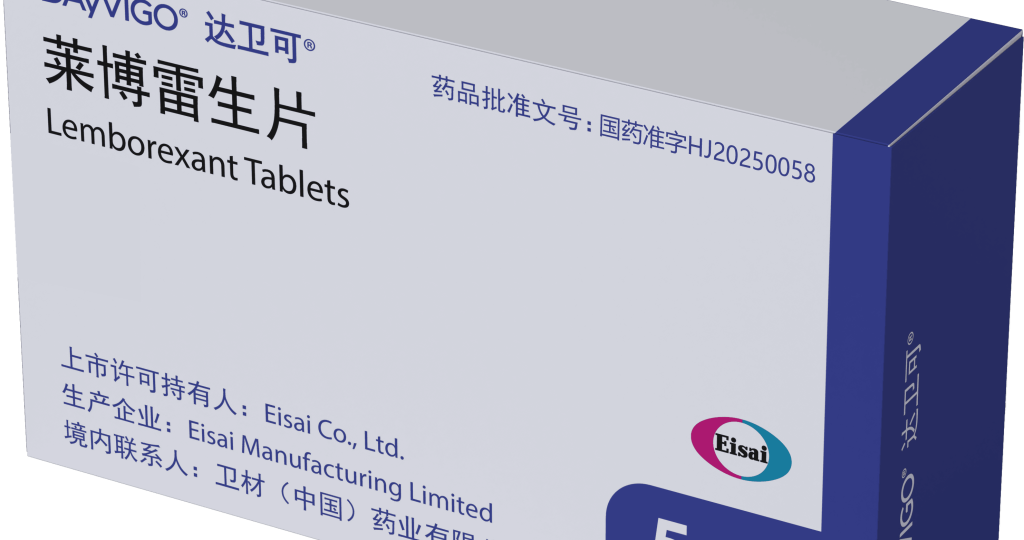
EMA has accepted Eisai’s marketing authorization application for lemborexant to treat chronic insomnia, advancing the dual orexin receptor antagonist toward potential European approval.
Written By: Nikita Jha, BPharm
Reviewed By: Pharmacally Editorial Team
Eisai has reached another regulatory milestone after the European Medicines Agency accepted its Marketing Authorization Application for lemborexant, an orally administered dual orexin receptor antagonist (DORA), for the treatment of adults with chronic insomnia. The acceptance initiates the EMA’s scientific review of the application and brings the therapy one step closer to entering the European market.
Lemborexant is already approved in more than 25 countries, including the United States, Japan, Canada, Australia, and China. Approval in Europe would broaden access to a therapy that works by selectively blocking the brain’s wake-promoting orexin signaling pathway rather than producing generalized sedation.
Scientific and Clinical Context
Chronic insomnia is characterized by persistent difficulty falling asleep, staying asleep, or both, despite adequate opportunity for sleep, with symptoms lasting at least three months. The disorder is associated with fatigue, impaired concentration, irritability, reduced quality of life, and diminished daytime functioning.
According to Eisai, chronic insomnia affects an estimated 4.7% to 22.1% of adults in Europe, highlighting a substantial unmet medical need. Current pharmacological treatments frequently rely on medications that broadly suppress central nervous system activity, increasing interest in therapies that improve sleep while minimizing next-day impairment.
Lemborexant belongs to the dual orexin receptor antagonist (DORA) class. It competitively blocks both orexin receptor 1 (OX1R) and orexin receptor 2 (OX2R), reducing orexin-mediated wakefulness. By targeting the physiological mechanism that maintains alertness, the drug facilitates sleep onset and maintain sleep throughout the night. Its relatively rapid receptor binding and dissociation kinetics may also contribute to lower residual morning effects.
Regulatory Review
The EMA’s acceptance confirms that the application is sufficiently complete for formal scientific evaluation. While the announcement did not disclose new clinical efficacy data, the submission builds on the extensive evidence supporting lemborexant across global development programs and its established regulatory approvals in multiple international markets.
Lemborexant has demonstrated efficacy in improving both sleep onset and sleep maintenance in previous clinical studies, including Phase 3 trials evaluating patients with insomnia disorder. The therapy has accumulated substantial post-approval clinical experience following commercialization in several countries.
Strategic Significance
The European filing reinforces Eisai’s long-term strategy in neurology and sleep medicine. The company continues to prioritize therapies that address significant unmet needs through novel mechanisms of action. Expanding lemborexant into Europe would strengthen Eisai’s global sleep disorder portfolio while offering physicians an alternative to traditional sedative-hypnotic treatments.
Regulatory Path Forward
EMA’s acceptance marks the beginning of the centralized regulatory review process. If the agency grants marketing authorization, lemborexant would become a new treatment option for adults with chronic insomnia across eligible European markets.
A positive decision would further expand the global availability of the therapy and support broader adoption of orexin receptor antagonists as an evidence-based treatment approach for chronic insomnia.
Reference

About the Writer
Nikita Jha, BPharm (LinkedIn) a pharmacy graduate specializing in medical writing, with a strong ability to interpret complex medical and regulatory information and translate it into clear, accurate, and evidence-based healthcare content. Known for her attention to detail and precision, she focuses on delivering high-quality scientific communication that supports drug safety and informed decision-making.