
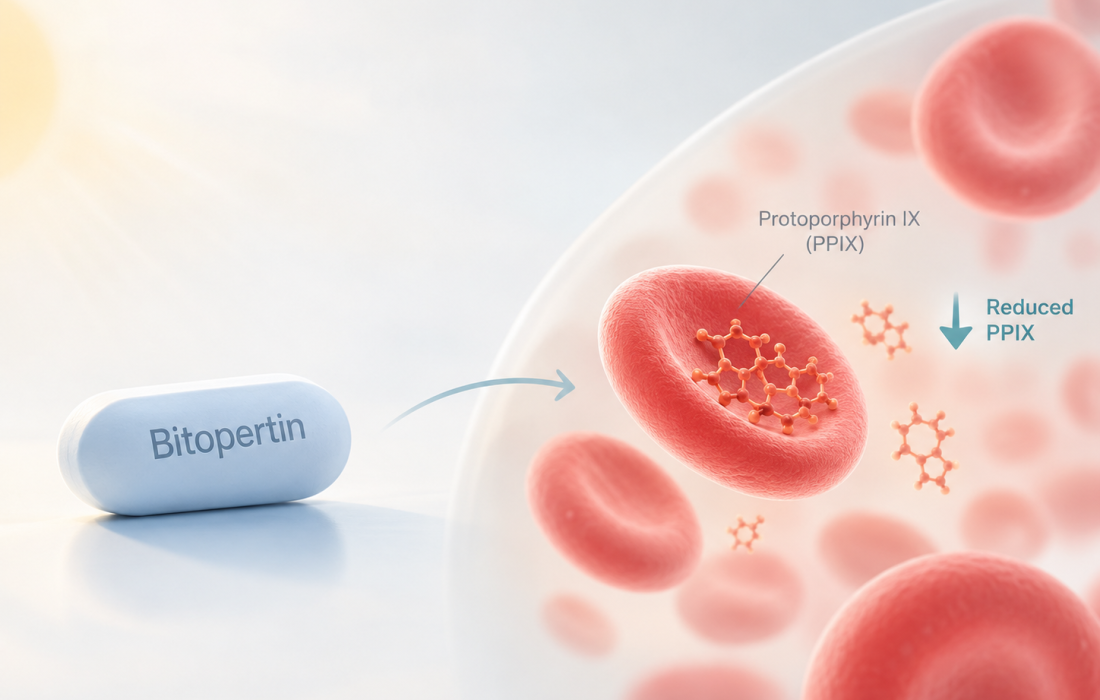
Disc Medicine reports positive Phase 3 APOLLO results for bitopertin in EPP, with reduced PPIX, improved pain-free light exposure and planned FDA resubmission.
Written By: Saniya Katakdhond, PharmD
Reviewed By: Pharmacally Editorial Team
Disc Medicine has reported positive topline results from the pivotal Phase 3 APOLLO trial of bitopertin in adults and adolescents aged 12 years or older with erythropoietic protoporphyria (EPP), including X-linked protoporphyria (XLP). The study met both co-primary endpoints and all secondary endpoints, demonstrating improvements in whole-blood metal-free protoporphyrin IX (PPIX), pain-free light exposure, and phototoxic reactions compared with placebo.
EPP is a rare disorder characterized by PPIX accumulation, which can trigger severe pain following light exposure and substantially restrict outdoor activities and daily routines.
The results strengthen the clinical evidence supporting bitopertin, an investigational oral therapy designed to modulate heme biosynthesis. Disc plans to resubmit its New Drug Application (NDA) to the U.S. Food and Drug Administration (FDA) by the end of 2026, with a regulatory decision anticipated by mid-2027.
Trial Design and Patient Population
APOLLO was a randomized, double-blind, placebo-controlled Phase 3 trial involving 183 participants with EPP or XLP across the United States, Canada, Europe, and Australia. Participants were randomized 1:1 to receive oral bitopertin 60 mg once daily or placebo for six months.
The co-primary endpoints assessed the percentage change from baseline in whole-blood metal-free PPIX after six months and the average monthly total time spent in sunlight without pain between 10 a.m. and 6 p.m. during the final month of treatment.
Both Co-Primary Endpoints Achieved
Bitopertin demonstrated statistically significant improvements in both co-primary endpoints compared with placebo:
- PPIX reduction: Whole-blood metal-free PPIX showed a 41.4% reduction versus placebo (p<0.0001).
- Improved light tolerance: Patients experienced an additional 12.2 hours per month of pain-free light exposure during month six (p=0.0010).
These findings demonstrate that the reported biomarker improvement was accompanied by a benefit in a patient-relevant measure of light tolerance.
Secondary Endpoints Reinforce the Findings
Bitopertin also significantly reduced the incidence rate of phototoxic reactions over the six-month treatment period compared with placebo (p<0.0001). Cumulative pain-free light exposure throughout treatment increased significantly (p<0.0001).
Among adults, the change from baseline in average daily sunlight exposure time before the onset of prodromal symptoms also improved compared with placebo (p=0.0077).
Exploratory patient-reported outcomes favored bitopertin, with statistically significant improvements in Patient Global Impression of Change (PGIC) and Patient Global Impression of Severity (PGIS) scores (p<0.0001 for each).
Together, these findings extend the reported treatment effects beyond PPIX reduction to measures of light tolerance, phototoxic reactions, and patients’ perceptions of their condition.
Safety Profile
Bitopertin was generally well tolerated, with no new safety signals reported. Dizziness was the most frequently reported treatment-emergent adverse event in the bitopertin group, occurring in 50% of patients. These events were generally mild or moderate and transient. No treatment-emergent adverse events above Grade 3 were reported.
Bitopertin is an investigational oral inhibitor of glycine transporter 1 (GlyT1). By limiting glycine uptake into developing red blood cells, it reduces substrate availability for heme biosynthesis, with the aim of lowering the pathological accumulation of PPIX in patients with EPP and XLP.
Regulatory Status
In February 2026, the FDA issued a Complete Response Letter (CRL) for bitopertin’s NDA for EPP. The agency acknowledged evidence that bitopertin lowered PPIX and the biological rationale for using PPIX as a biomarker, but indicated that it needed the APOLLO results before making an approval decision. Following a Type A meeting in June 2026, Disc reported alignment with the FDA that a successful APOLLO study could support a response to the CRL and potentially enable traditional approval.
Based on the topline findings, the company plans to resubmit its application by the end of 2026, with an FDA decision anticipated by mid-2027. Bitopertin remains investigational and is not approved for use in any jurisdiction.
Clinical Interpretation
APOLLO provides evidence of activity across a disease-associated biomarker and a patient-relevant measure of functional benefit. The 41.4% reduction in whole-blood metal-free PPIX, alongside an additional 12.2 hours of monthly pain-free light exposure during month six, strengthens the clinical rationale for bitopertin in EPP and XLP.
The results are particularly relevant to the regulatory pathway because the FDA had requested APOLLO data before deciding on the existing application. However, positive topline results do not establish that all regulatory requirements have been satisfied. Full clinical and safety data, the durability of benefit beyond six months, and the FDA’s assessment will be important in determining whether bitopertin can secure approval.
Reference
Disc Medicine Announces Success on All Primary and Secondary Endpoints in the Pivotal Phase 3 APOLLO Trial of Bitopertin in Adults and Adolescents with Erythropoietic Protoporphyria (EPP), Disc Medicine, 19 October 2026
Study of Bitopertin in Participants with EPP or XLP (APOLLO) (APOLLO), ClinicalTrials.gov ID NCT06910358

About the Writer
Saniya Sanjay Katakdhond (Linkedin) is a Doctor of Pharmacy professional with hands-on experience in patient case review, clinical documentation, medical record analysis, and patient care.
Her hospital experience has strengthened her understanding of clinical conditions, treatment approaches, and multidisciplinary healthcare practices.
With ICH-GCP certification and a research-oriented approach, she brings clinical insight and attention to detail to healthcare content development.
As a healthcare writer, Saniya focuses on translating clinical knowledge and patient-care experience into clear, accurate, and evidence-informed medical content.