
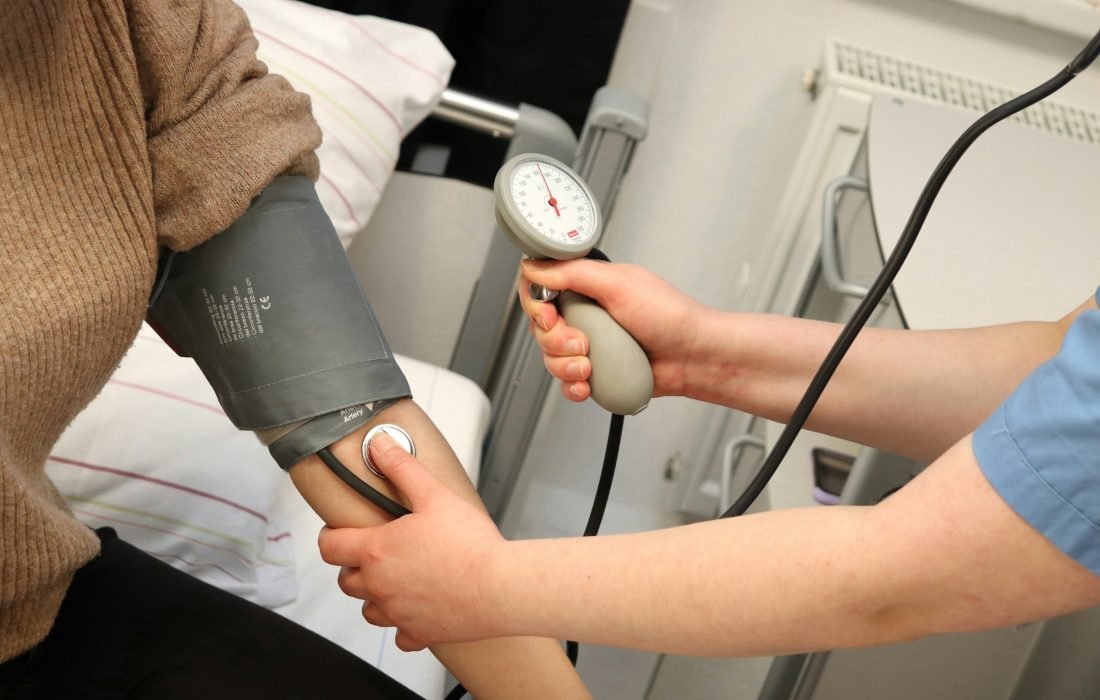
CuraSen’s CuraAX (CST-3056) meets its Phase 2a endpoint, improving standing blood pressure in patients with neurogenic orthostatic hypotension.
Written By: Saniya Katakdhond, PharmD
Reviewed By: Pharmacally Editorial Team
CuraSen Therapeutics reported statistically significant, dose-dependent improvements in standing systolic blood pressure (SBP) with CuraAX (CST-3056) in patients with symptomatic neurogenic orthostatic hypotension (nOH). Presented on November 12, 2026, as late-breaking data at the 37th International Symposium on the Autonomic Nervous System by Chief Medical Officer Gabriel Vargas, MD, PhD, the exploratory Phase 2a findings support further clinical evaluation of the oral selective α1A-adrenergic receptor partial agonist, with doses of 5–20 mg selected for the planned Phase 2b study.
Clinical Background
Neurogenic orthostatic hypotension is a debilitating condition commonly associated with Parkinson’s disease and other synucleinopathies, including pure autonomic failure (PAF) and multiple system atrophy (MSA). It develops when impaired sympathetic nervous system activity prevents adequate blood vessel constriction during postural changes, resulting in a sudden fall in blood pressure upon standing.
Patients may experience dizziness, lightheadedness, fainting, and cognitive impairment, increasing the risk of falls, injuries, and hospitalization. Treatment remains challenging because maintaining adequate blood pressure while standing without causing excessive increases during supine positioning is an important clinical consideration.
CuraAX: A Selective Adrenergic Approach
CuraAX (CST-3056) is an investigational oral, selective α1A-adrenergic receptor partial agonist developed to address blood pressure instability associated with nOH. The candidate is also CNS-penetrant, an additional pharmacological characteristic that distinguishes its development profile. Prior Phase 1 evaluation in 56 healthy volunteers established that CuraAX was well tolerated up to a maximum tolerated dose of 90 mg, providing the pharmacological foundation for patient testing.
Its partial agonist activity is intended to support blood pressure maintenance during postural changes while limiting excessive increases when patients are lying down. This approach targets an important limitation of existing treatments, where improving upright blood pressure must be balanced against the risk of supine hypertension.
Phase 2a Study Design
The Phase 2a investigation (NCT07089043) was a single-blind, five-day, inpatient, dose-escalation study conducted across five clinical sites in the United States, involving 12 patients with nOH associated with Parkinson’s disease, PAF, or MSA. Participants received placebo followed by single daily increasing doses of CuraAX.
The investigation evaluated safety and tolerability alongside hemodynamic effects through hourly 10-minute standing assessments. Patients also completed daily Orthostatic Hypotension Symptom Assessment (OHSA) evaluations. The primary endpoint assessed improvement in standing SBP, with the study designed to characterize the initial clinical effects of CuraAX and inform dose selection for subsequent clinical development.
Key Clinical Findings
CuraAX achieved the primary endpoint of the study, demonstrating statistically significant improvements in standing SBP at doses of 5, 10, and 20 mg. Active treatment produced average increases of approximately 10–20 mmHg in standing SBP compared with placebo, indicating a clear dose-dependent hemodynamic response across the tested range.
All 12 enrolled patients demonstrated improvements in standing SBP during treatment. Participants with more pronounced pretreatment hypotension experienced the greatest benefit, suggesting that baseline blood pressure severity may influence treatment response, though this remains an exploratory observation requiring confirmation.
Increases in supine SBP were described as modest compared with those reported for midodrine, an established treatment for nOH. Although relevant to managing the risk of supine hypertension, this observation does not establish superiority over midodrine or demonstrate a comparative safety advantage.
Across the tested 5–40 mg dose range, CuraAX demonstrated an acceptable safety and tolerability profile. Reported adverse events were mild to moderate and transient, including chills, tingling, and goosebumps, which the company associated with α1A-adrenergic receptor target engagement.
From a functional perspective, participants with greater pretreatment hypotension were able to stand for longer during the 10-minute assessment periods while receiving CuraAX. Furthermore, principal investigator Italo Biaggioni, MD, of the Vanderbilt Autonomic Dysfunction Center, noted that patients subjectively reported feeling better and experiencing improved mobility, although formal quantitative reductions in OHSA scores were not detailed in the topline readout. Based on the overall Phase 2a dataset, CuraSen selected a 5–20 mg dose range for the planned Phase 2b investigation.
Clinical Interpretation
The Phase 2a findings provide an encouraging proof-of-concept signal for CuraAX in symptomatic nOH. Statistically significant, dose-dependent improvements in standing SBP, together with comparatively modest increases in supine SBP, support further investigation of its selective α1A-adrenergic mechanism.
These results are particularly relevant to the clinical challenge of maintaining adequate blood pressure during standing without excessively increasing it in the supine position. The observed improvements in standing duration and subjective mobility also provide functional measures worth evaluating systematically in subsequent studies.
However, the results require cautious interpretation. The investigation included only 12 patients and lasted five days, limiting conclusions about long-term efficacy, durability, and safety. Although participants completed daily OHSA assessments, the topline findings do not establish statistically confirmed, sustained symptom relief or reductions in falls and hospitalization. The magnitude and clinical significance of the observed blood pressure improvements also require evaluation in larger controlled studies.
CuraAX Advances Toward Phase 2b Evaluation
CuraSen plans to advance CuraAX into a Phase 2b study using the selected 5–20 mg dose range. This next stage will be important for assessing the reproducibility and durability of the observed blood pressure improvements in a larger patient population. Further evaluation of orthostatic symptoms, standing tolerance, and supine blood pressure will help determine whether the early hemodynamic response translates into meaningful clinical benefits for patients with nOH.
References
Phase 2a Clinical Data Show CuraSen Therapeutics’ CuraAX (CST-3056) Met Primary Endpoint, Demonstrating Statistically Significant Improvement in Standing Systolic Blood Pressure in Patients with Neurogenic Orthostatic Hypotension (nOH), CuraSen Therapeutics, November 12, 2026.
A Study in Subjects with Neurogenic Orthostatic Hypotension, ClinicalTrials.gov ID NCT07089043

About the Writer
Saniya Sanjay Katakdhond (Linkedin) is a Doctor of Pharmacy professional with hands-on experience in patient case review, clinical documentation, medical record analysis, and patient care.
Her hospital experience has strengthened her understanding of clinical conditions, treatment approaches, and multidisciplinary healthcare practices.
With ICH-GCP certification and a research-oriented approach, she brings clinical insight and attention to detail to healthcare content development.
As a healthcare writer, Saniya focuses on translating clinical knowledge and patient-care experience into clear, accurate, and evidence-informed medical content.