
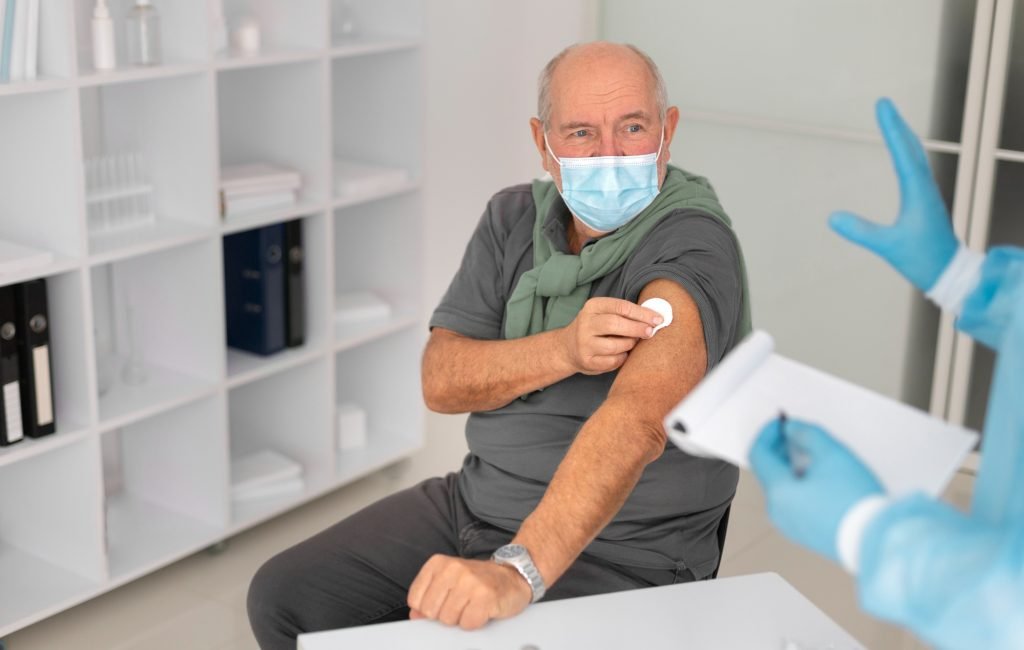
Clover’s Phase 2 RSV+hMPV±PIV3 vaccines showed robust neutralizing antibody responses and favorable safety in adults aged 60 to 85 years.
Written By: Kalyani Boharapi,
M.Pharm (Reg. Affairs)
Reviewed By: Pharmacally Editorial Team
Clover Biopharmaceuticals’ protein-based SCB-1022 and SCB-1033 vaccine candidates generated robust neutralizing antibody responses against RSV, human metapneumovirus (hMPV), and parainfluenza virus type 3 (PIV3) in adults aged 60 to 85 years. The Phase 2 findings also showed no apparent immune interference from adding PIV3 and no decline in antibody responses among participants aged 75 years and older.
Phase 2 supports broad respiratory virus coverage
The randomized, observer-blinded, multicenter Phase 2 study (NCT06984094) enrolled 420 older adults in Australia. Participants received either SCB-1022, which combines RSV and hMPV antigens; SCB-1033, which adds PIV3; or placebo.
At 28 days after vaccination, antibody titers generally matched or exceeded those observed in the earlier Phase 1 study. Neutralizing antibody geometric mean fold rises were approximately 6- to 9-fold for RSV and 6- to 8-fold for hMPV.
SCB-1033 also generated more than a 3-fold increase in PIV3 neutralizing antibodies. Participants with lower baseline PIV3 antibody levels showed an approximately 5-fold rise, while PIV3 prefusion F-specific antibodies increased by up to approximately 20-fold.
Adding the PIV3 antigen did not appear to reduce RSV or hMPV neutralizing antibody responses compared with the two-virus SCB-1022 formulation.
The study also found no apparent decline in antibody responses among participants aged 75 years and older compared with those aged 60 to 74 years, a relevant finding for respiratory vaccines because immune responses can weaken with advanced age.
Early infection signal requires cautious interpretation
Vaccine recipients had an approximately 62% lower rate of reported respiratory tract infections than placebo recipients during the first 28 days after vaccination.
However, the company cautioned that these infections were identified through adverse-event reporting rather than PCR sequencing. The study therefore cannot establish that the reduction resulted specifically from protection against RSV, hMPV, or PIV3.
The trial took place during an RSV outbreak in Australia, with hMPV and PIV3 circulating during enrollment and follow-up, providing a relevant epidemiological setting for evaluating respiratory-virus vaccine responses.
Favorable safety profile
Both candidates were generally well tolerated. Most solicited local and systemic adverse events during the first seven days were mild and transient, with fatigue, headache, and injection-site pain among the most common events. Symptoms lasted about two days on average across vaccine and placebo groups.
Unsolicited adverse events through 28 days occurred at similar frequencies across groups. No vaccine-related serious adverse events, adverse events of special interest, or adverse events leading to discontinuation were reported.
Trimer-Tag platform and commercial-scale manufacturing
SCB-1022 and SCB-1033 use Clover’s Trimer-Tag platform to produce prefusion-stabilized F (PreF)-Trimer protein antigens. The platform supports multivalent protein-based vaccine formulations targeting multiple respiratory viruses.
Alongside the clinical program, Clover completed commercial-scale production of multiple RSV, hMPV, and PIV3 PreF antigen batches using 2,000-liter bioreactors. Successful scale-up provides manufacturing validation ahead of potential late-stage development.
Clover CEO Joshua Liang said the Phase 2 results strengthen the candidates’ potential differentiated profile, including the possibility of revaccinating people who have previously received approved RSV vaccines to broaden or restore protection. That potential will require dedicated clinical evidence and should not yet be considered established.
Path Forward
Clover plans to assess mid- and late-stage development strategies for the RSV+hMPV and RSV+hMPV+PIV3 candidates and explore global collaboration opportunities.
The Phase 2 data strengthen the clinical rationale for combining multiple respiratory-virus PreF antigens in a single protein-based vaccine, while the favorable safety findings and 2,000-liter manufacturing experience reduce some development and production risks ahead of pivotal testing.
Reference
Clover Announces Positive Phase 2 Clinical Data for RSV + hMPV ± PIV3 Respiratory Combination Vaccine Candidates in Older Adults, Clover Biopharmaceuticals, 06 Sep 2026

About the Writer
Kalyani Boharapi (LinkedIn) is a pharmacy professional and healthcare writer currently pursuing an M.Pharm in Regulatory Affairs at Dr. D. Y. Patil College of Pharmacy, with interests in pharmaceutical regulations, drug development, and healthcare innovation. She has academic exposure to dossier preparation, scientific writing, and regulatory documentation. Kalyani has also completed certification courses in Generative AI, AI in Pharma, and Bioinformatics, and actively participates in pharmaceutical conferences to stay updated with emerging trends and advancements in the healthcare and pharmaceutical industry.