
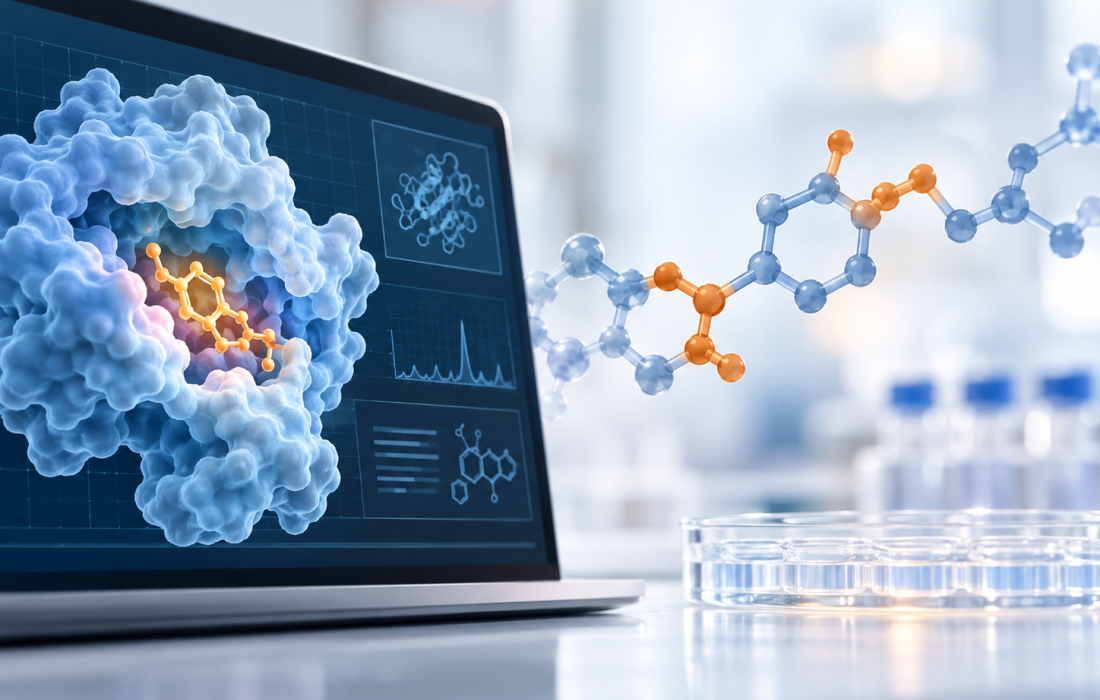
Chai Discovery expands its collaboration with GSK after AI-generated molecular designs produced binders across all targets tested in a laboratory evaluation.
Written By: Umesh Hanumante, M. Pharm (Reg. Affairs)
Reviewed By: Pharmacally Editorial Team
Chai Discovery has expanded its collaboration with GSK after laboratory testing showed that its AI-generated molecular designs could bind to all targets evaluated in an initial technology assessment. The partnership will give GSK access to Chai’s protein-folding and molecular-design models to support drug discovery across its research pipeline.
AI Models Generated Binders Without Target-Specific Training
During the evaluation, Chai’s models generated molecular designs against a panel of diverse GSK therapeutic targets using a zero-shot approach, without target-specific training. GSK then tested the designs in its laboratories and identified binders across all targets included in the assessment.
The findings supported the expansion from a technology evaluation to a broader collaboration. However, the companies did not disclose the number of targets tested, the number of designs screened, individual binding-affinity measurements, or the proportion of generated candidates that demonstrated binding.
These details are important for assessing the platform’s performance beyond the initial evaluation, particularly its ability to produce reproducible, high-affinity binders across different protein classes.
Chai’s Protein Design Platform Supports Drug Discovery
Chai Discovery develops artificial intelligence models that predict and reprogram interactions between biological molecules. Its technology addresses an important challenge in early drug discovery: identifying molecules that bind selectively and strongly to disease-relevant targets.
Protein structure prediction and molecular design can help researchers explore candidate molecules before committing resources to extensive experimental testing. Laboratory validation remains essential, however, because computational predictions do not necessarily translate into measurable binding, biological activity, or therapeutic efficacy.
Chai’s latest model, Chai-3, is reported by the company to achieve high target success rates and binding affinities, including against challenging targets. The companies did not disclose whether Chai-3 specifically generated the binders identified during the GSK evaluation or provide quantitative results from the assessment.
Under the expanded collaboration, GSK will access Chai’s platform, including its protein-folding and design models, to support discovery activities across its pipeline.
GSK Combines External AI Models with Internal Research
Christopher Austin, senior vice president of R&D Technologies at GSK, said the evaluation demonstrated strong binding affinities across a diverse panel of targets. He added that Chai’s technology complements GSK’s internal models, which the company continuously retrains using its own laboratory data.
This approach reflects a broader pharmaceutical research strategy in which external AI platforms supplement proprietary computational systems and experimental capabilities. Combining computational predictions with internal laboratory testing can help research teams assess candidate molecules and refine their discovery workflows.
For GSK, the collaboration provides access to additional molecular-design capabilities while allowing the company to evaluate their utility within its existing research infrastructure.
Further Validation Needed to Establish Drug Discovery Impact
The expanded partnership marks another pharmaceutical collaboration for Chai Discovery since the beginning of 2026. The companies have not disclosed financial terms, specific therapeutic programs, development milestones, or timelines for advancing candidates generated through the collaboration.
The initial results establish laboratory-confirmed binding across the tested targets, but they do not establish that the generated molecules demonstrate functional activity, selectivity, suitable pharmacokinetic properties, or safety in biological systems.
Further data on binding affinity, experimental success rates, functional validation, and progression into preclinical development will help clarify how much the platform can accelerate drug discovery.
For now, the expanded collaboration gives GSK broader access to Chai’s AI-based molecular-design capabilities, with the potential value depending on how consistently those computational predictions translate into experimentally validated drug candidates.
Reference
Chai Discovery Announces Collaboration with GSK Following Successful Wet-Lab Evaluation, Chai Discovery via Business wire, 09 October 2026

About the Writer
Umesh Hanumante (M.Pharm) (LinkedIn) is a pharmacy professional and healthcare writer with a background in Regulatory Affairs, pharmaceutical innovation, and clinical research. He has around two years of industry experience as an Executive PMT at Troikaa Pharmaceuticals Ltd and qualified GPAT 2024. His areas of interest include regulatory compliance, dossier preparation, clinical trials, emerging therapies, and advancements in the global pharmaceutical and healthcare