
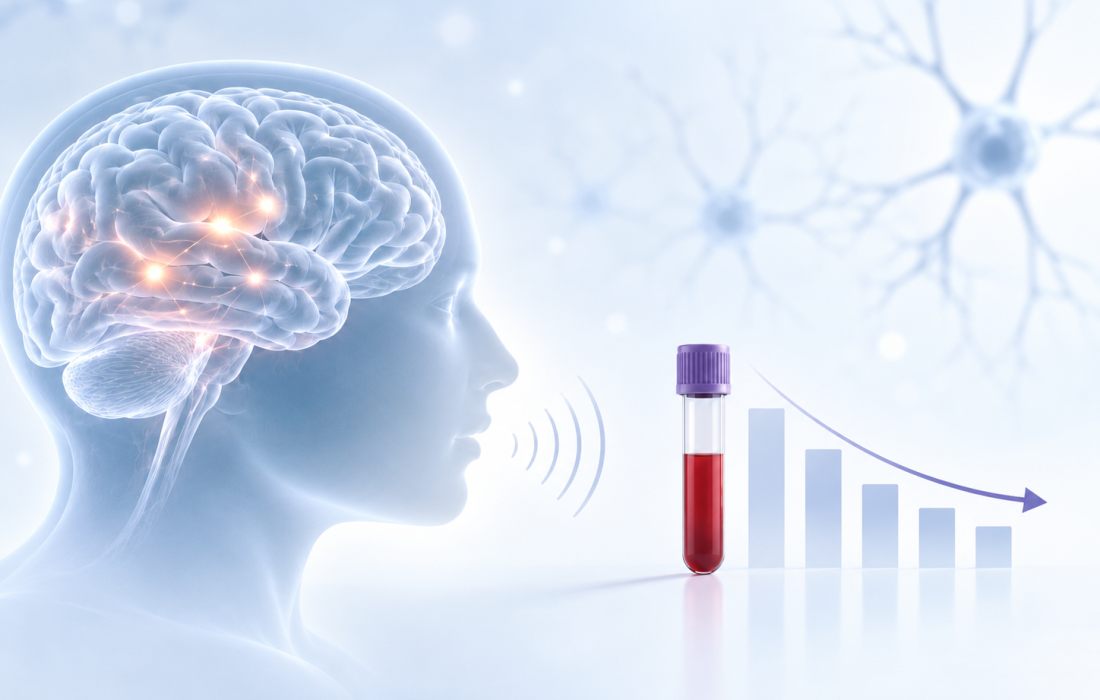
CervoMed reports a 12-week reduction in neurofilament light levels with neflamapimod in a Phase 2a nfvPPA trial. Clinical benefit remains unconfirmed.
CervoMed has reported initial results from its Phase 2a trial of neflamapimod in nonfluent variant primary progressive aphasia (nfvPPA), showing a mean reduction in plasma neurofilament light chain (NfL) levels during the first 12 weeks of treatment. The findings, presented in a late-breaking oral session at the 15th International Society for Frontotemporal Dementias (ISFTD) Annual Meeting in Philadelphia, provide an early biomarker signal that requires confirmation in subsequent analyses.
The reduction was more pronounced among participants whose baseline NfL levels were at or above the median. However, the open-label findings do not establish whether the biomarker changes translate into clinical benefits or slower disease progression.
NfL Reduction Observed During the First 12 Weeks
The Phase 2a study (NCT07033481) enrolled 25 participants with nfvPPA. At baseline, 18 participants (72%) had elevated plasma NfL levels relative to the general population, while four (16%) had elevated glial fibrillary acidic protein (GFAP) levels.
Mean baseline NfL was 45.7 pg/mL, with a standard deviation of 39.6 pg/mL. Mean GFAP was 103.4 pg/mL, with a standard deviation of 43.2 pg/mL.
During the first 12 weeks of treatment, mean plasma NfL levels declined by approximately 3.1 pg/mL, with most of the reduction occurring between Weeks 6 and 12. In an exploratory analysis of 13 participants whose baseline NfL levels were at or above the median, the mean decline was approximately 5.7 pg/mL. GFAP levels remained stable over the same period.
NfL is a biomarker of neuronal injury and degeneration, and elevated levels are associated with neurodegenerative disease progression. CervoMed noted that the observed reduction contrasts with increases typically reported in natural-history studies.
However, the initial findings come from a small, open-label cohort without a concurrent control group during this treatment period. The results therefore represent a preliminary biological signal rather than evidence that neflamapimod slows neurodegeneration or improves language function. The larger reduction among participants with higher baseline NfL is also exploratory and requires confirmation.
Neflamapimod Generally Well Tolerated
Neflamapimod was generally well tolerated during the initial treatment period, with no new safety signals identified. One participant developed elevated liver enzyme levels that met the study protocol’s criteria for treatment discontinuation.
The participant was asymptomatic, had no associated bilirubin elevation, and the enzyme elevation resolved after treatment was discontinued. Although the overall safety findings were considered acceptable by the company, the discontinuation highlights the importance of continued safety monitoring as the trial progresses.
Neflamapimod is an investigational oral small-molecule drug that crosses the blood-brain barrier and selectively inhibits the alpha isoform of p38 mitogen-activated protein kinase (p38α). The pathway is being investigated for its potential role in neuroinflammation and synaptic dysfunction, including processes implicated in tau-associated neurodegenerative conditions.
Trial Design and Upcoming Data Readouts
The 36-week Phase 2a study is evaluating the safety, pharmacokinetics and clinical effects of neflamapimod in 25 participants across academic medical centres in the United States and the United Kingdom.
Participants received 24 weeks of open-label treatment with either neflamapimod 40 mg three times daily (19 participants) or 80 mg twice daily (six participants). This is followed by a 12-week double-blind, placebo-controlled randomized withdrawal period, during which participants are assigned in a 1:1 ratio to continue neflamapimod or switch to placebo.
CervoMed expects to present 24-week biomarker data at the Clinical Trials on Alzheimer’s Disease conference in November 2026. Topline clinical data are anticipated in the first quarter of 2027.
The upcoming readouts will be important for determining whether the initial NfL reduction persists and whether biomarker changes are accompanied by measurable clinical effects. The randomized withdrawal period may also provide additional evidence on the effects of continued treatment, although interpretation will depend on the results and study analyses.
Investigational Approach for an Unmet Medical Need
Nonfluent variant primary progressive aphasia is a progressive form of frontotemporal dementia that primarily affects speech production and language expression. Patients may experience increasing difficulty communicating as the disease advances, with some eventually losing the ability to speak.
There are currently no approved pharmacological treatments for nfvPPA in the United States or the European Union. Neflamapimod has also been investigated in dementia with Lewy bodies, recovery after ischemic stroke and amyotrophic lateral sclerosis. The drug has received US Food and Drug Administration (FDA) Fast Track Designation for dementia with Lewy bodies and Orphan Drug Designation for nfvPPA.
The initial Phase 2a findings provide a rationale for continued investigation of neflamapimod in nfvPPA, particularly given the observed reduction in NfL levels. Nevertheless, the small open-label dataset limits conclusions about efficacy. The planned 24-week biomarker analysis and Q1 2027 clinical readout will be important in assessing whether the early signal is sustained and whether it corresponds to meaningful clinical changes. Neflamapimod remains investigational for nfvPPA.
Reference
CervoMed Presents Initial Results of Phase 2a Trial of Neflamapimod in Nonfluent Variant Primary Progressive Aphasia (nfvPPA) Showing Positive Effects on a Key Neurodegeneration Biomarker in Late-Breaking Oral Session at ISFTD 2026, Cervomed, 12 October 2026
Clinical Study of Neflamapimod in Patients with Primary Progressive Aphasia, ClinicalTrials.gov ID NCT07033481

About the Writer
Mayuri Vaja (Linkedin) is a Pharm.D professional with a strong interest in clinical research, pharmacovigilance, and medical writing, supported by certifications in pharmacovigilance and academic projects exploring AI in healthcare and drug safety.
With a growing focus on evidence-based healthcare and scientific communication, she is developing expertise in clinical research and translating healthcare evidence into clear, meaningful content.
As a Pharmacally healthcare writer, Mayuri is committed to creating accurate, research-driven, and clinically relevant healthcare content while continuously strengthening her professional skills.