
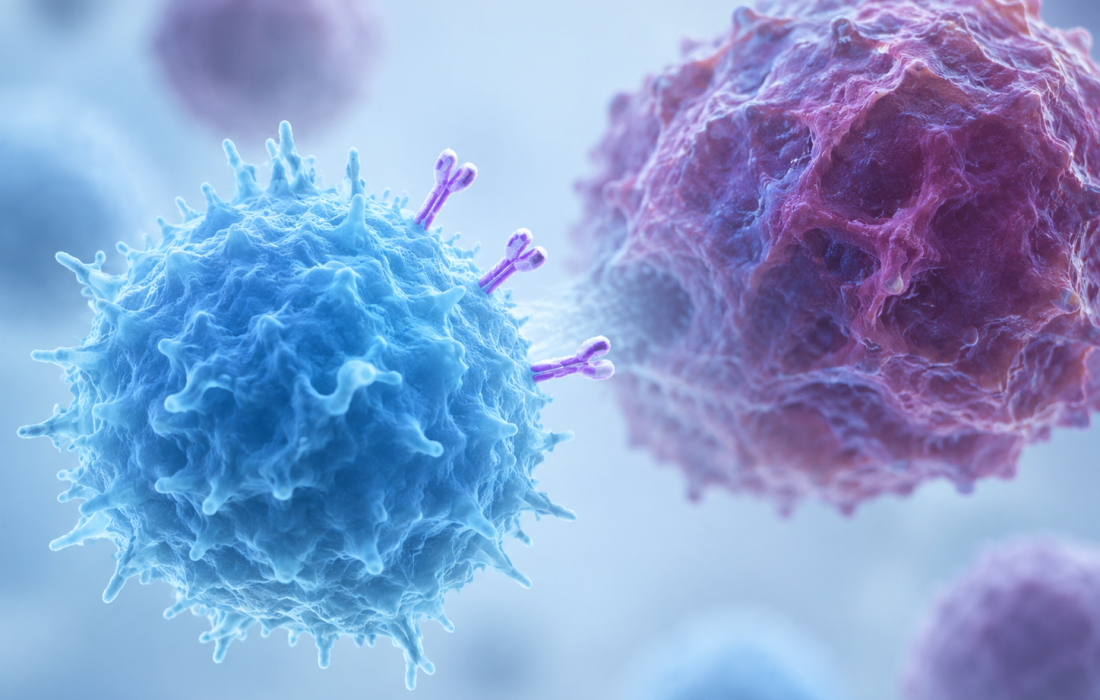
CARsgen reports 3 complete and 2 partial responses with CT1182, an investigational in vivo CAR T-cell therapy for relapsed or refractory B-cell lymphoma.
Written By: Pavani Polepaka, PharmD
Reviewed By: Pharmacally Editorial Team
CARsgen Therapeutics has reported preliminary clinical data for CT1182 (KJ-C2529), an investigational CD19/CD20-targeting in vivo CAR T-cell therapy, showing three complete responses and two partial responses among six evaluable patients with relapsed or refractory B-cell non-Hodgkin lymphoma (R/R B-NHL). The early findings also showed a manageable safety profile, with no dose-limiting toxicities or treatment-related serious adverse events.
CT1182 Shows Early Antitumor Activity in High-Risk Lymphoma
As of October 31, 2026, the ongoing investigator-initiated trial had enrolled six patients, including five with diffuse large B-cell lymphoma (DLBCL) and one with blastoid mantle cell lymphoma (MCL). All patients had Ann Arbor Stage IV disease, with a median of three previous lines of therapy and a median total tumor burden, measured by the sum of the products of diameters (SPD), of 1,927.5 mm². Two patients had previously received T-cell engager (TCE) therapy.
The trial explored CT1182 doses ranging from 1.2 × 10⁸ to 7.2 × 10⁸ transduction units (TU). At a median follow-up of approximately 3.2 months, all six patients were evaluable for efficacy. Three achieved complete responses (CR), while two achieved partial responses (PR). All five responses remained ongoing at the data cut-off.
Complete responses occurred even at the starting dose, with the longest response lasting nearly five months. One patient whose disease was refractory to previous TCE treatment also achieved CR. However, another TCE-refractory patient did not demonstrate effective CAR-T cell expansion, attributed to T-cell exhaustion and CD20 antigen loss.
No Dose-Limiting Toxicities or Severe Treatment-Related Events Reported
The preliminary safety findings covered all six dose-limiting toxicity (DLT)-evaluable patients. Investigators reported no treatment-related serious adverse events, DLTs or infusion-related reactions (IRRs).
Only Grade 1 cytokine release syndrome (CRS) occurred. No immune effector cell-associated neurotoxicity syndrome (ICANS), immune effector cell-associated haemophagocytic lymphohistiocytosis-like syndrome (IEC-HS) or infusion-associated biphasic cytokine elevation was reported.
Haematological toxicity was generally mild. No treatment-related Grade 3 or higher haematological toxicities were observed, although one Grade 3 leukopenia event could not be definitively separated from the underlying disease. The company also described hepatic toxicity as mild.
Complete B-cell aplasia was observed in all responding patients, providing evidence of target engagement and biological activity following treatment.
CARvivo Platform Supports In Vivo CAR-T Cell Generation
CT1182 uses CARsgen’s proprietary CARvivo™ platform to generate CAR-T cells directly inside the patient’s body following a single intravenous infusion. Unlike conventional autologous CAR-T therapies, which require T-cell collection, ex vivo genetic modification and reinfusion, this approach enables in situ CAR-T cell generation without lymphodepletion.
The platform incorporates proprietary viral envelopes and T-cell-specific promoters to improve T-cell targeting and reduce off-target transduction. However, the six-patient dataset remains too small to establish the platform’s clinical safety advantages over conventional CAR-T approaches.
Registrational Trial Filing Expected in 2027
The preliminary findings provide an early clinical signal for CT1182, particularly given the heavily pretreated population and responses observed at relatively low doses. The absence of severe treatment-related toxicities is also relevant to evaluating whether the therapy could eventually support outpatient administration, although this setting has not yet been established clinically.
CARsgen plans to explore a broader dose range to determine the recommended Phase 2 dose (RP2D) and better characterize the dose-response relationship. The company expects to file for a registrational clinical trial in the first half of 2027.
The potential application of CD19/CD20-targeting in vivo CAR-T therapy beyond lymphoma, including B-cell-mediated autoimmune diseases, also warrants further investigation. However, these applications remain exploratory and require dedicated clinical evaluation.
Reference
CARsgen Presents First Clinical Data on Its In Vivo CAR-T Product Candidate CT1182, CARsgen, 22 November 2026
A Clinical Study Exploring the Safety, Efficacy and Metabolic Kinetics of CT1182 Injection in Patients with Relapsed / Refractory Non-Hodgkin Lymphoma, ClinicalTrials.gov ID NCT07548697

About the Writer
Pavani Polepaka, Pharm.D., (Linkedin) is a clinically trained pharmacy professional with hands-on exposure to hospital settings and experience in patient case documentation, medical record review, adverse drug reaction (ADR) reporting, pharmacovigilance, literature review and patient counselling. She possesses a strong foundation in pharmacotherapy, drug safety, clinical research and evidence-based healthcare practices, with an interest in translating clinical evidence into scientifically accurate medical content. She demonstrates research and analytical skills through academic activities and medical literature evaluation.