
CAPRISA 012C Phase II trial found no overall HIV protection with CAP256V2LS and VRC07-523LS in young women, highlighting viral resistance as a key challenge.
Written By: Anamika Koshti, PharmD
Reviewed By: Pharmacally Editorial Team
On July 29, 2026, CAPRISA presented results from CAPRISA 012C (PACTR202112683307570), a Phase II study evaluating a combination of two long-acting broadly neutralising antibodies (bnAbs) to prevent HIV infection in young women, at the 26th International AIDS Conference in Rio de Janeiro, Brazil. The trial did not demonstrate a statistically significant overall protective benefit, though it uncovered an important finding, the study identified widespread viral resistance among breakthrough infections, suggesting that resistance likely contributed to the lack of overall protection.
Why Young Women in Southern Africa Remain a Priority Population?
Young women aged 15 to 24 in sub-Saharan Africa continue to bear a disproportionate share of the global HIV epidemic. Daily oral PrEP is available and effective, but adherence challenges have limited its real-world impact in this population, motivating the pursuit of long-acting, passively administered antibody-based prevention as an alternative biomedical strategy.
What Are Broadly Neutralising Antibodies?
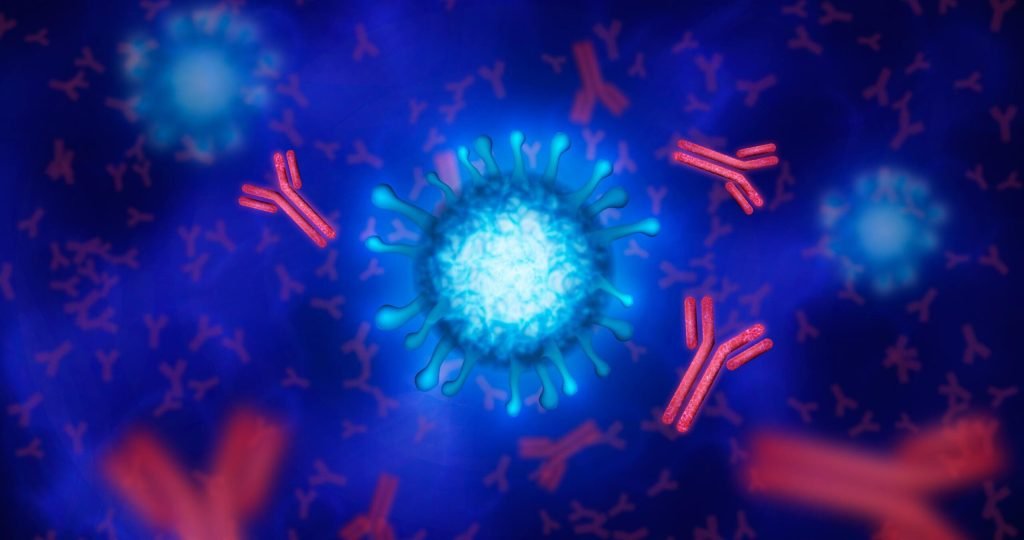
Unlike the strain-specific antibodies typically produced after HIV infection, broadly neutralising antibodies (bnAbs) are rare antibodies capable of recognising and blocking many HIV strains. CAP256V2LS was discovered by CAPRISA in a South African trial participant and developed over a 22-year partnership between South African and US scientists. Combined with VRC07-523LS, a bnAb developed by the NIH’s Vaccine Research Center, the pairing was designed to combine high potency (the strength to neutralise HIV) with high breadth (the ability to neutralise a wide range of strains) by targeting conserved regions of HIV’s outer envelope that the virus struggles to alter without compromising its own survival.
Trial Design
CAPRISA 012C followed the earlier Phase I first-in-human CAPRISA trial of CAP256V2LS. This Phase II, double-blinded, randomised, placebo-controlled trial evaluated CAP256V2LS and VRC07-523LS administered together subcutaneously at six-monthly intervals in young HIV-negative women. A total of 1,023 participants were enrolled at CAPRISA’s urban eThekwini and rural Vulindlela clinics in South Africa and at the Centre for Infectious Disease Research in Zambia (CIDRZ). All participants were offered standard HIV prevention services, including PrEP. Of those enrolled, 512 women were randomised to the bnAb combination and 511 to placebo.
Key Findings
Both bnAbs were shown to be safe. The overall HIV incidence rate across the trial was 3.0 per 100 women-years. A total of 39 women acquired HIV infection during the study: 17 in the placebo group and 22 in the bnAb group. There was no statistically significant difference in HIV incidence between the two groups, meaning the combination did not demonstrate an overall protective benefit against HIV acquisition.
The most clinically significant finding emerged from viral analysis of the 39 breakthrough infections. Of these, twenty-five of the 39 breakthrough viruses were resistant to both bnAbs, while 12 of the remaining 14 were resistant to one of the two antibodies. Encouragingly, the data showed a trend toward protection when the acquired virus was sensitive to both or one of the two bnAbs, compared to when the virus was resistant to both. The investigators observed a trend toward protection when the infecting virus was sensitive to one or both antibodies against susceptible viral strains, but that circulating HIV strains in this population were, in many cases, already resistant to the specific bnAbs tested.
Expert Perspectives
Dr. Sharana Mahomed, Site Principal Investigator and Head of HIV Pathogenesis at CAPRISA, described the trial as highlighting the challenge of viral diversity in HIV, including shifts in sensitivity to bnAbs, characterising the 22-year effort as a translation from a laboratory concept to field-ready evidence made possible by the women who participated. Dr. Izukanji Sikazwe, Head of HIV at The Global Fund and former CEO of CIDRZ, noted the trial represented an opportunity to bring HIV prevention science closer to the young women who need it most, and to contribute African-led research toward long-acting prevention approaches. Dr. Michael Makanga, Executive Director of Global Health at EDCTP3, congratulated the team on the translational journey, describing the results as a strategic contribution to global HIV antibody research and one of few medical innovations both conceived and developed within Africa.
What This Means Going Forward?
The trial has not produced a new HIV prevention product, but its findings carry direct value for the field. The ongoing high rate of new HIV infections in young women underscores the need for expanded prevention strategies alongside continued vaccine and cure research. The trial’s central lesson, that sensitivity of contemporary circulating HIV strains to specific bnAbs cannot be assumed, will directly shape how future antibody-based prevention studies are designed. The trial was funded by EDCTP, the NIH Vaccine Research Center, and the South African government through its Department of Health, Department of Science, Technology and Innovation, the SAMRC, and the National Research Foundation. The findings indicate that future bnAb prevention trials will need to account for the sensitivity of contemporary circulating HIV strains when selecting antibody combinations.
Reference

About the Writer
Anamika Koshti (LinkedIn) is a PharmD professional and healthcare writer with interests in clinical research, pharmacovigilance, and evidence-based medicine. She has authored peer-reviewed publications on Alzheimer’s disease and PCOS, presented research at national conferences, and gained hands-on experience in medical content development and clinical data interpretation. She is committed to translating complex medical research into accurate, accessible content for healthcare professionals and patients.