
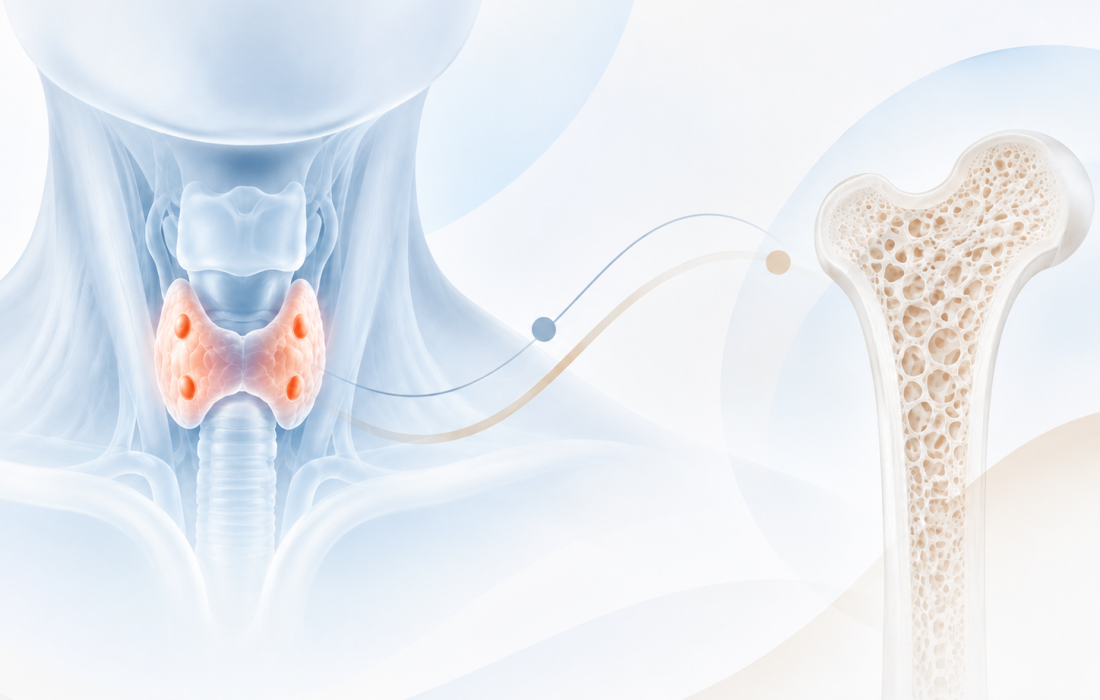
BridgeBio reports Week 24 CALIBRATE findings showing PTH recovery and symptom improvements with encaleret in ADH1, alongside increased bone turnover markers.
Written By: Siddhi Bhadekar, M. Pharm (QA)
Reviewed By: Pharmacally Editorial Team
BridgeBio Pharma reported new 24-week findings from the Phase 3 CALIBRATE trial of encaleret in autosomal dominant hypocalcemia type 1 (ADH1) at the American Society for Bone and Mineral Research (ASBMR) 2026 Annual Meeting in Boston. The results demonstrated recovery of endogenous parathyroid hormone (PTH) secretion, increased bone turnover markers, and improvements in participant-reported symptoms and daily functioning compared with standard of care (SoC).
The findings extend the evidence for encaleret beyond serum and urine calcium regulation, although the clinical significance of the bone-marker changes and the reliability of subjective symptom findings require further assessment. BridgeBio also announced that the FDA has accepted its New Drug Application with Priority Review, and that the first participant has been dosed in the Phase 3 RECLAIM-HP study in chronic hypoparathyroidism.
Encaleret Restores PTH Secretion and Increases Bone Turnover
In the Phase 3 CALIBRATE trial (NCT05680818), encaleret was evaluated against conventional therapy in participants with ADH1. Erik Imel, MD, of Indiana University School of Medicine, presented the 24-week bone turnover findings at ASBMR.
Key findings presented include:
- PTH Recovery: Endogenous PTH secretion reached or exceeded the lower limit of normal in 91% of encaleret-treated participants, compared with 0% receiving SoC at Week 24.
- Bone Turnover: Markers of both bone formation and bone resorption increased in the encaleret arm relative to conventional therapy.
ADH1 is characterized by gain-of-function mutations in the calcium-sensing receptor (CaSR), leading to suppressed PTH secretion and reduced bone turnover. The observed marker increases align with the intended mechanism of action of encaleret, an allosteric CaSR antagonist that dampens receptor sensitivity to allow endogenous PTH secretion to resume.
However, the presentation did not disclose individual bone turnover markers, numerical baseline-to-week-24 changes, or structural bone density outcomes (e.g., DXA scores). Consequently, while these data confirm a biological effect on bone remodeling, they do not yet establish improved bone microarchitecture, bone strength, or reduced fracture risk.
These data build upon earlier efficacy findings from CALIBRATE, where 76% of encaleret-treated participants achieved normalized serum and urine calcium at Week 24, compared with 4% receiving conventional therapy at Week 4 (). Because these comparisons involve different assessment time points, they should be interpreted within the context of the trial’s crossover design rather than a direct, same-time-point comparison.
Participant-Reported Symptoms and Daily Functioning
Steven Ing, MD, of Ohio State University and a CALIBRATE investigator, presented the patient-reported outcome (PRO) data. All participants in the encaleret group reported improvement in at least one ADH1-related symptom, compared with 46% in the SoC group (which consisted of oral calcium supplementation and/or active vitamin D analogues).
At Week 24, reported symptom improvements included:
- Fatigue: 61.3% (encaleret) vs. 27.3% (SoC)
- Muscle Cramps: 58.1% vs. 36.4%
- Muscle Spasms: 58.1% vs. 18.2%
- Tingling (Paresthesia): 51.6% vs. 9.1%
- Brain Fog: 48.4% vs. 9.1%
Participants also reported domain-specific functional improvements, including mood and emotions (61.3% vs. 27.3%), physical activity (45.2% vs. 9.1%), daily life activities (35.5% vs. 18.2%), and work life (35.5% vs. 9.1%).
Methodological Considerations
These findings indicate potential quality-of-life benefits that extend beyond biochemical calcium control. However, CALIBRATE was an open-label trial, meaning treatment awareness may have introduced expectation bias into subjective self-assessments. Furthermore, full statistical parameters—including exact sample denominators, confidence intervals, and instrument validation details—were not fully detailed in the summary presentation. These outcomes should therefore be regarded as encouraging secondary signals rather than definitive proof of symptom efficacy.
Regulatory Status: FDA Priority Review & EMA Submission
BridgeBio confirmed that the FDA has accepted its NDA for encaleret in ADH1 under Priority Review, designating a Prescription Drug User Fee Act (PDUFA) target action date of May 8, 2027. A Marketing Authorization Application (MAA) has also been submitted to the European Medicines Agency (EMA).
Priority Review status reduces the FDA’s goal review timeframe from 10 months to 6 months for applications targeting serious conditions with unmet medical needs. It does not guarantee approval. Encaleret holds Orphan Drug Designations in the US, EU, and Japan, alongside FDA Fast Track Designation.
RECLAIM-HP Study Expands Development into Chronic Hypoparathyroidism
BridgeBio has dosed the first patient in RECLAIM-HP (NCT07805356), a global, randomized, double-blind, placebo-controlled Phase 3 trial evaluating oral encaleret in adult and adolescent patients with chronic hypoparathyroidism.
- Design: Approximately 160 participants will be randomized 3:1 (encaleret vs. placebo) across a 24-week double-blind period.
- Primary Endpoint: The proportion of participants maintaining both blood and urinary calcium within protocol-defined target ranges at Week 24.
- Secondary Endpoints: Reduction or elimination of conventional therapy, PROs, bone mineral metabolism, and long-term safety.
Note: Chronic hypoparathyroidism differs etiologically from ADH1, most commonly resulting from postsurgical damage to or removal of the parathyroid glands rather than genetic CaSR mutations. Data from RECLAIM-HP will determine whether negative allosteric modulation of CaSR can provide therapeutic benefit in broader hypoparathyroid populations.
What the Findings Mean
The 24-week Phase 3 CALIBRATE results provide evidence that encaleret restores endogenous PTH release, improves mineral regulation, and elevates bone turnover markers, while offering signal improvements in daily patient functioning.
Key questions moving forward include the long-term durability of bone remodeling effects, structural bone outcomes, and whether subjective PRO benefits hold up under real-world clinical use. The primary upcoming milestone is the FDA’s May 8, 2027 PDUFA action date.
Reference
Encaleret Increased Bone Turnover and Improved Participant-Reported Symptoms in the Phase 3 CALIBRATE Trial in ADH1, BridgeBio Pharma, 11 October 2026
Efficacy and Safety of Encaleret Compared to Standard of Care in Participants with ADH1 (CALIBRATE), ClinicalTrials.gov ID NCT05680818

About the Writer
Siddhi Rajendra Bhadekar (Linkedin) is an M.Pharm professional with expertise in medical and scientific writing, literature review, publication writing, and evidence synthesis, supported by four peer-reviewed publications.
She brings working knowledge of ICH-GCP, MedDRA, pharmacovigilance, ADR/AE reporting, clinical data management, and regulatory documentation.
With experience across pharmaceutical R&D, Quality Control, and Quality Assurance, she combines scientific research skills with strong attention to accuracy and detail.
Her background in manuscript development, publication planning, and scientific communication enables her to translate complex healthcare information into clear, reliable content.